
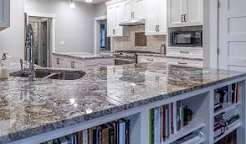

Looking for durable kitchen countertops in Winnipeg that homeowners can trust for daily use? The finish matters as much as the stone. Polished surfaces resist stains and wipe clean easily. Honed surfaces hide fingerprints and etch marks better. This guide compares both so you can pick the one that fits how you cook, clean, and live.
Picture a January morning in Winnipeg. It’s -25°C outside, the kids just tracked salt and slush across the kitchen floor, and someone set a wet coffee mug on the counter next to a cut lemon. By 8 a.m., your countertop has already taken a beating. The finish on that surface decides whether you wipe it clean in seconds or spend the weekend scrubbing.
Most people pick a stone by color and pattern, then treat the finish as an afterthought. That’s a mistake. Two slabs cut from the same block can behave very differently in your kitchen depending on whether the fabricator left them matte or shiny. Below, you’ll find how each finish works, where it shines, where it struggles, and which one fits a Winnipeg home best.
What Is the Difference Between Honed and Polished Countertops?
A honed countertop has a smooth, matte or satin surface, while a polished countertop has a glossy, mirror-like shine. The difference comes from how far the fabricator takes the grinding process.
After a slab is cut, workers grind it with abrasive pads, starting coarse and moving to finer grits. For a honed finish, they stop partway through, which leaves the surface smooth to the touch but without much shine. For a polished finish, they keep going through the finest grits until the stone reflects light like glass.
Polishing does more than add shine. The fine abrasives close up many of the tiny openings on the surface, so liquids have a harder time soaking in. Honing leaves those openings a bit more exposed. That single difference explains most of what you’ll read below.
One point trips people up: finish does not change hardness. On the Mohs scale, granite sits around 6 to 7 and marble around 3 to 4, whether the surface is honed or polished. A shiny marble counter is not tougher than a matte one. It just looks different when it gets damaged.
Which Finish Handles Stains Better in a Busy Kitchen?
Polished countertops handle stains better because their tighter surface slows down liquid absorption. If you cook often, spill often, or have kids at the kitchen island, this matters.
Think about what actually hits a kitchen counter: olive oil, red wine, coffee, turmeric, tomato sauce, and beet juice. On a polished granite surface, you usually have time to wipe these up before they set. On a honed natural stone surface, the same spill can sink in faster, especially if the sealer is old.
Honed stone can still perform well. It just needs more attention. A common guideline from stone fabricators and the Natural Stone Institute is to seal natural stone regularly and clean it with a pH-neutral cleaner. Many fabricators suggest sealing honed surfaces about once a year and polished ones every one to three years, though the right schedule depends on the stone.
Engineered quartz changes the picture. Quartz slabs from brands like Caesarstone, Cambria, and Silestone combine ground quartz with resin. That mix is non-porous, so stains don’t soak in whether the finish is polished or matte. If you want the honed look with polished-level stain protection, a matte quartz is worth a close look.
Which Finish Hides Scratches, Etching, and Fingerprints Better?
Honed finishes hide etching and light scratches better, while polished finishes hide stains better but show etch marks and dull spots clearly. Fingerprints and water spots show up on both, in different ways.
Etching is the big one for marble, limestone, and some other calcium-based stones. Etching happens when acid reacts with the stone and leaves a dull spot. Lemon juice, vinegar, tomato sauce, and wine can all do it. Lemon juice has a pH around 2, which is more than strong enough. Sealers do not stop etching, because the acid damages the stone itself instead of soaking in.
On a polished marble counter, an etch mark looks like a cloudy ring on a shiny surface, and you notice it right away. On a honed marble counter, the surface is already matte, so the same mark blends in. That’s why many marble lovers choose honed, even though it stains a bit more easily.
Scratches follow the same logic. Fine scratches show up as dull lines on glossy stone, but they disappear into a matte surface. Fingerprints are a mixed story. Dark polished stone shows fingerprints, streaks, and water spots. Dark honed stone can show oily smudges and a chalky look after wiping. Neither finish is fingerprint-proof, so a quick pass with a microfiber cloth helps either way.
Honed vs. Polished Countertops: Side-by-Side Comparison
| Feature | Honed Finish | Polished Finish |
| Look | Soft, matte, or satin | Glossy, mirror-like |
| Stain resistance (natural stone) | Fair; needs more frequent sealing | Better; surface is tighter |
| Etch visibility on marble | Low; blends into matte surface | High; shows as dull rings |
| Scratch visibility | Low | Higher on dark or glossy stone |
| Fingerprints and smudges | Shows oil marks on dark colors | Shows prints and water spots |
| Color depth | Slightly muted | Richer, more vivid |
| Cleaning speed | Takes a bit more care | Wipes clean quickly |
| Light reflection | Low | High; brightens small kitchens |
| Best fit | Marble, soapstone, low-key modern or classic look | Granite, quartz, busy family kitchens |
Which Finish Works Best in Winnipeg Homes?
For most Winnipeg households, polished granite or quartz handles daily life best, while honed suits homeowners who value a soft look and accept a little extra care. Winnipeg’s climate adds a few details that matter.
Winters here are long and cold. January lows regularly drop to -20°C or below, and people track road salt and grit into the house for months. If your kitchen sits close to a back door or mudroom, salty slush can end up on the counter from bags and boots. Salt and grit are rough on any surface, and a polished, well-sealed finish is easier to wipe down without leaving residue behind.
Winter also brings dry indoor air and shorter days. A polished surface bounces light around the room, which helps in a kitchen that gets little sun from November to February. A honed surface absorbs more light, so it pairs well with big windows or strong under-cabinet lighting.
Cooking habits count too. Manitoba families make a lot of perogies with tomato-based sauces, holiday baking, and slow-cooker meals for cold weather. Tomato sauce, vinegar-based pickling, and citrus all bring acid, which is the main enemy of marble and limestone. If you love to cook and want marble, honed hides the damage best. If you don’t want to baby your counters, granite or quartz gives you far more room for error.
Does Stone Type Matter More Than Finish?
Yes, stone type matters as much as finish, because each material reacts differently to heat, acid, and stains. Choose the stone first, then choose the finish that suits it.
Granite is hard and heat tolerant. Polished granite is the classic low-maintenance choice, and honed granite gives a softer, more modern look at the cost of a bit more sealing.
Marble is beautiful and softer. It etches and scratches easily, so honed is the finish most people choose, and they accept that the counter will develop a lived-in character over time.
Quartz is engineered, so it doesn’t need sealing and resists stains well. Most quartz comes polished, though matte and textured options exist. Quartz does have a limit on heat. Manufacturers such as Caesarstone warn against putting hot pans straight from the stove onto the surface, so a trivet is a must.
Quartzite is a natural stone that is harder than most granite. It comes in both finishes, and honed quartzite is popular for people who want a marble look with more durability.
How Do You Clean and Maintain Each Finish?
You clean both finishes with warm water, mild dish soap, and a soft cloth. Avoid vinegar, bleach, and abrasive powders on natural stone. Here is a simple daily routine that works for either finish:
- Wipe spills right away with a soft, damp cloth.
- Clean the surface with warm water and a few drops of mild dish soap, or a pH-neutral stone cleaner.
- Rinse with a clean, damp cloth so no soap film stays behind.
- Dry with a microfiber towel to prevent water spots, especially on polished dark stone.
- Use cutting boards and trivets so knives and hot pots never touch the surface.
If you’re weighing your options and want to see real slabs in person, you can browse kitchen countertop options and compare both finishes side by side under real light.
How Do Slab Size and Seams Affect Your Choice?
Slab size affects seam placement and cost, and seams look different on honed and polished stone. Before you pick a finish, work out how many countertop slabs your kitchen needs, because a layout that needs two slabs will have a seam somewhere.
A well-made seam is thin and tight. On a polished surface, the seam catches the light and can be easier to spot. On a honed surface, it blends in more. Matching the veining across two slabs is easier when you plan the layout early, and you get a better result when the fabricator cuts the pieces in the right order from the same slab or from slabs that sit next to each other in the bundle.
A Practical Tip Before You Seal or Buy
Run a simple water test on any natural stone sample before you buy it. Put a few drops of water on the surface and leave them for 10 to 15 minutes. If the stone darkens where the water sat, it’s absorbing liquid and needs sealing. If the water beads up and the stone stays the same color, the sealer is doing its job.
Do the test on a honed sample and a polished sample of the same stone. You’ll often see a clear difference, and it tells you how much upkeep you’re signing up for. Do the same with a lemon wedge on a small marble sample. Leave it for a few minutes, wipe it off, and check for a dull spot. That test shows you exactly how the stone will handle life in your kitchen.
Which Finish Should You Choose?
Choose polished if you want easy cleaning, richer color, and less worry about spills. Choose honed if you love a soft, matte look and don’t mind sealing the stone more often and wiping it down with care.
Here is a simple way to decide. If you cook daily, have young kids, or host a lot, go with polished granite or quartz. If you want marble and accept that it will age, go honed. If you want the honed look without the upkeep, pick a matte quartz or a honed quartzite. Whichever you choose, seal natural stone on schedule and use a pH-neutral cleaner.
Final Thoughts: Pick the Finish That Fits Your Kitchen
Honed and polished finishes are both good choices, and each solves a different problem. Polished gives you stain resistance, deep color, and quick cleanup. Honed gives you a soft, natural look that hides etching and scratches. The stone you pick, the way you cook, and the way your family lives will point you to the right answer.
Your next step is simple. Write down the stone types you like, note how you use your kitchen, and then look at real samples in your own lighting. Test them with water and a lemon wedge. Ask a fabricator about seam placement and slab count before you commit. If you’re ready to see honed and polished slabs in person and get expert advice on the right match for your home, visit Rockwood Stone Countertops.
FAQ
Is Honed or Polished Better for Kitchen Countertops?
Neither is better for everyone. Polished stone resists stains and cleans faster, while honed stone hides etching and scratches better. Busy families often prefer polished granite or quartz, while marble lovers usually pick honed. Match the finish to your stone type and how hard you use your kitchen.
Do Honed Countertops Stain More Easily Than Polished Ones?
Yes, honed natural stone usually stains more easily because its surface is more open and absorbs liquids faster. Regular sealing helps a lot. Engineered quartz is the exception, since it’s non-porous and resists stains in both honed and polished finishes.
Do Polished Countertops Show More Scratches?
Polished countertops can show fine scratches more clearly, especially on dark stone, because the glossy surface reflects light and highlights every line. Honed surfaces hide light scratches better. Granite and quartz resist scratching well in either finish, so daily use rarely causes visible damage.
Can You Change a Polished Countertop to a Honed Finish?
Yes, a professional can hone a polished natural stone countertop by grinding down the shine, and can re-polish a honed one. This job needs the right tools and skill, so hire a stone restoration expert. Don’t try it yourself, since uneven grinding can ruin the surface.
How Often Should You Seal Honed and Polished Countertops?
A common guideline is to seal honed natural stone about once a year and polished natural stone every one to three years. The right timing depends on the stone. Use the water test: if water darkens the surface after 10 to 15 minutes, it’s time to reseal.
Is Honed Marble Practical for a Winnipeg Kitchen?
Honed marble works if you accept some wear. It hides etching better than polished marble but stains more easily, so you need to wipe spills quickly and seal it on schedule. If you cook with a lot of acid, or want zero fuss, granite or quartz is safer.

