
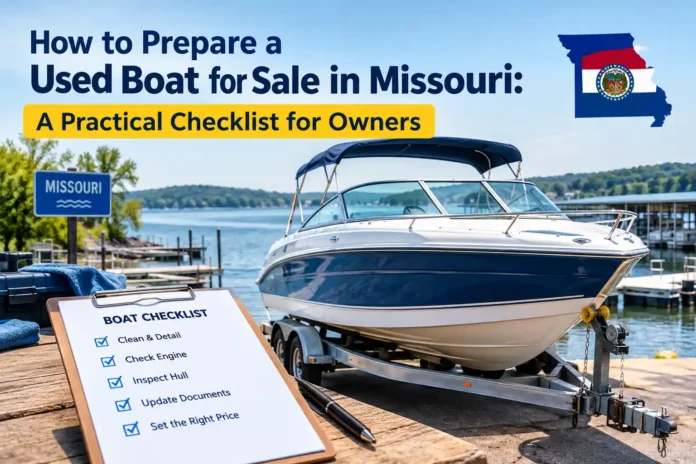

Selling a boat in Missouri requires more than just placing a “for sale” sign near the dock. Whether the boat spends its weekends on Lake of the Ozarks, Table Rock Lake, Truman Lake, or a quieter stretch of the Missouri River, buyers will look closely at how it has been maintained, stored, and documented. Owners considering selling my boat in Missouri should begin by making the vessel clean, straightforward to inspect, and accurately represented.
Preparation is not about making an older boat look brand new. It is about reducing uncertainty. A buyer should be able to see the condition of the hull, interior, engine area, trailer, and equipment without digging through personal gear or guessing about the boat’s history.
Why Preparation Matters Before Listing
Boats used in Missouri’s warm, humid summers can develop mildew, water stains, clogged drains, and sun-worn upholstery if they are not regularly cleaned and covered. In colder months, buyers may also ask about winterization, indoor storage, shrink-wrapping, battery care, and whether the boat has been protected against freeze damage. Visible clutter, standing water, odors, or neglected compartments can make a buyer wonder what else has been overlooked.
For owners who would rather explore local sales support rather than manage every part of the process alone, reputable boat dealers in Missouri can be a useful point of reference for understanding how professionally presented inventory is described and shown.
Step 1: Clean the Boat From Bow to Stern
Start with a full walk-through as if seeing the boat for the first time. Wash the hull, deck, cockpit, swim platform, and canvas. Clean seating, flooring, cup holders, storage lockers, cabin surfaces, and the head, if equipped. Remove fishing gear, loose tools, extra life jackets, food, clothing, and personal decorations to let buyers assess space. Focus on the bilge and engine compartment, ensuring they are accessible and reasonably clean, but don’t conceal leaks, corrosion, or damage. Remove standing water, identify its source if possible, and be ready to explain any remaining condition.
Step 2: Check Mechanical and Safety Equipment
Test systems before listing: start the engine, check gauges, warning lights, bilge pump, horn, navigation lights, batteries, trim, and electronics. Inspect hoses, belts, clamps, fuel lines, and wiring for damage. If sitting, ensure safe demonstration before showing or water testing. Trailer condition is vital; check tires, lights, winch, bunks, safety chains, coupler, and bearings. Use Coast Guard’s safety checklist to review onboard gear before a buyer asks.
Step 3: Gather Maintenance and Ownership Records
Create a folder—printed or digital—containing engine service invoices, oil-change records, winterization receipts, repair bills, manuals, warranty info, survey reports, and upgrade records like electronics, canvas, upholstery, or a repower. Include trailer records when relevant. Use exact dates, engine hours, and detailed invoice descriptions over vague statements like “recently serviced.” If some paperwork is missing, do not assume; label records clearly and specify missing items.
Step 4: Decide Which Repairs Are Worthwhile
Prioritize repairs affecting safety, reliability, or the buyer’s use of the boat. Issues such as a failed bilge pump, a broken trailer light, a cracked fuel line, or a dead battery can halt a sale. Lower-cost fixes, such as replacing hardware, fixing seat seams, or deep-cleaning stained carpet, also boost appeal. Be wary of costly upgrades for personal taste; electronics, upholstery, or accessories may not fully recoup their costs. Keep receipts and disclose unresolved issues.
Step 5: Set a Realistic Asking Price
Compare similar boats by year, make, model, length, engine type, hours, equipment, trailer inclusion, and overall condition. Look at Missouri listings as well as nearby regional markets, since demand can vary between lake communities and inland areas. Active listings show asking prices, not necessarily sale prices, so use several examples rather than relying on a single unusually high or low number.
Adjust the price for meaningful differences, including documented maintenance, storage history, working electronics, trailer condition, and known defects. The remaining balance on a loan is important to the seller, but it does not determine market value for a buyer.
Step 6: Take Clear, Current Photos
- Photograph the boat only after cleaning and removing clutter.
- Use daylight when possible and avoid heavy shadows across the hull or cockpit.
- Show both sides of the exterior, the bow, stern, helm, seating, storage, cabin, engine area, bilge, and trailer.
- Include close images of identification markings and major equipment.
- Show ordinary wear and known flaws honestly, rather than relying on old photos from a better season.
Step 7: Write an Accurate Listing and Prepare for Questions
Lead with specific facts: year, make, model, length, engine brand and horsepower, engine hours, included trailer, major equipment, recent service, storage history, location, and known issues. Avoid vague claims like “perfect” or “needs nothing.” Clear details help buyers decide to view. Expect questions about why you’re selling, ownership duration, usage, freshwater storage, what’s included, and if water tests are possible. Plan how deposits, inspections, fuel, haul-outs, and deadlines are handled. A written agreement clarifies terms.
Step 8: Review Missouri Documents Before Closing
Before accepting payment, confirm that the title or registration is in the seller’s name, check for outstanding liens, and verify that the Hull Identification Number matches the vessel and paperwork. A bill of sale should identify the boat, the sale price, the date, the buyer, the seller, and any included equipment. When a trailer is part of the deal, review its ownership documents separately.
Missouri owners should review the state’s boat and vessel titling requirements before closing, because the appropriate documents can depend on the boat, motor, trailer, ownership history, and transaction details. Keep signed copies of the title assignment, bill of sale, lien release when applicable, and payment records.
Final Pre-Listing Checklist
- Wash and detail the boat, then remove personal items.
- Test the engine, key systems, safety equipment, and trailer.
- Organize maintenance, storage, and ownership records.
- Complete sensible repairs and document the work.
- Price the boat against comparable listings in Missouri and the region.
- Take current photos that show the full condition of the vessel.
- Disclose known problems and clarify included equipment.
- Review the title, registration, lien, and bill of sale paperwork before closing.
Conclusion
Preparing a used boat for sale in Missouri is ultimately about making the next owner’s decision easier. A clean boat, tested systems, organized records, realistic price, complete photos, and accurate paperwork demonstrate care without overstating condition. That approach can reduce last-minute surprises and create a smoother path from the first inquiry to the final handoff.