

Bathroom design is moving away from spaces that look impressive in photographs but feel inconvenient in everyday life. Homeowners increasingly want rooms that combine comfort, personality, and practical features without demanding constant cleaning.
The latest design directions reflect that shift. Warmer materials are replacing sterile finishes, showers are becoming more adaptable, and storage is being incorporated into the architecture rather than added afterward.
But not every fashionable feature deserves a place in your home. The most successful updates balance visual appeal with durability, accessibility, and the way people actually use their bathrooms.
Warm Minimalism Is Replacing the All-White Bathroom
Bright white bathrooms dominated design inspiration for years. Their clean appearance remains appealing, but completely white interiors can feel clinical, particularly when paired with cold lighting and glossy surfaces.
Warm minimalism offers a softer alternative.
Creamy neutrals, sandy tones, natural-looking wood, and textured finishes create visual interest without overwhelming the room.
This approach is influencing bathroom remodeling projects where homeowners want contemporary design without sacrificing comfort.
Rather than replacing every surface with an identical color, designers are introducing subtle contrasts between cabinetry, flooring, and walls.
A light oak vanity, warm beige tile, and brushed metal fixtures can make a compact bathroom feel inviting.
However, natural materials require careful selection because bathrooms experience frequent moisture exposure.
Wood-look porcelain and moisture-resistant cabinetry can provide similar visual effects with more manageable maintenance requirements.
The goal is a welcoming atmosphere that remains practical long after installation.
Walk-In Showers Are Becoming More Adaptable
Large walk-in showers continue attracting attention because they can create a more open appearance while simplifying everyday bathing.
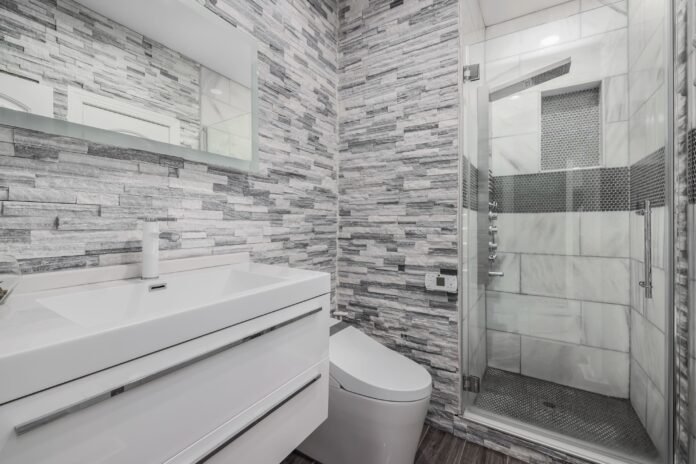
Instead of elaborate enclosures, many designs use clear glass, streamlined hardware, and minimal visual barriers.
Accessibility is also shaping shower layouts.
Low-threshold entries, strategically positioned grab bars, and built-in seating can make bathing easier for people with different mobility needs.
Some homeowners are choosing curbless showers, although these require appropriate floor slopes, waterproofing, and drainage.
The trend isn’t simply about making showers bigger.
It’s about creating spaces that are easier to enter, clean, and use comfortably.
Before replacing a bathtub, homeowners should consider household preferences and whether retaining at least one tub makes sense.
A fashionable shower conversion should improve daily life rather than eliminate a feature someone still needs.
Statement Tiles Are Moving Beyond the Shower Wall
Tile is becoming an important way to introduce personality without relying on excessive decoration.
Instead of covering every surface with the same large-format material, homeowners are experimenting with distinctive shapes, subtle patterns, and contrasting textures.
Vertical stacked tiles can make walls appear taller, while handmade-look surfaces introduce slight variations that soften modern interiors.
Checkerboard flooring and understated geometric patterns are also finding places in contemporary bathrooms.
However, visually interesting tile isn’t automatically practical.
Highly textured surfaces may require additional cleaning, while certain natural stones need periodic sealing.
Flooring must also provide appropriate slip resistance.
Homeowners should consider grout color, tile dimensions, and maintenance requirements before committing.
A statement surface often works best when surrounding finishes remain relatively simple.
That allows the design to feel intentional rather than competing for attention from every direction.
Floating Vanities Are Making Smaller Bathrooms Feel Larger
Bathroom storage is becoming more integrated with modern design.
Wall-mounted vanities are particularly appealing because exposing the floor beneath them can make a small room appear more spacious.
They also create opportunities for contemporary lighting and cleaner visual lines.
Yet floating cabinetry isn’t suitable for every bathroom.
Proper wall support is essential, and installation may require additional structural preparation.
Homeowners should also evaluate storage capacity.
A sleek vanity with limited drawer space can quickly become frustrating when toiletries, cleaning products, and grooming tools accumulate.
Deep drawers, internal organizers, and recessed medicine cabinets can improve functionality without adding bulky furniture.
For households needing substantial storage, a traditional floor-standing vanity may remain the better choice.
The most effective design provides enough room for daily essentials while keeping countertops reasonably clear.
Layered Lighting Is Becoming a Design Essential
A single ceiling fixture rarely provides ideal lighting for every bathroom activity.
Modern designs increasingly combine ambient, task, and accent lighting to create more adaptable spaces.
Vanity lighting positioned near face level can reduce shadows during shaving, skincare, and makeup application.
Recessed ceiling fixtures provide general illumination, while discreet accent lights can highlight architectural details.
Warm, adjustable lighting may create a more relaxing atmosphere during evening routines.
However, lighting choices must account for moisture exposure and electrical safety requirements.
Fixtures installed near showers or bathtubs need appropriate ratings for their locations.
Homeowners should also consider how mirror placement affects reflected light.
An attractive fixture that produces harsh glare can make a bathroom less comfortable.
Thoughtful lighting improves visibility, supports everyday tasks, and changes how the room feels throughout the day.
Wet Rooms Are Challenging Traditional Bathroom Layouts
Wet rooms use carefully waterproofed surfaces to create bathing areas with fewer conventional boundaries.
In some designs, the shower occupies an open section of the bathroom rather than a fully enclosed stall.
This approach can make compact spaces feel less divided and improve accessibility.
It also allows greater flexibility when positioning showers, benches, and other features.
However, wet rooms require meticulous planning.
Floor slopes, waterproofing membranes, drainage capacity, and ventilation must work together to control moisture.
Without proper execution, water can reach areas that weren’t intended to remain wet.
Homeowners should also consider where towels, toilet paper, and electrical fixtures will be positioned.
An open layout isn’t automatically more convenient.
The best wet-room designs balance visual simplicity with reliable water management and everyday comfort.
Smart Bathroom Features Are Becoming More Subtle
Bathroom technology is shifting toward features that solve ordinary inconveniences rather than demanding attention.
Heated mirrors can reduce condensation, while motion-activated lighting makes nighttime visits easier.
Digital shower controls may allow users to select preferred temperature settings, and certain fixtures offer water-saving functions.
Heated flooring is another feature that can improve comfort in colder climates.
Still, smart technology introduces considerations beyond appearance.
Electronic controls may require dedicated electrical connections, compatible plumbing, or specialized maintenance.
Homeowners should examine replacement-part availability and long-term reliability before choosing complicated systems.
Not every bathroom benefits from connected devices.
Sometimes a dependable exhaust fan, well-positioned lighting, and an efficient faucet provide more meaningful improvements.
Technology earns its place when it simplifies everyday routines without creating unnecessary maintenance problems.
Timeless Foundations Are Balancing Bold Design Choices
Personalized bathrooms are becoming more popular, but homeowners are also recognizing the expense of replacing fashionable permanent finishes.
A practical approach combines durable foundational materials with decorative elements that are easier to update.
Neutral flooring, reliable fixtures, and well-built cabinetry can provide a flexible starting point.
Personality can come from mirrors, wall colors, lighting, hardware, and carefully chosen accent surfaces.
This doesn’t mean every bathroom must look conservative.
A distinctive vanity color or dramatic tile feature can work beautifully when it complements the room’s proportions and lighting.
The important question is whether the design suits the household rather than simply following current inspiration photographs.
Bathroom trends are most valuable when they improve comfort, function, and long-term satisfaction.
A successful renovation should feel current today without becoming inconvenient or unnecessarily expensive to maintain tomorrow.