
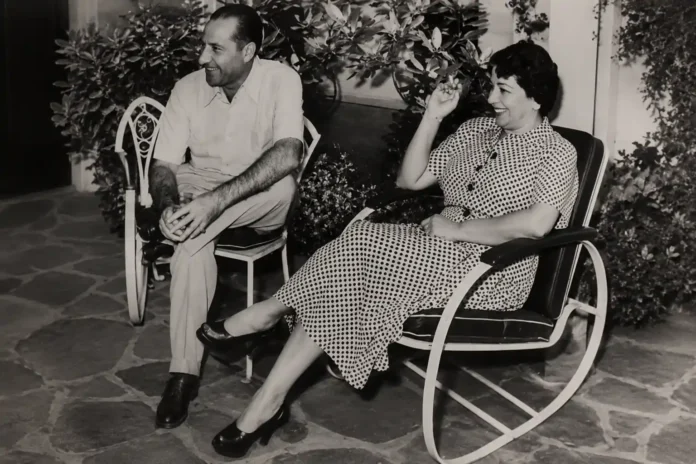

Lauretta Giegerman was the longtime wife of New York crime figure Frank Costello. Records also identify her as Loretta Geigerman and Loretta B. Costello. Born in Manhattan in 1894, she spent most of her adult life privately. Her story spans marriage, federal records, the 1957 shooting, and Costello’s 1973 death.
Frank was born Francesco Castiglia and became a major American Mafia figure. Lauretta later appeared in federal tax records through 1976. Her story reached new audiences through The Alto Knights in 2025. Debra Messing played Bobbie Costello opposite Robert De Niro.
Who Was Lauretta Giegerman?
Lauretta Giegerman was a private historical figure tied closely to American organized crime. Loretta Geigerman is another form of her name. She became known mainly as Frank Costello’s wife. Her life placed her near major events in New York mob history.
Costello became known as the “Prime Minister of the Underworld.” His public image brought intense attention from newspapers and law enforcement. Lauretta never developed a similar public persona. Her historical importance comes from her documented place within the Costello household.
Lauretta Giegerman’s Name, Spelling, and Historical Records
Lauretta, Loretta, Bobby, and Bobbie: Why Her Name Appears Differently
Historical records use both Lauretta Giegerman and Loretta Geigerman. Federal material also identifies her through her married Costello name. Loretta B. Geigerman appears in biographical and family records. Bobbie Costello became another familiar form of her identity.
Newspaper captions used the nickname “Bobby” during Frank Costello’s lifetime. Modern searches often use “Bobbie” instead. These spelling variants now appear throughout biography summaries and historical references. Accurate identification depends on connecting those names to the same woman.
Federal and Genealogical Records Confirming Her Identity
An FBI index lists “Costello, Lauretta” as Frank Costello’s wife. The entry also gives Lauretta Giegerman as an alternative name. It connects her directly with the identified LCN figure. This federal record offers unusually clear identity evidence.
Family records also connect the Geigerman name with New York. A Manhattan marriage index records Jacob Geigerman marrying Celie Josephs in 1888. Genealogical records also identify Dudley Geigerman as Jacob’s son. These records help establish the broader family structure.
Early Life and Family Background
Birth and Childhood in Manhattan
Lauretta was born on October 28, 1894, in Manhattan. New York County was changing rapidly during the 1890s. Immigrant communities shaped many neighborhoods across the growing city. Her childhood developed within this crowded urban environment.
European immigrants brought distinct languages and family traditions into New York. Working-class families also faced changing economic conditions. Public records provide only limited details about Lauretta’s formative years. Her later biography should not be filled with invented childhood stories.
German-Jewish Family Roots and Parents
Her family is commonly identified with German-Jewish roots. Jacob H. Geigerman was her father. Her mother appears in records as Cecelia Josephs or Celie Josephs. Their 1888 Manhattan marriage appears in a historical city index.
This background placed Lauretta within New York’s Jewish immigrant community. Frank Costello came from an Italian Catholic family. Their marriage therefore crossed both ethnic and religious lines. That union became part of their documented family history.
Lauretta Giegerman’s Siblings and Large Family
Family listings name Ruth and Harold among Lauretta’s siblings. Jessie and Jerome also appear in those family accounts. Sidney and Theodore appear alongside William. The household therefore included several children.
Dudley Geigerman also appears in later federal testimony involving the family. Harold Geigerman appears beside him in the same record. Their names became important beyond basic genealogy. Both later appeared in testimony concerning Bayou Novelty Co.
Education and Life Before Public Attention
Detailed school records for Lauretta are not firmly documented. Basic schooling was common within Manhattan’s expanding public education system. Literacy and arithmetic formed core parts of elementary schooling. Higher education remained less common for many women of her generation.
Women’s education changed steadily during the early 20th century. More women also entered the workforce. Lauretta’s later public record remains focused on marriage and family life. Claims about specific schools should therefore be treated carefully.
Lauretta Giegerman’s Showgirl Career and Life Before Marriage
A contemporary TIME profile called Loretta an “onetime show girl.” That description appeared in 1949. TIME used her nickname “Bobby” in the same passage. It did not provide detailed Broadway production credits.
Later biographies expanded the description into a Broadway showgirl career. Some also connect her with vaudeville theaters and cabarets. Confirmed theater credits remain far less detailed than those later claims. The safest historical description remains TIME’s contemporary showgirl reference.
Early 1900s New York had a large entertainment scene. Theater circles included stage performers and choreographed routines. Motion pictures were also beginning to reshape popular entertainment. Lauretta’s documented professional description remains much narrower.
How Lauretta Giegerman Met and Married Frank Costello
How Lauretta Giegerman Met Frank Costello
Frank Costello was still Francesco Castiglia during his younger New York years. One account says Lauretta was connected through a close friend. Other versions describe neighborhood familiarity between their families. Both lived within New York’s dense immigrant communities.
A detailed mob history says Frank met Loretta in 1914. It identifies her as a companion’s younger sister. Their relationship moved toward marriage that same year. The marriage became the central documented link between their families.
The 1914 vs. 1918 Marriage-Date Conflict
The stronger historical date for their marriage is September 1914. One established biography gives September 22, 1914. Another detailed account gives September 23, 1914. Both place the wedding in 1914 rather than 1918.
Some modern biographies still repeat 1918. The 1914 date better matches established Frank Costello histories. Frank was using the Costello name around this marriage period. Their marriage then lasted until he died in 1973.
Marriage and Private Life With Frank Costello
Life as the Wife of a Powerful Crime Figure
Frank’s criminal career brought government investigations and intense press coverage. Law enforcement also followed his business and political connections. Rival threats later added another layer of danger. Lauretta remained far less visible than her husband.
She rarely appeared in interviews or major public events. Her private domestic life stayed separate from Frank’s public reputation. No reliable evidence places her inside Mafia operations. Federal records instead show her through marriage and financial matters.
Their Central Park West Apartment and Sands Point Home
TIME described the Costellos living on Central Park West. Their Manhattan home was a seven-room apartment. Annual rent was reported as $3,600. One maid had reportedly worked there for 15 years.
The couple also owned a summer home at Sands Point. TIME described that property as having 12 rooms. Its reported value was $34,000. Frank maintained a small peach orchard there.
Later descriptions sometimes identify the Majestic Apartments at 115 Central Park West. They also name apartment 18F and decorator James Mont. Stories mention a gold-plated grand piano and slot machines. Contemporary documentation gives the clearest baseline for their household.
Did Lauretta and Frank Costello Have Children?
Frank Costello and Lauretta remained childless during their marriage. TIME described the Costellos as a childless couple in 1949. Later historical biographies repeat the same basic fact. No reliable explanation establishes why they had no biological children.
Frank Costello’s Rise and Lauretta’s Place in American Mob History
Frank Costello’s Rise in the American Underworld
Frank rose through New York’s underworld during the Prohibition era. Bootlegging and illegal alcohol created enormous criminal markets. He later became strongly associated with gambling businesses. Political connections also became central to his reputation.
Costello developed a reputation for negotiation rather than open violence. His influence extended beyond ordinary street crime. Law enforcement watched his finances and political relationships closely. The American Mafia eventually treated him as a major strategist.
Luciano, Lansky, Genovese, and Other Underworld Figures
Lucky Luciano became one of Frank’s most important criminal associates. Meyer Lansky also worked within the same underworld network. Bugsy Siegel belonged to this wider circle. Vito Genovese later became Frank’s strongest leadership rival.
Other major names included Gaetano Lucchese and Ciro Terranova. The Morello crime family formed part of New York’s earlier underworld history. These crime networks shaped Frank’s rise. Lauretta lived beside him as those power struggles developed.
Was Lauretta Giegerman Involved in Crime?
No reliable public evidence identifies Lauretta as a Mafia operator. She was not documented as an organized crime leader. Her name does appear in federal tax litigation. Those records concern financial liability rather than Mafia membership.
The distinction is clear in the surviving federal material. Frank faced extensive criminal and tax scrutiny. Lauretta appeared as his wife and joint taxpayer. That does not establish participation in his criminal operations.
The 1957 Assassination Attempt and Lauretta’s Rare Public Appearance
Frank survived an assassination attempt in Manhattan during 1957. Vincent “The Chin” Gigante became associated with the shooting. The attack happened in Frank’s Central Park West apartment lobby. A bullet caused a scalp wound.
Lauretta appeared publicly during the aftermath on May 3, 1957. She accompanied Frank through hospital and police activity. Roosevelt Hospital treated his wound. Press photographers captured Lauretta shielding part of her face.
Theatrical agent William Kennedy was also with the Costellos that evening. Frank later went to the West 54th Street police station. Detectives questioned him after hospital treatment. The incident became a major moment in Mafia history.
Lauretta Giegerman’s Tax Records and Financial History
Joint and Individual Tax Cases Before Frank Costello’s Death
Federal tax disputes followed Frank for decades. Loretta B. Costello appeared with him in several proceedings. Joint liability covered several years during the 1940s. The litigation later continued for many years.
A 1976 decision addressed tax years from 1941 through 1954. Some notices covered Frank alone. Others covered Frank and Loretta jointly. These records provide documented financial history for the Costello household.
Earlier tax matters also involved years such as 1927 and 1928. Records from this period extended into the 1930s. Judgments and collections continued during the 1940s. Federal tax enforcement therefore touched the family long before Frank’s death.
The 1976 Tax Court Case
The key case was Frank Costello, Deceased, and Loretta B. Costello v. Commissioner. The U.S. Tax Court filed its opinion on December 29, 1976. Loretta remained a named petitioner. The dispute involved federal income tax liabilities.
Stipulated decisions were entered against Loretta on July 20, 1976. The court later continued issues involving Frank’s estate. These proceedings document Lauretta after his 1973 death. They provide a rare legal snapshot of her later life.
Frank Costello’s Estate and Lauretta as Sole Heir
Frank Costello died intestate on February 18, 1973. The Tax Court identified Loretta as his widow. It also called her his sole heir. No permanent estate administrator had been appointed.
This record gives Lauretta a clear legal position after Frank’s death. She was directly connected to his estate. The record also separates documented inheritance from speculative net-worth claims. Her status as sole heir is established in federal litigation.
The Geigerman Family’s Connection to Bayou Novelty Co.
Senate testimony connected Dudley Geigerman with Bayou Novelty Co. Harold Geigerman was named as another partner. Philip Kastel confirmed both men’s involvement. G. R. Brainard was also identified within the partnership.
The testimony asked whether the Geigermans were related to Frank Costello. Kastel answered that they were related by marriage. He also confirmed Loretta Costello’s Geigerman maiden name. The record therefore links family history with a documented business investigation.
The hearing also questioned Frank’s interest in the company. Kastel described a joint venture involving Costello. This evidence concerns business connections around Lauretta’s relatives. It does not establish Lauretta as an operator herself.
Frank Costello’s Death and Lauretta Giegerman’s Final Years
Frank Costello’s Death in 1973
Frank Costello died on February 18, 1973. He was 82 years old. A heart attack led to treatment at Doctors Hospital. His death ended a marriage lasting nearly six decades.
His funeral arrangements involved Frank E. Campbell’s establishment. About 50 relatives and others reportedly attended. Burial followed at St. Michael’s Cemetery in Elmhurst. Frank was placed inside a private mausoleum.
The mausoleum was bombed in 1974. Carmine Galante was later linked to that act. Dudley Geigerman appeared around the funeral period. The episode became another strange chapter in Costello’s organized crime legacy.
What Happened to Lauretta After Frank Costello Died?
Lauretta became Frank’s widow after his 1973 death. Federal litigation shows her active in legal proceedings during 1976. She faced stipulated Tax Court decisions that July. The court also recognized her as Frank’s sole heir.
Her public presence remained limited outside those records. News stories did not turn her into a public figure. The surviving legal record provides the strongest later-life evidence. It places her clearly within Frank’s estate and tax matters.
When Did Lauretta Giegerman Die?
A firm death date for Lauretta should not be stated as established. Federal proceedings document Loretta B. Costello during 1976. That record rules out claims placing her death in 1973. Her later final years remain poorly documented.
Lauretta Giegerman in The Alto Knights and Modern Popular Culture
Debra Messing as Bobbie Costello
The Alto Knights returned the Costello story to popular culture in 2025. Debra Messing played Bobbie Costello. Robert De Niro portrayed Frank Costello. He also played rival mob boss Vito Genovese.
The Barry Levinson film opened on March 21, 2025. Warner Bros. Pictures handled its American theatrical release. The film later reached home and streaming audiences. It gave modern viewers a dramatized version of Frank’s marriage.
Historical Lauretta vs. the Film’s Bobbie Costello
The film presents Bobbie as a strong influence on Frank. Debra Messing gives the character a larger dramatic presence. Their Sands Point life also becomes part of the screen relationship. These scenes help shape the movie’s private version of Costello.
Historical biography requires a narrower standard. Film dialogue can combine fact with dramatization. Lauretta’s verified record centers on marriage and documented public events. The movie should not replace those records as factual biography.
Lauretta Giegerman’s Legacy and Historical Significance
Lauretta Giegerman occupies a small but real place in American history. Her marriage connected her with Frank Costello for decades. Federal records place her in major tax proceedings. Photographs also connect her with the famous 1957 shooting aftermath.
Her story adds a private dimension to American Mafia history. It also connects family life with New York mob history. Books and documentaries usually focus much more heavily on Frank. Modern interest has expanded through The Alto Knights.
Old photographs and legal documents now provide the strongest historical foundation. They show a woman who remained outside organized crime leadership. Her significance comes from documented proximity to major events. That record is more useful than invented personality stories.
Conclusion
Lauretta Giegerman was also recorded as Loretta Geigerman and Loretta B. Costello. She married Francesco Castiglia in September 1914. Frank later became one of New York’s most influential organized crime figures. Their marriage lasted until he died in 1973.
Her record includes the 1957 shooting aftermath and federal tax litigation. In 1976, the Tax Court identified her as Frank’s sole heir. The Alto Knights revived the Bobbie Costello name for modern audiences. Her biography is strongest when built from documented facts rather than Mafia mythology.
More Celebrity Profiles: Jean Goebel: Biography, Art, Family, Career, Life and Legacy
FAQs
Who was Lauretta Giegerman?
Lauretta Giegerman was Loretta Giegerman, Frank Costello’s wife. She was a private Manhattan woman closely connected to American organized crime history.
When was Lauretta Giegerman born?
Lauretta Giegerman was born on October 28, 1894, in Manhattan, New York County. Historical records connect her early life with New York.
Did Lauretta Giegerman have children?
Lauretta Giegerman and Frank Costello had no biological children. Contemporary historical reporting described their marriage as childless.
What was Lauretta Giegerman’s role in Frank Costello’s life?
Lauretta was Frank Costello’s wife and private domestic partner. Federal records later identified Loretta B. Costello as his widow and sole heir.
What is known about Lauretta Giegerman’s profession?
TIME described Loretta Giegerman as an “onetime show girl.” Detailed Broadway theater credits for Lauretta Giegerman are not firmly established.
Why is Lauretta Giegerman historically significant?
Lauretta Giegerman was Frank Costello’s longtime wife. Her record connects Mafia history with federal tax litigation, the 1957 shooting, and The Alto Knights.
When did Lauretta Giegerman die?
Lauretta’s exact death date is not firmly established. Federal Tax Court records document Loretta B. Costello in legal proceedings during 1976.
Why is Lauretta Giegerman also called Loretta Geigerman?
Historical records use Lauretta Giegerman and Loretta Geigerman for Frank Costello’s wife. Federal records also identify her by the Costello surname.