
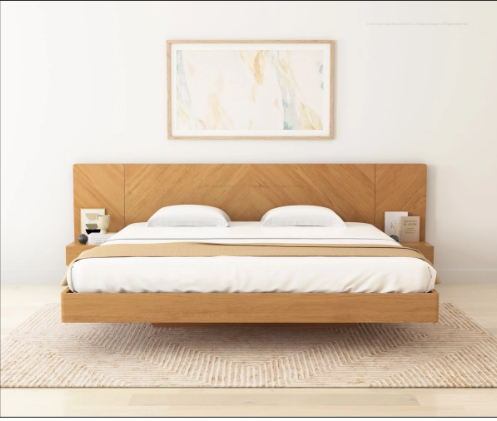

Ever walked into a bedroom and wondered how the bed seems to hover above the floor? That floating effect can make an ordinary sleeping area feel more open, refined, and contemporary. The design is not simply about appearance. It comes from the way the bed is supported and how its structure is integrated into the room.
A floating bed frame is designed to create the visual impression that the mattress platform is suspended above the floor, usually with the supporting structure concealed from view. This style has become popular in contemporary bedrooms where clean lines, open floor space, and natural materials come together.
Key Takeaways
- Floating beds create a hovering appearance by concealing their support structure.
- Cantilevered designs can give bedrooms a lighter visual feel.
- Visible floor space can make a room appear more open.
- Bed size and surrounding clearance should be considered before choosing a design.
- Wood can bring warmth to an otherwise sleek bedroom setting.
- Construction and weight support are just as important as the visual design.
What Is a Floating Bed Frame and How Does It Work?
The floating effect comes from hiding the main support beneath the bed platform. Depending on the design, the structure may use a recessed base, central support, wall-mounted elements, or a cantilevered construction.
A cantilever works by supporting a structure from a point that extends outward, creating the appearance that part of the bed is unsupported. Furniture designers can use this principle to reduce the amount of visible structure beneath the mattress.
The result is a bed that appears to sit above the floor. The open area underneath also allows more of the flooring to remain visible, which can change the way the entire bedroom feels.
Why Floating Beds Suit Modern Bedroom Design
Clean silhouettes and uncluttered spaces are central to modern bedroom design. A floating bed fits naturally into this style because its concealed base reduces visual bulk.
The effect can be enhanced with:
- Recessed lighting beneath the platform
- Simple bedside tables
- Neutral wall colors
- Minimal decorative pieces
- Natural wood finishes
- Soft bedding and textured fabrics
The goal is to let the bed’s shape remain visible without filling the room with unnecessary details.
How Floating Beds Can Make a Bedroom Look Larger
Furniture that sits directly on the floor can make a small bedroom feel visually heavier. A raised platform exposes more flooring, allowing the eye to travel beneath the bed.
This can be useful when considering how to make a room look bigger. The effect will not physically increase the room’s size, but it can create a greater sense of openness.
Keeping pathways clear can strengthen the effect. Light-colored flooring, appropriately sized furniture, and good natural lighting can also help maintain an airy appearance.
Floating Bed vs Traditional Bed Frame: What’s the Difference?
The biggest difference is the visual relationship between the bed and the floor.
A traditional frame usually has visible legs, rails, or a substantial base. A floating design hides much of this structure, creating a lighter appearance.
| Feature | Floating Bed | Traditional Bed |
| Visual effect | Light and suspended | Grounded and substantial |
| Floor visibility | Greater | Usually lower |
| Style | Contemporary | Wide range of styles |
| Support | Concealed or recessed | Usually visible |
| Cleaning | Open space may be easier to access | Depends on the frame |
Neither style is right for every bedroom. The choice depends on the room, furniture arrangement, personal taste, and construction requirements.
Modern Master Bedroom Ideas With Natural Wood
Floating designs do not have to look cold or overly minimal. Natural wood can bring warmth and visible grain into a contemporary bedroom.
For modern master bedroom ideas, consider pairing a streamlined bed with warm wood nightstands, soft bedding, textured rugs, and subtle lighting.
A well-made wooden bed can also provide a stronger sense of permanence than lightweight furniture. The natural variation in grain gives the bedroom character without requiring elaborate decoration.
Choosing the Right Bed Size for a Cantilevered Design
Bed size becomes especially important when working with a floating or cantilevered design. The mattress may fit comfortably on the platform, but the complete structure still needs enough room around it.
An extra-large king-size bed can create an impressive centerpiece in a spacious suite, but it requires generous clearance around the sides and foot of the bed.
Before selecting a large design, measure:
- Wall-to-wall room dimensions
- Available walking space
- Door and closet clearance
- Nightstand placement
- Window positions
- Overall bed dimensions, including the frame
Checking the full dimensions rather than relying only on mattress size can prevent an overcrowded layout.
How Wood Furniture Works With Floating Bed Designs
Natural wood can soften the clean lines of a floating bed. A wood finish adds texture and warmth while keeping the overall bedroom visually calm.
Wood king bedroom furniture can work particularly well in larger rooms where the bed needs supporting pieces that feel substantial without competing with its design.
Wood can also be introduced through nightstands, benches, dressers, or accent pieces. Keeping the finishes within a similar color family can help the room feel connected.
The Rural Art’s bedroom collection reflects this preference for handcrafted furniture, natural wood character, and designs that can bring warmth into different interior styles. Its range includes solid wood beds and bedroom pieces, giving homeowners different ways to build a cohesive bedroom setting.
Things to Consider Before Choosing a Floating Bed
The visual effect is only one part of the decision. Check the construction and room requirements before choosing a design.
- Confirm the frame’s weight capacity.
- Check how the support structure is installed.
- Measure the room and available walking space.
- Consider mattress height and thickness.
- Check clearance for bedside furniture.
- Think about access to the space underneath.
- Review installation requirements carefully.
A floating appearance should never come at the expense of structural stability.
Is a Floating Bed Right for Your Bedroom?
A floating design can work well if you enjoy contemporary furniture, visible floor space, clean lines, and a lighter visual effect. It can be particularly attractive in spacious bedrooms where the bed serves as the main focal point.
A traditional bed may be more suitable if you prefer a substantial frame, built-in storage, classic detailing, or a design that sits firmly on the floor.
The best choice should reflect the room’s proportions as well as the way you use the space.
Create a Bedroom That Feels Light and Personal
A floating bed can change the character of a bedroom by reducing visual bulk and drawing attention to the space around it. Yet the bed should still feel connected to the rest of the room through materials, colors, proportions, and supporting furniture.
The Rural Art‘s focus on handcrafted wood furniture offers another direction for homeowners who want natural character alongside contemporary bedroom styling. Looking at construction, dimensions, materials, and the overall room layout can help you select a bed that feels right for both the space and your everyday routine.
FAQs
1. What makes a bed look like it is floating?
A concealed or recessed support structure creates the appearance that the bed is hovering above the floor. Some designs use cantilevered construction, while others create the effect through a hidden central base.
2. Are floating beds sturdy?
A properly designed floating bed can be sturdy, but strength depends on the construction, materials, support system, and installation. Always check the manufacturer’s weight specifications.
3. Can a floating bed work in a small bedroom?
Yes. The visible floor beneath the bed can create a lighter visual effect. Choosing the correct bed size and leaving enough walking space is essential.
4. Can floating beds be made from wood?
Yes. Wood can be used to create floating and platform-style beds while adding natural grain and warmth to contemporary bedroom interiors.