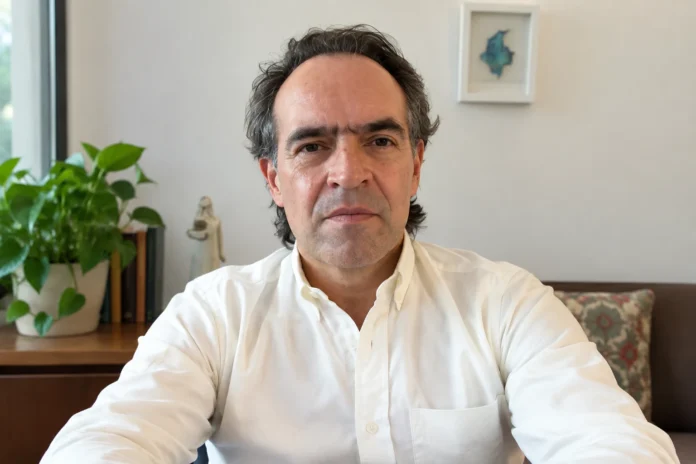
Carlos Scola Pliego is a Spanish filmmaker with a long behind-the-camera career. Film databases also credit him professionally as Carlos Scola. His film industry work reached international cinema during the 1980s. Documentary filmmaking later became an important part of his film credits.
He worked as a script supervisor before moving into assistant director roles. Carlos later became a director and writer on his own projects. Producer credits also form part of his verified screen career. His documented work stretches from the early 1980s into the 2000s.
Public interest grew through Sade Adu, whose full name is Helen Folasade Adu. Carlos became her celebrity spouse through their 1989 marriage. Their divorce followed in 1995, while privacy shaped his later public record. His current status has far less documentation than his verified biography.
Who Is Carlos Scola Pliego?
Carlos Scola Pliego’s Identity and Professional Background
Carlos Scola Pliego is a Spanish film professional with several production roles. His credits include script supervisor and assistant director work. He later became a documentary director, writer, and producer. These jobs place his career firmly within Spanish cinema.
Carlos worked on international productions from the early 1980s onward. IMDb records nine assistant-directing credits under Carlos Scola. His film production career also includes documentary filmmaking. His 1989 marriage to Sade Adu later expanded his public profile.
What Is Actually Verified About His Biography?
Film records support his work as a Spanish film director. Sade’s official biography also confirms their 1989 marriage. IMDb records the divorce in 1995. These points belong to his strongest documented public record.
His birth date and birth year remain outside firm documentation. His age and exact birthplace also lack dependable confirmation. Education and parents remain largely private. Siblings and wider family background receive little reliable coverage.
Religion and residence have attracted speculation in secondary profiles. Finances and net worth also lack public financial evidence. Current occupation and relationship status receive similarly limited documentation. Privacy therefore remains central to his modern biography.
Carlos Scola Pliego’s Early Life, Education, and Background
Carlos was reportedly born in Spain and raised within a Spanish background. Details about his childhood home remain private. His parents and siblings rarely appear in established biographical material. Little is documented about his wider family or upbringing.
Reported profiles have linked him with Economics and Law studies. Business administration training has also appeared in secondary biographies. A specific university or film school has not been firmly established. Formal qualifications therefore remain among his least documented details.
His practical experience became clearer during the late 1970s and early 1980s. Film production taught skills involving scheduling and continuity. That work also required technical fluency and production knowledge. No primary interview provides a complete early-life account.
Carlos Scola Pliego’s Film Career
Early Work in Script Supervision and Film Production
Carlos built early experience through continuity and production planning. Opera Prima credited him with script supervision in 1980. That role required matching dialogue and visual continuity between scenes. It placed him inside professional Spanish cinema early.
He also worked on productions linked to the late 1970s. La boda del señor cura is associated with 1979 career accounts. In 1981, Dos y dos, cinco credited him as second assistant director. These jobs marked his move toward production crew management.
Assistant Director Work on Spanish and International Films
Carlos became busier as an assistant director during 1982 and 1983. Black Commando lists him as second assistant director. Hundra gave him another assistant-directing credit. G’olé! also placed him within the directing team.
Scarab credited Carlos as third assistant director in 1983. Curse of the Pink Panther involved Spanish production work. He later assisted on Eleni during 1985. These projects strengthened his international production experience.
Never Say Never Again and Other Major International Credits
Never Say Never Again became his most recognizable international film connection. The 1983 James Bond production starred Sean Connery. Carlos served as second assistant director for work in Spain. His role was uncredited on the finished production.
The film was directed by Irvin Kershner. Kim Basinger also appeared in the production. Carlos worked within the Spanish production crew. That role added a major franchise to his assistant-directing career.
Christopher Columbus
Carlos joined Christopher Columbus in 1985. The television miniseries used production teams across several countries. He served as assistant director for Spain. IMDb lists his work across all four episodes.
The production featured Gabriel Byrne in the title role. Virna Lisi also appeared in the international cast. Carlos handled Spanish production logistics within the assistant-directing team. The credit shows sustained work beyond single-film assignments.
Documentary Directing, Writing, and Producing
Carlos moved into documentary filmmaking with Ngira: Gorilas en la montaña. The 1988 production runs about 25 minutes. He worked as co-director and producer. The project focused on gorilla filming in Africa.
The documentary involved African environments and mountain gorillas. Research places production in the Democratic Republic of the Congo region. Other locations included Rwanda and Kenya. The project expanded his work beyond assistant direction.
Donde termina el corazón followed in 1989. Carlos served as director and writer. The 95-minute documentary moves from the Ituri Forest toward Nairobi. Its broader subject concerns African communities and visual storytelling.
Later Film and Production Credits
Carlos later produced Capitanes de la Arena in 2001. That production was connected with Salvador in Brazil. His later career returned to a major film in 2007. Goal II: Living the Dream listed him under additional crew.
Carlos worked as a dialogue coach on the football film series. The credit shows professional activity during the 2000s. It does not list him as the film’s director. This distinction gives a clearer picture of his later career.
Carlos Scola Pliego’s Work in Music Videos
Work Connected With Sade’s Promise Era
Sade released Promise in 1985 during her rapid international rise. Three music videos from that era involved Carlos. He worked as an assistant director on those productions. This professional connection developed before their marriage.
The video work linked Spanish film production with the music industry. Carlos already had experience in international production by then. Sade was still based mainly in London. Their creative paths later crossed again in Spain.
Miguel Ríos and Other Music-Video Work
Carlos also entered Spanish music video production in 1986. He co-directed Ruido de fondo for Miguel Ríos. José Luis Berlanga shared the directing work. The project used unusual combinations of still images and editing.
Production involved thousands of photographs before final assembly. The visual production took almost one month. That approach differed sharply from ordinary filmmaking. It showed Carlos working beyond conventional film sets.
How Did Carlos Scola Pliego Meet Sade Adu?
Their First Professional Connection
Carlos first entered Sade Adu’s orbit through professional video work. The connection developed during the Promise period in 1985. He assisted with three music videos from that era. Their first link therefore came through production work.
Sade was becoming internationally famous at the time. Carlos remained part of a behind-the-camera creative circle. Their paths involved both film work and music production. The personal relationship developed later in Spain.
Reconnecting in Madrid
Sade later left London and spent significant time in Madrid. She reconnected with Carlos there during the late 1980s. Their professional acquaintance then became a personal relationship. Spain became an important base for that period.
The relationship developed before their 1989 marriage. Media attention around Sade was already intense. Carlos remained much less visible in the press. Their shared privacy limited detailed public coverage.
Stronger Than Pride Recording Period
Sade recorded Stronger Than Pride before its 1988 release. Carlos accompanied her during recording sessions in France. Their relationship was established during this creative period. European travel also formed part of their life together.
The album came before their formal marriage. Carlos was therefore present during an important music-career period. His presence does not prove authorship or songwriting influence. It does establish a clear relationship timeline.
Carlos Scola Pliego and Sade Adu’s Marriage
When Did Carlos Scola Pliego and Sade Adu Marry?
Carlos and Sade married in Spain during 1989. Sade’s official biography confirms that marriage year. EL PAÍS places the ceremony in October 1989. Reports described the setting as a Spanish castle.
IMDb lists February 11, 1989 as the wedding date. Madrid remained closely linked with their married life. Viñuelas Castle appears in later accounts of the wedding. The marriage joined a Spanish film director with an international music star.
Their Life Together in Spain
The couple built much of their private life around Madrid. Sade had moved from London during this period. Carlos continued his film career while she pursued music. Their household remained largely outside celebrity coverage.
Stronger Than Pride remained part of their shared timeline. Recording and touring shaped Sade’s professional commitments. Carlos faced his own film responsibilities. Press attention continued despite their privacy preference.
Wedding-Date Claims and Conflicting Sources
Sade’s official biography records the marriage simply as 1989. EL PAÍS gives October 1989 for the ceremony. IMDb instead lists February 11, 1989. A primary marriage record has not settled the exact wedding date.
The strongest confirmed fact remains the 1989 marriage year. Later accounts sometimes add specific dates or locations. Those details should not replace the confirmed year. This keeps the public record clear.
Why Did Carlos Scola Pliego and Sade Adu Divorce?
Separation and Divorce Timeline
Carlos and Sade entered a legal marriage in 1989. Their relationship later broke down before the formal divorce. The divorce was completed in 1995. That created a legal marriage lasting about six years.
The pair kept the separation largely private. Neither built a public campaign around the breakup. Contemporary reporting focused more on Sade’s emotional recovery. Their private circumstances remained outside detailed public discussion.
What Sade Has Said About the Relationship’s End
Sade later described the breakup as a very sad situation. She said she left quickly with a small bag. The emotional impact lasted for about five years. Her interview avoided a detailed public explanation of the divorce.
That account gives the clearest personal description of the separation. Carlos did not build a public narrative around it. The relationship therefore remains defined by limited firsthand comments. Privacy continued after their marriage ended.
Did Carlos Scola Pliego and Sade Adu Have Children?
Carlos and Sade had no publicly documented children together. Their marriage ended before Sade became a mother. Her child, Izaak Theo Adu was born in 1996. Carlos was not the child’s father.
Later biographies identify Jamaican music producer Bob Morgan as Izaak’s father. Sade’s motherhood therefore began after her marriage to Carlos. Their divorce created no documented shared-parenting relationship. The family histories remained separate afterward.
Did Carlos Scola Pliego Influence Sade’s Music?
Stronger Than Pride and Their Relationship Timeline
Stronger Than Pride arrived in 1988 during their relationship. Carlos joined Sade during recording sessions in France. Madrid also formed part of their life together. The album appeared before their 1989 marriage.
This timeline links Carlos with an important creative period. It does not give him songwriting or production credit. Sade’s music career remained professionally distinct. Their relationship provides context rather than documented authorship.
Love Deluxe and Breakup Interpretations
Love Deluxe arrived in 1992 before the legal divorce. Its songs explore love and loss with unusual emotional force. Themes also include desire and intimacy. Listeners often connect those subjects with Sade’s relationship history.
The album also deals with memory and emotional survival. Heartbreak and longing appear within its broader songwriting. Separation themes encouraged later fan interpretation. Those readings remain interpretations rather than confirmed biography.
Documented Influence vs Fan Speculation
No documented credit identifies Carlos as an inspiration for specific Sade songs. Fan claims often connect him with breakup themes. Available evidence supports the relationship timeline instead. It does not establish direct creative authorship.
Sade’s recording career regularly examines love and emotional change. Those subjects existed beyond one relationship. Carlos forms part of her personal history. Claims about specific songs should therefore remain speculation.
What Happened to Carlos Scola Pliego After the Divorce?
His Later Professional Work
Carlos continued receiving professional credits after the 1995 divorce. He produced Capitanes de la Arena in 2001. The project had connections with Salvador in Brazil. It added production work to his post-divorce career.
His next major film record appeared in 2007. Goal II: Living the Dream listed him as dialogue coach. IMDb places that work under additional crew. It remains his clearest later film-industry credit.
Why He Disappeared From the Public Spotlight
Carlos had always worked mainly behind the camera. Public attention focused heavily on his former marriage. He gave few major interviews after the divorce. Celebrity news therefore had little new material to follow.
His professional activities also became less visible after 2007. Publicity and intrusive media never defined his film career. Cameras and headlines followed Sade far more closely. Carlos maintained a low public profile.
Where Is Carlos Scola Pliego Now?
Carlos has no firmly established current location in the public record. Spain and Europe appear frequently in later profiles. His residence and current home remain private. Current professional activities are also sparsely documented.
No verified current occupation dominates his 2026 profile. His relationship status also stays outside reliable public coverage. That privacy matches his long absence from the public spotlight. Film records remain clearer than his daily life.
Is Carlos Scola Pliego Still Alive?
The October 2024 Death Claim
A recent secondary report says Carlos died during October 2024. It places his cremation at El Escorial in Spain. The same report connects his final years with Madrid. It describes him as a filmmaker and writer.
The report also mentions Martina, dama de picas. Sara Pastor wrote the book linked with that appearance. It presents the event as part of his low-profile final years. The death claim remains reported rather than independently established.
What Reliable Sources Actually Confirm
Reliable film records confirm Carlos’s professional career. Sade’s official biography confirms their 1989 marriage. IMDb also records the divorce ending in 1995. These records do not provide an official obituary.
The October 2024 death report therefore remains unverified by a primary death notice. El Escorial appears only within later reporting. His precise current status in 2026 cannot be stated firmly. The established public record remains centered on film and marriage.
Books, Translation Credits, and Other Records Linked to Carlos Scola Pliego
Salvador: un apunte de filosofía sencilla
A publishing record lists Salvador: un apunte de filosofía sencilla under Carlos Scola Pliego. Biblioteca Nueva published the book in 2004. Google Books records 436 pages. The ISBN is 9788497422314.
The bibliographic record classifies Carlos as the author. Its subject material includes philosophy and political ideas. The publishing record itself is clear. Its identity link with the filmmaker remains unconfirmed.
El médico de Toledo Translation Credit
Carlos Scola Pliego also appears as a translator in publishing catalogs. Maeva lists him on El médico de Toledo. Matt Cohen wrote the historical novel. A 2023 Spanish edition carries the translation credit.
That edition belongs to Spanish-language publishing rather than filmmaking. The bibliographic record names the translator directly. However, it does not identify him as the filmmaker. The shared name therefore requires careful identity verification.
Spanish Corporate Records Bearing the Same Name
Spain’s BORME contains a corporate record for Carlos Scola Pliego. The filing names him as a company liquidator. It was signed in Madrid during 2005. The notice appeared through BOE publication in 2006.
This legal filing creates another public-record lead. It concerns a company and corporate liquidation. The record does not connect its signer with filmmaking. It should not establish a separate business career without identity verification.
Carlos Scola Pliego’s Net Worth and Financial Claims
No verified net worth figure is available for Carlos Scola Pliego. Online estimates sometimes place wealth between $1.5 million and $3 million. Those figures lack public financial records. They should not be treated as established assets.
His salary and career income were never publicly documented in detail. Investments and business disclosures also remain absent from reliable records. No verified financial filing establishes his personal wealth. Film career credits cannot prove a financial figure.
Verified Facts vs Commonly Repeated Claims
Facts Supported by Stronger Sources
Carlos worked in Spanish cinema before becoming widely known through Sade Adu. Dos y dos, cinco credited him in 1981. Black Commando followed during 1982. Several assistant-directing projects then arrived in 1983.
Those projects included Hundra and G’olé!. He also worked on Scarab. Never Say Never Again added major international production experience. Curse of the Pink Panther involved more Spanish assistant work.
Carlos later joined Eleni and Christopher Columbus in 1985. His documentary work expanded with Ngira: Gorilas en la montaña. Donde termina el corazón followed in 1989. These credits include director and writer responsibilities.
He also gained producer credits during his film career. Script supervisor work appears on Opera Prima. Goal II: Living the Dream provides a 2007 additional-crew credit. IMDb records his broad professional identity clearly.
Details That Remain Unverified or Disputed
His birth date and birth year are not firmly established. The same applies to age and exact birthplace. Hometown claims also lack strong public documentation. Parents and siblings remain outside reliable biographical records.
Reported profiles mention childhood and education without strong supporting records. Film school and university claims remain similarly uncertain. Some profiles name Economics and Law studies. Others describe him as a businessman or financial consultant.
Claims also describe him as a record industry executive. Roman Catholic religion appears in some secondary biographies. Height and remarriage claims lack solid documentation. His present residence and current occupation remain private.
Net worth estimates include $1.5 million and $3 million figures. The exact wedding date also remains disputed. February 11, 1989 appears in IMDb. EL PAÍS instead places the ceremony in October 1989.
The reported death in October 2024 presents another unresolved claim. El Escorial appears as the reported cremation location. No primary death notice establishes those details. They should remain described as reported information.
Why Carlos Scola Pliego Still Attracts Public Interest
Carlos remains interesting because his career connects film history with music history. Sade Adu remains one of modern music’s most private major artists. Their marriage links his name with enduring public curiosity. His own documentary filmmaking adds another reason for search demand.
Interest also reaches the Promise and Stronger Than Pride periods. Love Deluxe keeps relationship discussions active among fans. Celebrity culture often returns to Sade’s private life. Carlos remains central to her only documented marriage.
That interest gained fresh context in 2026. Sade entered the Rock & Roll Hall of Fame that year. The honor renewed attention around the band’s global music legacy. It also brought new attention to Sade’s personal history.
Carlos Scola Pliego’s Legacy
Carlos built a professional identity within Spanish cinema and international cinema. His early work involved script continuity and assistant direction. He later expanded into directing and writing. Producing also became part of his film career.
His international productions included Never Say Never Again. Christopher Columbus added sustained television experience. Ngira: Gorilas en la montaña showed his documentary filmmaking. Donde termina el corazón expanded that creative direction.
Music video work widened his visual career beyond cinema. Later dialogue coaching appeared on Goal II: Living the Dream. Sade Adu remains central to public interest in him. Yet his professional legacy extends beyond that marriage.
Conclusion
Carlos Scola Pliego built a varied career as a Spanish film professional. He worked in script supervision and assistant direction. Later credits established him as a director and writer. He also became a producer within documentary filmmaking.
His international cinema work included Never Say Never Again. Christopher Columbus added another major production credit. His own projects included Ngira: Gorilas en la montaña. Donde termina el corazón followed during 1989.
His marriage to Sade Adu began in 1989. Their divorce was completed in 1995. Privacy later limited his public record and personal biography. Verified film credits remain the clearest foundation for understanding his legacy.
FAQs
Who is Carlos Scola Pliego?
Carlos Scola Pliego is a Spanish filmmaker. He worked as an assistant director and writer. He is also known for marrying Sade Adu.
How did Carlos Scola Pliego meet Sade Adu?
Carlos met Sade through Promise-era music-video work. He assisted on three videos. Their relationship later developed after reconnecting in Madrid.
When did Carlos Scola Pliego marry Sade Adu?
Carlos Scola Pliego married Sade Adu in 1989. The official biography confirms that year. Later records give different specific dates.
When did Carlos Scola Pliego and Sade Adu divorce?
Carlos Scola Pliego and Sade Adu divorced in 1995. Their legal marriage began in 1989. It therefore lasted about six years.
Did Carlos Scola Pliego and Sade Adu have children?
Carlos and Sade had no documented children together. Izaak Theo Adu was born in 1996. Bob Morgan is identified as Izaak’s father.
What movies did Carlos Scola Pliego work on?
Carlos worked on Never Say Never Again and Christopher Columbus. His credits also include Eleni. He later directed his own documentaries.
Is Carlos Scola Pliego still alive?
Carlos reportedly died in October 2024. A secondary report places his cremation at El Escorial. No primary death notice confirms that claim.
Where is Carlos Scola Pliego now?
Carlos has no firmly verified current residence. Spain and Europe appear in later reports. His 2026 professional activities remain private.