
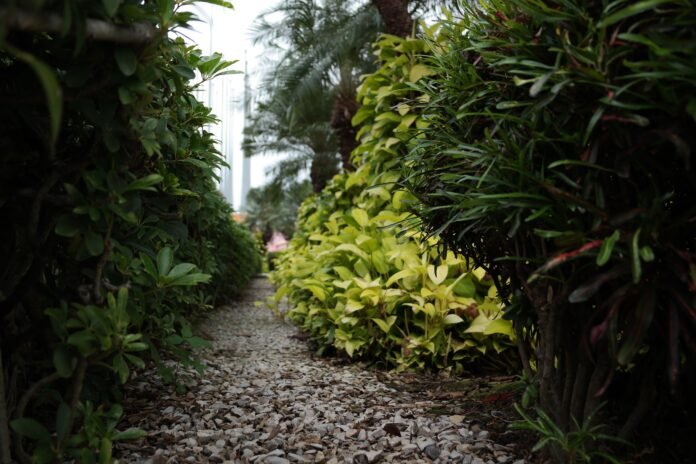

Gardening in central Florida rewards a very different set of decisions than gardening almost anywhere else in the country. Heat that persists for most of the year, a distinct wet season, sandy soils that drain almost immediately, and periodic cold snaps all combine to punish plant choices imported from temperate climates. Many struggling landscapes are not neglected, simply built from the wrong palette.
Soil is the first thing worth understanding. Much of the region sits on sand that holds very little water or nutrition. Water passes through quickly, taking dissolved fertiliser with it, which is why frequent light watering tends to produce shallow rooted plants that collapse in the first dry spell. Building organic matter into planting beds and mulching generously does more for long term plant health than any fertiliser schedule.
Plant selection follows from that reality. Natives and well adapted species such as coontie, muhly grass, firebush, beautyberry, walter’s viburnum, and simpson’s stopper handle heat, humidity, and rainfall swings without constant intervention. They also support local pollinators and birds. Ornamentals bred for cooler regions often survive their first season on nursery vigour alone and then decline once that reserve is spent.
Turf deserves a realistic assessment. St. Augustine remains popular and performs well in the right conditions, but it needs sunlight, and homeowners frequently fight a losing battle trying to grow it under mature oak canopy. Replacing deep shade lawn with groundcover, mulched beds, or shade tolerant planting eliminates a recurring source of frustration and reduces both water use and chemical inputs.
Irrigation causes more plant loss than drought. Overwatering encourages fungal disease, shallow rooting, and chinch bug pressure, and it wastes a considerable amount of water during a season when rainfall already exceeds demand. Systems fitted with functioning rain sensors, zoned appropriately for sun and shade, and adjusted seasonally rather than left on a single year round programme perform far better.
Drainage and grading are the unglamorous foundations of everything else. Flat lots with heavy summer rainfall need water directed deliberately away from foundations and out of low areas where it stands. Correcting grade, adding dry creek beds or french drains, and choosing planting suited to periodically saturated soil solves problems that no amount of replanting will fix.
Hardscape choices should be made with the same climate logic. Permeable surfaces, generous shade over seating areas, and materials that do not become uncomfortably hot underfoot make outdoor spaces genuinely usable during the months when they are least inviting. A beautifully built patio in full afternoon sun tends to sit unused for half the year.
Maintenance planning is the final piece and the one most often deferred. Pruning timing, mulch renewal, seasonal irrigation adjustment, and periodic soil improvement are modest tasks individually, but skipping them for a couple of seasons is what turns a well designed landscape into an overgrown one that needs expensive rescue work.
The practical conclusion is that a landscape which suits the climate needs less of everything: less water, less fertiliser, less replacement, and less weekend labour. Homeowners planning tampa landscaping work will get more value from a design conversation about soil, drainage, sun exposure, and long term maintenance than from a plant list chosen purely on appearance, because the choices made before anything is planted determine how the garden looks five years later.
READ ALSO: Personalized Wellness Plans: A Smarter Approach to Long Term Health