
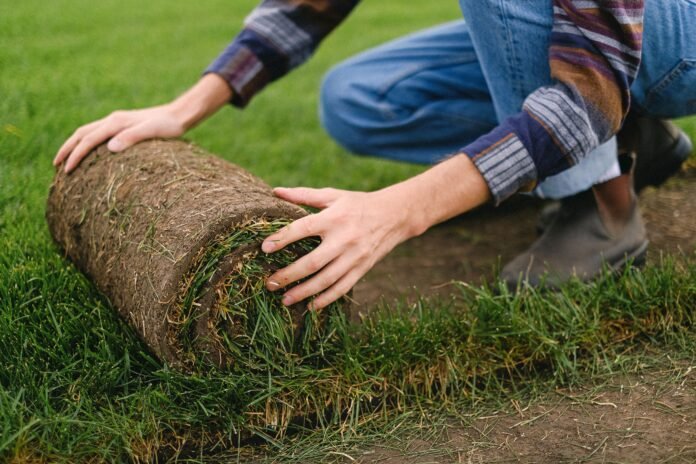

For property managers, HOA boards, and commercial developers, turf is rarely a purely aesthetic decision. The grass surrounding an office park, apartment community, retail center, or municipal facility must look presentable year-round, survive traffic and irrigation limitations, and fit a maintenance budget that will be scrutinized annually. Choosing well at installation determines a decade of those costs, which makes the specification decision far more consequential than the line item suggests.
Match the Grass to the Actual Use
Commercial sites contain very different zones, and specifying one grass for all of them wastes money in some areas and guarantees failure in others. High-visibility entrances and signage areas justify a premium turf with dense, fine texture. Common areas where residents and employees actually walk need durability and self-repair. Retention areas, roadside strips, and large low-traffic expanses call for something economical and drought-tough that will not demand irrigation forever.
A supplier growing the full range can specify by zone: a premium option where appearance sells, a hard-wearing choice where traffic concentrates, and an economical workhorse across acreage. Working with a commercial sod supplier Tampa projects rely on for this kind of zone-by-zone planning typically produces both a better-looking property and a lower total cost than a single blanket specification.
Count the Lifetime Cost, Not the Install Price
The cheapest installation is frequently the most expensive property. Turf that needs constant irrigation raises water bills every month for years. Grass poorly suited to shade thins and requires repeated re-sodding. Varieties that demand aggressive fertility and pest programs inflate landscape contracts indefinitely. Meanwhile, appropriate turf established properly reaches a low-maintenance equilibrium and stays there.
Run the comparison across five years, including water, maintenance contract implications, and expected re-sod frequency. That analysis routinely justifies spending modestly more upfront on the right variety and proper soil preparation.
Preparation Determines Longevity
Commercial sites often carry construction legacy: compacted subsoil, buried debris, poor grading, and irrigation designed on paper rather than tested in the field. Sod laid over these problems fails predictably and gets blamed on the grass. Insist on proper grading, decompaction, appropriate soil amendment, and verified irrigation coverage before delivery is scheduled. This is the least glamorous line in the budget and the one that protects everything above it.
Logistics and Scheduling
Commercial installations move in phases and change dates constantly. Your supplier needs the capacity to deliver full truckloads reliably, the flexibility to adjust cutting schedules when your timeline shifts, and the depth to serve multiple simultaneous phases. Confirm lead times in peak season, ask how they handle weather delays, and check references with other commercial buyers about consistency across an entire season rather than a single load.
The Payoff of Specifying Well
Commercial turf done right becomes invisible in the best way: it looks good in leasing photos, survives the traffic it receives, keeps maintenance predictable, and stops generating complaints and change orders. Specify by zone, count lifetime cost, insist on preparation, and choose a supplier with real capacity. Those four decisions, made once at the start, quietly determine what your property looks like and what it costs for the next decade.
READ ALSO: Club Pui Guide: Pui O Caravan Stay, Booking & Travel Tips