
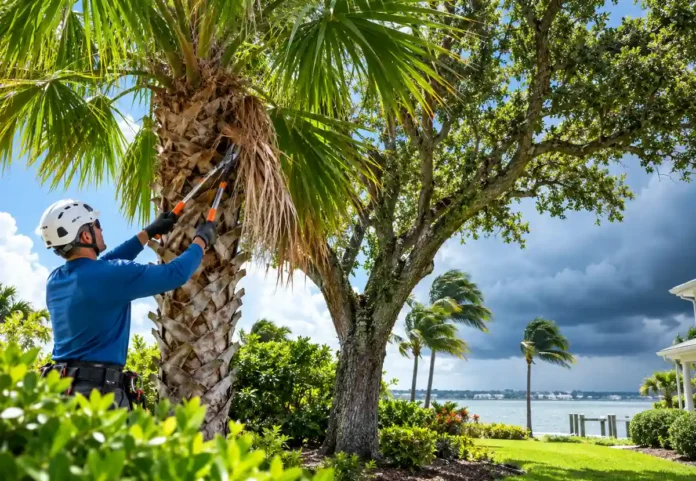

In Vero Beach, FL, palms and oaks are more than landscape features. They frame driveways, shade patios, define waterfront properties, and give neighborhoods their unmistakable Treasure Coast character. They also face the realities of Atlantic hurricane winds, heavy rain, saturated sandy soil, flying debris, and exposure to salt-laden coastal air. Scheduling professional tree pruning on the Treasure Coast before the busiest part of hurricane season can help property owners identify dead, damaged, overextended, or poorly positioned growth before it becomes a more urgent concern.
The purpose of storm-focused pruning is not to strip every tree bare. Healthy foliage, properly developed limbs, and stable branch structure are important parts of a tree’s ability to respond to wind. A sound plan removes documented hazards while preserving the natural form and health of the palm or oak.
For Vero Beach properties, that often means balancing safety around roofs, lanais, power service lines, pool cages, fences, docks, sidewalks, and parked vehicles with the long-term value of a mature landscape.
Why Hurricane Preparation Matters in Vero Beach, FL
Vero Beach in Florida has seasonal tropical weather. Mature oaks may have decades of growth with broad canopies over homes or outdoor spaces. Palms often line pools, condos, beaches, or parking lots. During storms, dead fronds, loose fruit, broken limbs, and hanging branches can become hazards. Wind isn’t the only issue; prolonged rain can saturate soil and affect trees with root damage, trunk decay, poor lean, compacted soil, or previous construction.
Coastal trees face stronger winds. Storm prep begins with inspection, not random cutting. From ground level, trees may look healthy but hide issues like narrow branches, decay, cracks, or dangerous limbs near structures. Early detection offers better options and avoids rushed decisions before storms.”
What a Storm-Preparation Tree Inspection Should Include
A practical pruning plan begins with the individual tree and its surroundings. Palms, live oaks, laurel oaks, magnolias, and ornamental trees do not respond to the same cuts in the same way. A qualified tree professional should consider the species, size, condition, location, recent growth, past pruning, and the targets below the canopy.
Canopy and Deadwood Review
The priority is often dead, broken, diseased, detached, or hanging material. In palms, this can include fully brown fronds, dangling frond bases, damaged leaf stems, and old flower or fruit stalks. In oaks, it can include dead branches, storm-damaged limbs, rubbing branches, and limbs that have failed but remain caught in the canopy.
Branch-Union and Structural Review
Oaks can develop multiple main stems or closely competing limbs. Some attachments are naturally strong, while others contain included bark or form a tight V-shaped union that can be more susceptible to splitting under wind load. Structural pruning may reduce the weight of selected limbs, improve clearance, and guide a younger tree toward better long-term form without unnecessarily removing its canopy.
Clearance and Target Review
Tree work near a Vero Beach home should account for potential damage if material falls. Common targets include roof edges, gutters, outdoor kitchens, pool screens, air-conditioning equipment, windows, driveways, boats, fences, walkways, and utility connections. Branches near energized power lines require special caution. Property owners should not attempt to prune around utility conductors themselves.
Trunk, Root Zone, and Lean Review
Pruning is not always the answer. A visible trunk cavity, mushroom growth, soil lifting around roots, sudden lean, major crack, or extensive decay may call for monitoring, additional assessment, or removal rather than routine trimming. This is especially important after heavy rain, when saturated soil can affect stability.
Pruning Palms Without Creating New Problems
Palm pruning is one of the most misunderstood parts of hurricane preparation. It is common to see palms cut down to a narrow tuft of upright foliage before storm season. This practice is often called a hurricane cut, but it is not a best-practice solution for a healthy palm. A palm needs green fronds for photosynthesis, nutrient management, and normal growth. Severe removal of living fronds can leave the palm looking cleaner for a short time while weakening and stressing the plant.
Guidance from the University of Florida on proper palm pruning notes that observations following Florida’s severe 2004 and 2005 hurricane seasons found that heavily hurricane-cut palms were more likely to experience crown breakage than palms with fuller crowns. The practical message for Vero Beach homeowners is clear: less foliage does not automatically equal less wind damage.
Appropriate Palm Work Before Storm Season
- Remove fully dead fronds that could detach in high winds.
- Remove damaged or kinked fronds when they present a clear hazard.
- Remove old flower stalks or fruit stalks when falling fruit or debris is a concern.
- Address fronds interfering with safe access, roofs, screens, signs, or walkways.
- Inspect the crown, trunk, and growing point for visible signs of damage or decline.
- Use methods that avoid cutting into the trunk or causing permanent climbing-spike wounds.
Healthy green fronds should not be removed simply to create a feather-duster appearance. In addition to reducing the palm’s energy-producing surface, unnecessary removal can make nutrient deficiencies more noticeable. The exact pruning approach should depend on the palm species and its condition. Coconut palms, sabal palms, queen palms, royal palms, and fan palms can have different growth habits, debris patterns, and maintenance needs.
Pruning Live Oaks and Other Oaks for Wind Exposure
Live oaks are vital in Vero Beach, offering shade, habitat, and character. They can be durable, but large oaks aren’t risk-free; heavy limbs, decay from old wounds, and previous canopy growth near structures may need trimming. Use selective pruning, not topping, which causes large wounds and weak regrowth. Lion-tailing removes interior foliage, increasing weight on ends, while excessive thinning can weaken the tree’s balance.
Useful Oak-Pruning Objectives
- Crown cleaning: Removing dead, broken, diseased, or hazardous branches.
- Structural pruning: Addressing competing leaders, weak unions, and poor branch development.
- Selective crown thinning: Reducing localized density where appropriate while maintaining the canopy’s natural shape.
- Crown raising: Creating clearance above driveways, walkways, roads, roofs, or pool enclosures.
- Selective reduction: Shortening an overextended limb back to a suitable lateral branch instead of making a damaging stub cut.
Southern live oaks are widely recognized for their strength and wind tolerance, yet their structure still deserves attention. The University of Florida’s southern live oak guidance emphasizes the value of pruning for strong structure, particularly where multiple trunks and narrow branch angles develop. On a Vero Beach lot, the goal may be to reduce stress on one long limb over a screened pool while retaining the shade and character that made the tree valuable in the first place.
When to Schedule Pruning in Vero Beach
Do not wait until a named storm is approaching to arrange non-emergency tree work. Once forecasts begin showing a serious threat to Florida’s east coast, qualified crews may be heavily booked, and weather conditions can limit safe access. A proactive inspection allows time to discuss options, obtain a written scope of work, and prioritize the trees that matter most.
- Palms: Routine removal of fully dead fronds and hazardous stalks may be appropriate year-round. Late spring is often a sensible time to assess debris concerns before peak storm activity.
- Live oaks: Structural and clearance pruning should be planned around the tree’s condition, species, and specific objective. Avoid unnecessary severe cuts made solely out of fear of a future storm.
- Storm-damaged trees: Have damaged trees evaluated after conditions are safe. Keep people, pets, and vehicles away from hanging limbs, cracked trunks, and downed wires.
- Newly purchased properties: An early inspection can reveal old deferred maintenance, limbs over structures, or palm debris issues before the first hurricane season arrives.
A Practical Vero Beach Tree-Storm Plan
- Walk the property and note trees near roofs, pool cages, fences, utility service lines, parked vehicles, and outdoor gathering spaces.
- Look for dead branches, hanging limbs, cracked unions, loose palm fronds, fruit clusters, sudden leaning, or soil movement around the trunk.
- Schedule a professional evaluation before the peak of storm season rather than after a warning is issued.
- Ask whether each recommendation is pruning, reduction, removal, monitoring, or post-storm cleanup.
- Do not request a hurricane cut for palms or topping for oaks.
- Keep photos and written records of completed work, particularly for large mature trees near structures.
- After a major storm, reassess the property from a safe distance and call for help with unstable or inaccessible damage.
A typical Vero Beach property may have a mature live oak stretching toward a screened lanai and several palms along the driveway. The oak may need crown cleaning, a selective reduction cut, and clearance above the enclosure. The palms may only need dead fronds and fruit stalk removal. Treating both situations as “storm trimming” would miss the point. Species-specific decisions protect the landscape better than a one-size-fits-all cut.
Professional Help for Palm and Oak Pruning
Proper pruning can reduce preventable hazards, improve clearance, and support healthier long-term tree structure, but it cannot control hurricane intensity, flooding, root conditions, or every hidden defect. For Vero Beach, FL, property owners, the most effective approach is informed preparation: inspect early, remove genuine hazards, preserve healthy foliage and branch structure, and avoid aggressive cuts that create new weaknesses before Atlantic hurricane winds arrive.