
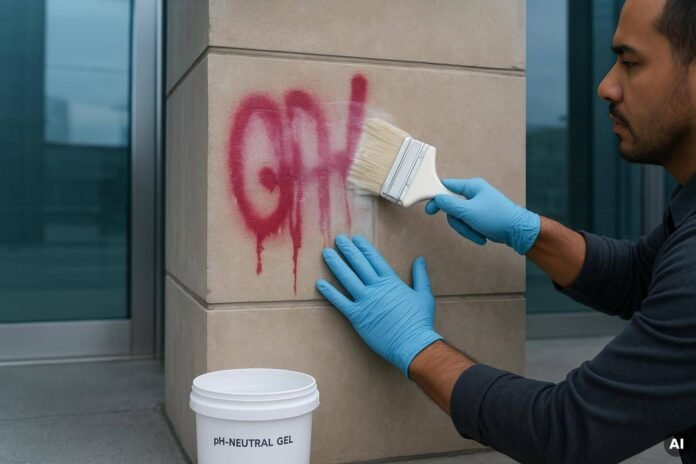

Property managers should contact professional graffiti removal services as soon as vandalism appears on delicate or porous materials, creates safety or environmental risks, breaks local cleanup deadlines, or affects main customer entrances. In most cases, calling within 24 to 48 hours is best. Reaching for a household solvent and stiff brush may seem like a cheap quick fix, but the wrong method can turn a surface mark into permanent damage. Knowing when to stop and call trained technicians can prevent an expensive repair project.
Managing multi-tenant office buildings, busy residential towers, or large retail centers means keeping the property attractive while controlling operating costs. If tags appear high above the ground or across detailed exterior materials, specialist contractors such as RAIL London graffiti removal services have the rigging, access gear, and surface-safe cleaning products needed to handle the work without harming the building or putting staff at risk.
When Should Property Managers Call Professional Graffiti Removal Services?
Each graffiti incident has different factors, including the type of paint, outdoor temperature, surface porosity, and how visible the location is to the public. Knowing whether in-house staff can handle the mark or whether trained cleaners are needed helps protect the building and its value.
Instead of using the same method for every tag, experienced technicians look for clear warning signs that call for specialist equipment, controlled containment, and tested paint-removal products.
Call Within 24 to 48 Hours to Limit Permanent Staining
The first day or two after vandalism is a key period for removal. Modern spray paints, industrial markers, and aerosol enamels contain carrier solvents that evaporate quickly. This leaves behind resin binders and strong pigments. In warm weather or direct sunlight, these pigments can set deep into the material within only a few hours. Calling a professional team during the first 24 to 48 hours gives cleaning products a better chance to break down the paint before it forms strong chemical bonds with the wall.
Fast cleanup also helps reduce repeat tagging. Vandals often choose places where their work will be seen by many people. If the marks disappear almost overnight, the location becomes less attractive as a public display area. Research across city districts shows that buildings where graffiti is removed within 48 hours have much lower rates of repeat tagging than sites where the damage remains visible.
Request Immediate Help for Graffiti Near Entrances, Signs, or Security Areas
Graffiti near busy areas-such as main entrances, shopfronts, direction signs, or security equipment-can harm a property’s image right away. Research into retail and residential leasing suggests that visible vandalism can reduce perceived property value by 15% to 25%. It can also make a building seem neglected, which may discourage potential tenants, customers, and visitors. Quick professional cleaning helps the property continue to look cared for and secure.
Graffiti covering direction signs, fire lanes, camera lenses, or emergency markers also creates a safety and legal concern. Professional cleaners use rapid-removal systems made for glass, polycarbonate, and reflective sign materials. These systems can remove paint without melting the surface or damaging its UV-protective finish.
Schedule Expert Removal for Delicate or High-Value Materials
Polished granite, historic brick, sand-cast stone, anodized aluminum, and architectural glass can all be damaged by rough cleaning. Strong abrasives or general acidic washes may remove factory finishes, damage historic mortar, or permanently mark mineral surfaces. If the outer layer of old stone or brick is blasted away, the softer material below is left open to water damage and cracking caused by freezing and thawing.
Professional restoration teams use careful, controlled methods on these materials. Techniques such as vapor blasting, low-pressure steam cleaning, and neutral-pH water-based poultices can lift paint without changing the aged finish, texture, or strength of valuable exterior materials.
Contact a Professional When Graffiti Covers Multiple Surfaces
Vandals seldom keep paint on one clean, even surface. A single large tag may begin on a brick wall, cross an aluminum doorframe, cover a pane of tempered glass, and end on painted timber cladding. Each material reacts differently to pressure, heat, and solvents. A product that safely removes paint from metal could dissolve the binder in nearby brick or damage a rubber window seal.
Handling several materials calls for different cleaning products and careful masking. Professional crews separate each surface before work begins. They may use solvent or citrus gels on metal trim, blade methods on glass, and gentle vapor cleaning on masonry. This limits runoff between surfaces and reduces the chance of chemical damage.
Signs That DIY Graffiti Cleanup Is Not the Right Choice
Building maintenance staff are very capable at routine upkeep, but stubborn graffiti can involve materials and hazards well beyond normal cleaning work. Recognizing when in-house efforts may cause more damage than they solve helps protect the building budget.
Trying to save money with internal labor can lead to extra damage. A small, affordable cleanup may then become a costly repair or restoration job.
Paint Has Penetrated a Porous Surface
Unsealed split-face concrete block (CMU), precast concrete, and older brick behave much like large mineral sponges. Liquid solvents in spray paint can carry pigment deep into tiny gaps through capillary action, which is the movement of liquid through narrow spaces. Scrubbing with household soap and a stiff brush often pushes the color farther into the material instead of removing it.
Once pigment has soaked into the pores, professional cleaning is usually the safest and most reliable option. Specialists use gel strippers with the right thickness to stay on vertical walls. These products draw trapped color back to the surface. Technicians can then rinse the area with controlled-temperature, low-pressure washing equipment to remove the remaining dark shadows.
Previous Cleaning Attempts Have Spread or Set the Stain
A common reason property managers call for help is the appearance of a “halo” or smudge around the original tag. When staff use the wrong solvent, it may dissolve the top layer of paint without removing the pigment underneath. The loosened color then spreads onto the clean area around it, creating a dark mark that is twice as large as the original graffiti.
Too much heat or the wrong chemical can also bake the pigment into the binders in brick or concrete. Correcting a failed cleaning attempt requires experienced technicians who can carry out pH patch tests, identify the chemicals already used, and prepare a targeted wash to lift the set-in stain.
Removal Requires Pressure Washing, Chemicals, or Elevated Access
Industrial pressure washing involves more than hiring a machine from a local hardware store. Incorrect pressure can gouge timber, break down soft mortar joints, and remove protective factory finishes. Work becomes even more dangerous when it involves strong chemicals and equipment for reaching high areas.
Graffiti on second-story walls, parapets, or narrow lightwells may require training in rope access, boom operation, and work at height. Professional contractors arrive with approved fall-arrest systems, secure anchor points, and elevated containment equipment. These measures protect workers and pedestrians on the pavement below.
Safety, Environmental, or Liability Risks Exceed Staff Capabilities
Safety Data Sheets (SDS) for industrial graffiti removers list serious hazards. Some products can cause breathing problems, eye injuries, skin burns, and long-term harm to water ecosystems. Staff who work without proper protection, especially in poorly ventilated spaces or near HVAC air intakes, may suffer serious illness or injury.
Local and national environmental laws also control the release of chemical runoff into storm drains. Washing solvent residue and pigments that contain heavy metals into street gutters can lead to large municipal fines. Professional teams use wash-water recovery systems, neutralizing booms, and hazardous-waste containers. This allows them to collect the wastewater and dispose of it through legal channels.
How Long Does Graffiti Removal Take and What Does It Cost?
Most simple graffiti removal jobs take about two to six hours on site after the technicians arrive. The exact time depends on the surface, paint type, and ease of access. Work on high buildings, large tags covering several walls, or historic materials may take several days. This is especially true when the job needs several rounds of chemical poultices and waiting periods between treatments.
Prices vary based on the type and extent of the damage. A basic single-tag job may cost several hundred dollars. A difficult incident involving several materials across a commercial facade can cost several thousand dollars or more. Knowing what affects the price helps property managers set a realistic budget.
Why Delayed Cleanup Can Increase Restoration Costs
Putting off cleanup is one of the easiest ways to increase the final bill. Sunlight and changing weather can cause paint to cure and form stronger bonds. Removal then takes more labor and more cleaning products. A mark that could have been handled with a quick steam wash on Monday may need several applications of costly gel and hours of detailed work a month later.
Delays can also create legal and financial problems. Many cities have visual-blight rules that apply daily fines if graffiti is not removed by the legal deadline, which may be only 7 to 10 days after formal notice. Commercial insurance policies may also require prompt action after vandalism to stop further damage. Waiting too long could put part or all of a claim at risk.
When a Maintenance Contract or Rapid-Response Plan Makes Sense
Properties on busy streets, near transport hubs, or in areas with frequent vandalism can find one-off emergency calls costly and difficult to manage. Repeated call-out fees, separate invoices, and uneven cleaning results can place steady pressure on the operating budget.
For these properties, a maintenance agreement or rapid-response plan may offer clear savings. Such plans can set service prices, provide a promised response time, and include the use of protective coatings. Treating graffiti cleanup as a planned operating task instead of a repeated emergency helps property managers keep exterior walls looking consistent and avoid sudden costs.
Advanced Architectural Protection and Risk Governance
Along with quick cleanup, property managers can use building design and protective treatments to reduce future damage. Anti-graffiti coatings are one of the most useful long-term investments for exposed building exteriors. Sacrificial coatings form a clear barrier that comes away during hot-water pressure washing. The coating and paint are removed together, while the stone below remains protected. A new layer is then applied. Permanent silicone- or fluoropolymer-based coatings create a smooth, non-stick surface that gives aerosol paint little grip. Tags can often be wiped away with mild soap and water.
Property managers must also deal with legal questions when urban artwork is not clearly vandalism. In places covered by the Visual Artists Rights Act (VARA) or local heritage laws, removing a large painted work that may be commissioned public art can lead to an expensive legal dispute. Professional cleaning firms often work with city conservation officers, legal advisers, and architectural historians before removing uncertain wall treatments. By combining physical protection, careful environmental practices, and skilled chemical cleaning, property managers can handle graffiti as a planned property task instead of a stressful emergency.