

Furniture storage in dubai is one of the most common reasons residents rent a storage unit, and it is also the category where the wrong choice does the most visible damage. A sofa, a dining table, or a solid wood wardrobe represents a significant financial outlay, and in many cases an emotional one as well. People store furniture because a lease has ended, a renovation is under way, a move has been delayed, or a new apartment is smaller than the old one. In every one of these situations the expectation is the same: the furniture should come out of storage looking and functioning exactly as it did when it went in. In Dubai, whether that expectation is met depends almost entirely on one factor, which is climate control.
Dubai’s climate is unusually hard on stored furniture. Summer temperatures regularly pass forty-five degrees, humidity along the coast climbs sharply through the same months, and the swing between air conditioned interiors and hot outdoor air creates furnirepeated stress on materials that were never designed for it. A unit that looks perfectly acceptable on the day you sign the contract can become a slow source of damage across a single summer if it is not actively managed. For anyone searching for furniture storage in dubai, understanding why climate control matters, and what it should actually involve, is the most useful preparation available before comparing a single price.
This guide explains what Dubai’s conditions do to different types of furniture, what genuine climate control looks like in practice, how to verify it before you commit, and how to prepare furniture so that it comes out of storage in the condition it went in. The aim is simple: to help you choose furniture storage in dubai that protects what you own rather than quietly reducing its value month after month.
What Dubai’s Climate Does to Stored Furniture
Furniture is made from materials that respond to their surroundings. Wood absorbs and releases moisture, leather holds oils that evaporate in dry heat, fabrics trap humidity, and glues and finishes soften or crack when temperatures climb. In a stable environment such as climate controlled storage, these reactions are minimal. In an environment that swings between extremes, they accumulate into permanent damage. The problem with storage is that nobody is present to notice early warning signs. By the time the furniture is retrieved, the damage has already happened.
Solid Wood and Veneer
Wood is the material most affected by poor storage conditions. In high heat and low humidity, solid wood loses moisture and contracts, which opens joints, splits panels, and loosens the fittings that hold drawers and doors in alignment. In high humidity, the same wood swells, causing doors to stick and surfaces to warp. Veneered furniture is even more vulnerable, because the thin top layer and the base material react differently to moisture, which leads to bubbling, lifting, and cracking along the edges. Dining tables, wardrobes, and bed frames are the pieces most often found warped after storage in an unmanaged unit.
Leather and Upholstery
Leather sofas and chairs depend on a stable level of moisture to stay supple. Sustained heat dries the surface, and once cracking begins it cannot be reversed. Fabric upholstery faces a different threat. Humid air trapped inside a closed unit encourages mildew and odour, particularly in foam cushions and padded seats. A sofa that went into storage clean can come out with a musty smell that is very difficult to remove.
Glass, Metal and Electronics
Glass tops and mirrors are less affected by humidity but are sensitive to rapid temperature change, which can stress frames and adhesives. Metal furniture is vulnerable to rust where moisture collects. Furniture that includes electronics, such as recliners with motors, adjustable beds, and entertainment units, can suffer component damage from sustained heat and condensation.
What Genuine Climate Control Actually Means
The phrase climate controlled is used widely, and it does not always mean the same thing. In practice there is a meaningful difference between a facility that actively manages its internal environment and one that simply runs air conditioning during business hours. For furniture, the useful standard is an environment that holds temperature and humidity within a stable, moderate range around the clock and across every season.
Signs of Genuine Climate Control
Temperature held within a stated range throughout the year. Humidity actively managed, not only temperature. Systems that run continuously, including nights and weekends. Conditions monitored inside the storage area, with a clear procedure when readings drift out of range.
Signs of Basic Cooling Only
Vague descriptions such as air conditioned with no figures. No mention of humidity at all. Cooling that operates only when staff are present. No ability to explain how conditions are monitored or what happens when they change.
As a general guide, furniture conservators recommend keeping wood and upholstered items in moderate temperatures with relative humidity somewhere between roughly forty and fifty-five percent. A facility that can speak about its conditions in these terms, rather than in marketing language, is usually one that manages them properly.
How to Verify Climate Control Before You Commit
Because the damage from poor storage is invisible until retrieval, verification has to happen before you sign. A short list of direct questions separates facilities that manage conditions from those that only advertise them.
- What temperature range do the units maintain, and does that hold through the peak summer months
- Is humidity actively controlled, and what range is targeted
- Does the system run continuously, or only during operating hours
- How are conditions monitored inside the units themselves
- What happens if conditions go outside the target range
- Can I visit the facility and see the storage area before booking
A visit is often more revealing than any answer. A well-managed facility feels stable the moment you step in. Stale air, visible condensation, damp odours, or noticeable heat in the corridors are all signs that the system is not doing its job.
How to Prepare Furniture for Storage
Even in a well-managed unit, preparation makes a real difference to how furniture comes out. Most of the steps are simple and inexpensive, and they protect against the small problems that storage can still cause.
Clean and Dry Everything First
Dust, food residue, and moisture trapped on a surface become problems in a closed unit. Wipe wooden pieces with a suitable cleaner, vacuum upholstery thoroughly, and let everything dry fully before wrapping. Never wrap furniture that is even slightly damp.
Disassemble Where You Can
Removing legs, unscrewing bed frames, and taking doors off wardrobes reduces stress on joints and saves space. Keep all screws and fittings in labelled bags attached to the relevant piece, so reassembly is quick and nothing is lost.
Wrap With Breathable Materials
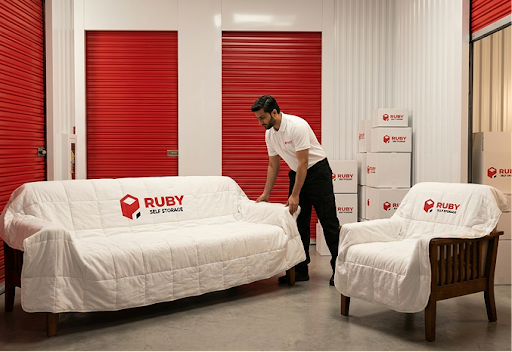
Moving blankets and cotton sheets protect surfaces while allowing air to move. Plastic wrap placed directly against wood or leather can trap moisture and cause the very damage you are trying to prevent. If you use plastic, use it over a breathable layer and leave small gaps for airflow.
Leave Space and Lift Off the Floor
Stack carefully, keep heavy items at the bottom, and avoid pressing furniture against walls. Using pallets or simply keeping items raised slightly off the floor protects against any residual moisture and allows air to circulate around the pieces.
Choosing the Right Unit Size for Furniture
Furniture takes up more space than most people expect, and choosing the wrong size creates problems in both directions. A unit that is too small forces compression and stacking that can crush cushions and scratch surfaces. A unit that is too large means paying every month for space that serves no purpose. A written inventory, with approximate dimensions for each major piece, gives a much more reliable basis for sizing than a guess based on the number of rooms.
- A studio apartment’s furniture typically fits in a small unit of roughly 35 to 50 square feet
- A one-bedroom apartment commonly needs around 50 to 75 square feet
- A two-bedroom home usually falls between 75 and 100 square feet
- A three-bedroom home or villa can need 100 to 150 square feet or more
- Disassembling larger pieces can reduce the space needed by a meaningful amount
Security, Access and Contract Terms
Furniture is bulky and often valuable, so security matters as much as climate. Look for continuous CCTV coverage, individual access control for each customer, and a facility that is staffed or monitored throughout operating hours. Access hours are worth checking as well. If you may need to retrieve a piece at short notice, round the clock access is far more practical than a facility that closes at five.
Before signing, confirm the minimum rental period, the notice required to end the contract, and exactly what the monthly price includes. Ask about insurance, deposits, and any fees for changing unit size. Clear terms in writing at the start prevent disputes at the end.
Conclusion
Climate control is the single most important factor in furniture storage in dubai, because it decides whether furniture comes out of storage as good as it went in or quietly loses value across a hot summer. Understanding what Dubai’s conditions do to wood, leather, fabric, and metal, knowing what genuine climate control involves, verifying it with specific questions, and preparing furniture properly before it goes in are the steps that protect your investment. Add a correctly sized unit, solid security, flexible access, and transparent contract terms, and furniture storage in dubai becomes what it should be: a reliable, low-stress solution rather than a risk you only discover when it is too late to fix.

