
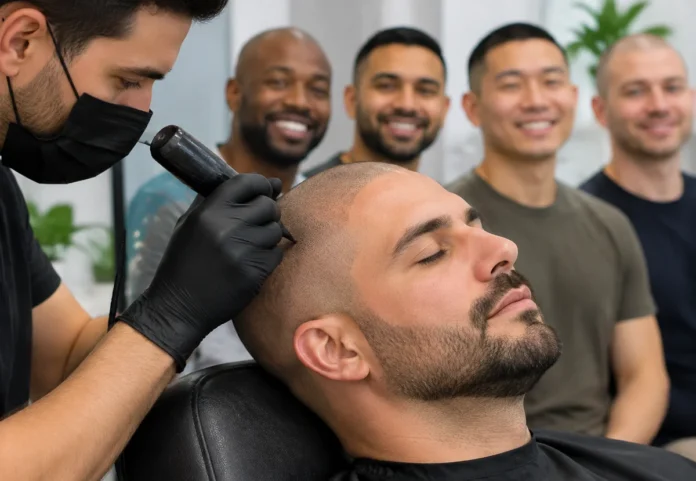

Scalp micropigmentation helps blend surgical marks directly into the surrounding hair. Since a scar has a different texture from regular skin, micropigmentation gently deposits pigment to soften the contrast. Here is more information on the safety and effectiveness of a hair tattoo for different skin types:
Hides Surgical Marks
A hair tattoo helps conceal permanent surgical marks left by hair restoration procedures. While surgical scars fade over time, they do not fully disappear on their own. Depositing custom pigments into the area is necessary for full concealment and proper blending. The process works because it mimics the appearance of stubble from short-shaven hair within the damaged tissue.
The procedure features a non-invasive safety profile, bypassing the risks of standard surgical revisions. Because there are no surgical incisions, clients avoid painful recovery periods and routine disruptions. While body ink reaches deep into the dermis, scalp pigments are placed closer to the surface. This depth prevents the ink from spreading uncontrollably or fading. Since the equipment uses tiny needles, the application remains gentle on delicate skin.
Effective treatment involves disrupting the linear and circular patterns of scarring left by previous procedures. Strip surgeries typically leave horizontal scars, while follicular unit extraction creates dots across the donor area. When an artist places tiny pigment deposits inside these spaces, the borders of the scars begin to soften.
Surgical scar concealment works across all skin types because custom-blended pigments account for individual skin undertones. Artists adjust pigment shades to match the scars with hair follicles. Since scar tissue absorbs ink differently than normal skin, the practitioner adjusts pressure based on the texture encountered.
Requires No Surgery
Micropigmentation offers a safe way to hide surgical scars without invasive procedures. Since the application requires no incisions, clients avoid the risk of complications like deep-tissue damage or nerve severing. While surgery can create even larger markings, surface-level application leaves skin texture unchanged.
During scalp micropigmentation, specialized tools work above the hair roots, protecting active hair growth. Clients retain all options for future hair restoration therapies, as the underlying tissue remains healthy. Practitioners utilize specialized color matching to eliminate the sharp contrast that makes scars noticeable.
Offers Lasting Results
Hair tattoos provide a long-term solution that eliminates the daily need for managing noticeable hair transplant scars. Because the pigments remain stable in the upper dermal layer, the camouflage stays sharp even through heavy sweating and washing. While topical cosmetic powders and hair fibers demand constant reapplication, tattoos are unaffected by environmental moisture or physical contact.
The safety of micropigmentation is reinforced by its fading pattern, which is compatible with the body’s natural aging process. As skin cells regenerate and are exposed to UV light, the pigment gradually softens. Because the color diminishes evenly across the treated area, it does not leave patchy spots.
Scalp tattoos require little maintenance and deliver long-lasting results. After the initial applications, the camouflage functions without demanding specialized topical creams or preservation products. While surgical scar revisions can cause side effects such as tissue thickening, micropigmentation helps maintain scalp stability.
Blends Skin Tones
Artists blend different tones across diverse skin complexions, neutralizing the contrast of surgical scars. Damaged scar tissue stands out against the surrounding hair-bearing skin, but custom color matching unifies the entire area. Practitioners analyze individual undertones to create a formulation that camouflages scars from past hair transplant surgery. Scalp inks are chemically stable, preventing the treated area from turning gray or blue over time. The finished concealment is undetectable under any lighting condition. Practitioners promote the effectiveness of skin tone blending through these techniques:
- Matching warm undertones
- Handling textured skin
- Reducing tissue discoloration
Matching Hair Color
Practitioners utilize carbon-based pigment that matches the client’s natural hair color. Since every client has unique hair density and shade, artists dilute the ink to match the surrounding hair stubble. While an individual’s lifestyle and sun exposure may cause the ink to fade, the treatment remains safe.
Explore Hair Tattoo Effectiveness
Micropigmentation is more effective when scheduled into separate sessions that allow scar tissue to heal between applications. This progressive approach allows the practitioner to fine-tune the color matching, providing long-lasting concealment. This also allows them to professionally blend it over time. Contact a tattoo artist to learn more about what they offer.

