

In manufacturing, automotive, heavy equipment, and metal fabrication, permanent part identification is not optional. VINs, serial numbers, chassis codes, data plates, and traceability marks must survive harsh environments, coatings, and years of service. HT Marker has built its reputation on machines that meet those exact demands with reliable, production-ready solutions.
Understanding the Need for Robust Marking
Modern supply chains and regulatory requirements demand clear, durable identification. A mark that fades under paint, galvanizing, or abrasion creates costly problems downstream. Dot peen systems create deep, indented marks by driving a hardened stylus into the material. Laser systems deliver high-contrast surface or subsurface marks with speed and precision. HT Marker supplies both technologies, along with related tools such as laser cleaning and 3D crystal engraving, so users can match the process to the part and environment.
The company’s focus is practical: machines that work on steel, stainless, cast iron, aluminum, brass, and materials up to high hardness levels. Portability options pneumatic, electric, and battery-powered address the reality that many parts cannot easily move to a fixed station. This combination of depth capability, material range, and mobility sets HT Marker apart for shops that need consistent results without constant process workarounds.
Dot Peen Systems for Deep, Lasting Marks
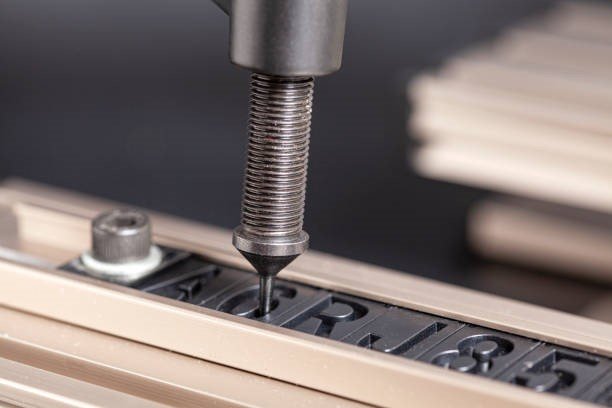
Dot peen remains the preferred method when marks must remain readable after painting, powder coating, or galvanizing. HT Marker range covers handheld and benchtop configurations. Pneumatic models deliver strong impact for deeper indentation on larger or harder parts. Electric and battery-powered units eliminate the need for a shop air compressor, simplifying deployment in repair bays, yards, or field locations.
Handheld models are especially useful for VINs and chassis marking on vehicles, trailers, and heavy equipment. Operators bring the marker to the part rather than forcing oversized components onto a stationary machine. Battery versions extend this flexibility to outdoor or remote sites with limited power access. Integrated controllers and touchscreen interfaces reduce setup time and support sequential numbering, logos, and 2D codes. Depth control allows users to balance legibility against material thickness and subsequent finishing processes.
These systems handle metals up to significant hardness while maintaining consistent character quality. For pipe, tube, and cylindrical work, rotary fixtures expand the application range. The result is identification that stays legible through the product’s life cycle exactly what compliance and quality systems require.
Laser Marking for Speed, Detail, and Versatility
When finer detail, high throughput, or non-contact marking is needed, HT Marker’s laser systems step in. Fiber lasers excel on metals, producing high-contrast marks on bare, anodized, or coated surfaces. Compact and handheld fiber models suit tags, small parts, and larger fixed components that cannot fit under a traditional station. UV lasers address plastics, glass, and heat-sensitive materials where thermal damage must be minimized. CO₂ options cover organics such as wood, leather, and certain plastics.
Portable laser units give operators the ability to mark frames, tanks, molds, and installed equipment without disassembly. Battery-supported versions further increase mobility. Marking areas, power levels, and software features are selected according to part size, required contrast, and production volume. The combination of speed and precision makes laser systems ideal for high-mix environments and for applications where visual quality of logos or data matrix codes is critical.
Matching Technology to Application
Choosing between dot peen and laser depends on several practical factors: required mark depth, subsequent surface treatments, part geometry, available utilities, and throughput needs. Deep mechanical marks favor dot peen when coatings will follow. Fine surface detail and non-metal materials favor laser. Many facilities benefit from both, using each where it performs best.
HT Marker supports this decision process with clear product differentiation pneumatic versus electric versus battery, benchtop versus handheld, fiber versus UV versus CO₂. Sample marking reports and application consultation help confirm performance on actual materials and coatings before purchase. Free shipping options to certain markets and straightforward online purchasing further reduce friction for buyers who already know their requirements.
Industries That Rely on Reliable Marking
Automotive and heavy equipment manufacturers use these machines for VINs, chassis numbers, and component serials. Metal fabricators and job shops apply them to tags, plates, and structural parts. Pipe and tube producers benefit from rotary-capable systems. Maintenance and field-service teams value portable battery units that operate away from fixed power or air sources. Across these sectors the common requirement is the same: a mark that remains readable after real-world service conditions.
Why Experience Matters in Equipment Selection
Ten years of observing industrial marking projects reveals recurring patterns. Shops often underestimate access constraints or the impact of subsequent painting. They may choose a technology based on initial cost rather than total cost of ownership, including consumables, utilities, and downtime. Reliable machines with straightforward controls and durable construction reduce those risks. HT Marker’s emphasis on practical configurations integrated controllers, battery options, and depth capability addresses the issues that appear most frequently on the shop floor.
Support after purchase is equally important. Clear documentation, responsive technical guidance, and the ability to obtain sample results before committing capital help ensure the chosen system performs as expected once installed.
Moving Forward with Confidence
Permanent identification protects product integrity, supports traceability, and meets regulatory expectations. HT Marker provides the tools dot peen for deep durability and laser systems for precision and versatility that industrial users need to achieve consistent results. By focusing on material suitability, mark permanence, and real-world accessibility, the company delivers solutions that integrate smoothly into production and field environments.
Whether the task is marking a VIN on a chassis in a busy yard, engraving serial plates on a production line, or applying fine codes to mixed materials, selecting the right combination of technology and machine configuration is the foundation of reliable identification. HT Marker’s range is built around that principle, giving manufacturers and fabricators the capability to mark once and trust the result for the life of the part.
READ ALSO: Utilizing the Expertise of a FinOp for Financial Management

