
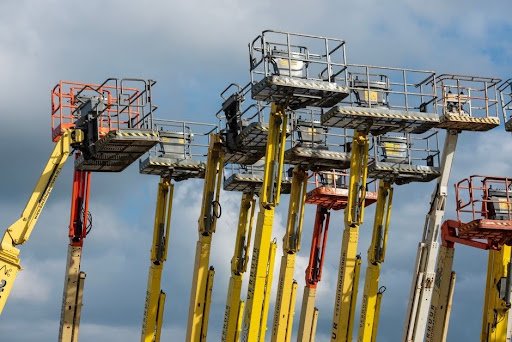

If you manage equipment, uptime can feel deceptively simple: fuel it, inspect it, send it out. Scissor lifts quickly expose the weak spots in that thinking. One delayed repair can stall a drywall crew, push back exterior work, and turn a tight schedule into a chain reaction. You need more than a maintenance checklist. You need a sharper view of parts planning, operator behavior, and the hidden costs that quietly eat into fleet performance.
Parts Availability Changes the Entire Maintenance Strategy
A lot of fleet managers focus on labor hours and inspection intervals, but parts sourcing often decides whether a repair takes one day or ten. That matters more now because many fleets are running older machines longer, especially in commercial construction and warehouse operations where replacement cycles have stretched.
When a mast roller, joystick controller, or charger module fails, the issue isn’t only diagnosis. It’s whether you can get the correct component fast, with the right fitment. For brands with broad installed bases, planning around dependable inventory is part of the job. Teams that regularly maintain JLG units often keep a sourcing plan for JLG Lift Parts because downtime gets far more expensive than carrying a small stock of high-failure items.
That approach isn’t about overbuying. It’s about understanding which components repeatedly affect machine availability and building your maintenance operation around that reality.
Uptime Problems Usually Start Before the Breakdown
Most lift failures don’t begin with a dramatic mechanical event. They start with small decisions that seem harmless at the time. A machine comes back from a jobsite with sluggish elevation speed, a torn platform cable sleeve, or a battery that barely holds charge. Nobody tags it out because it still moves.
That decision often creates the expensive failure later. Hydraulic seepage becomes a blown seal. Battery imbalance starts damaging charging cycles. A loose limit switch leads to intermittent shutdowns your technician can’t replicate in the shop.
If you want better uptime, track minor defects with the same seriousness as major ones. A lift that is “still usable” can be the exact machine that wrecks next week’s schedule. Preventive maintenance only works when your team treats weak signals as operational data, not background noise.
Operator Habits Have More Impact Than Most Shops Admit
You can maintain a fleet well and still lose uptime because of operator behavior. Repeated curb impacts, platform overloading, charging shortcuts, and rough indoor driving all create wear patterns that technicians see every week. Yet many companies still treat operator use and maintenance performance as separate issues.
They aren’t separate. If your lifts return with dented pothole protection assemblies or damaged gate latches, your repair data is telling you something about field habits. If electric scissor lifts consistently come back undercharged, your charging process in the yard or on-site is broken.
A simple change helps: connect every recurring repair category to a use pattern. Then review those patterns with supervisors, not just mechanics. You’ll start seeing where training needs to be more specific. “Operate carefully” does almost nothing. “Stop driving elevated over rough transitions at full speed” changes behavior because it names the actual problem.
Battery and Electrical Issues Deserve More Attention Than They Get
Electric lifts are everywhere now, especially indoors, and many uptime issues are electrical before they’re mechanical. Batteries age unevenly, corroded terminals increase resistance, and chargers get blamed for problems caused by poor charging discipline. A machine that seems unreliable may simply be running on a battery pack that has lost balance across cells.
You should treat battery health as a tracked asset condition, not a side note on the inspection form. Record voltage trends, watering compliance for lead-acid systems, charge completion rates, and the age of each pack. That gives you useful forecasting instead of reactive replacement.
Electrical troubleshooting also demands clean documentation. Intermittent fault codes, failing contactors, and damaged harness connectors can waste hours when previous repairs weren’t logged properly. In fleet terms, bad records are a multiplier for downtime. The technician is not just fixing the issue; they’re rediscovering the machine.
The Rental Mindset Can Quietly Damage Owned Fleets
A surprising number of owned fleets are managed with habits borrowed from rental equipment turnover. The machine gets inspected, cleaned up, sent out again, and deeper work waits until a failure forces action. That approach can function in the short term, but it creates an unstable fleet profile over time.
Owned assets need life-cycle thinking. You should know which lifts are becoming chronic repair units, which ones consume technician time disproportionately, and which models are turning into parts-risk machines because of age or component scarcity. Without that visibility, you keep approving “one more repair” on units that are draining your budget.
This is where maintenance and finance need to talk more often. Uptime isn’t only a shop metric. It affects project scheduling, labor efficiency, and capital planning. A lift that misses work repeatedly may look repairable on paper while costing far more than its service invoices show.
Standardization Makes Repairs Faster and Safer
Mixed fleets offer flexibility, but they also complicate maintenance. Different control layouts, charger specs, tire types, hydraulic components, and diagnostic procedures slow down both operators and technicians. Even basic preventive maintenance takes longer when every machine family has its own quirks.
Some variety is unavoidable, especially if your fleet grew through acquisitions or opportunistic purchases. Even so, standardization where possible has practical value. Fewer machine types mean clearer operator familiarity, simpler technician training, and more efficient parts stocking.
It also improves safety. When operators switch among lifts with different emergency lowering procedures or control responses, mistakes become more likely under pressure. Standardization reduces that friction. In the shop, it helps your team build deeper expertise instead of spreading knowledge thinly across too many systems. Better familiarity usually means faster diagnosis, fewer ordering mistakes, and more confidence when a machine needs to get back into service quickly.
Better Uptime Comes From Systems, Not Heroics
The strongest maintenance teams aren’t the ones constantly pulling off last-minute saves. They’re the ones that made fewer emergencies necessary in the first place. That usually comes down to systems: disciplined defect reporting, realistic PM intervals, accurate service histories, trained operators, and smart parts planning.
If your scissor lifts keep surprising you, the problem may not be the machines. It may be the absence of a clear operating system around them. Every recurring failure has a backstory. Every delayed repair points to a process gap. When you start reading those patterns instead of treating each breakdown as random, uptime becomes easier to control.
For fleet managers, that shift matters. Better availability protects schedules, lowers stress across crews, and makes every asset perform closer to the level you assumed you were already getting. In equipment management, that gap between assumption and reality is where most of the preventable cost lives.