
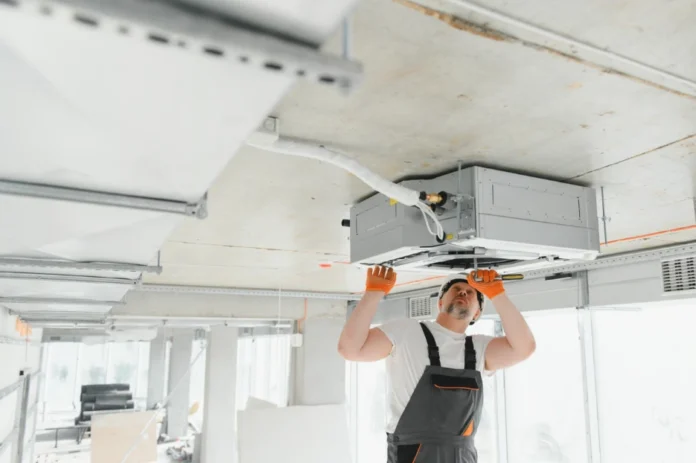

Buying a new air conditioner isn’t like buying a new fridge. You can’t just pick one off a showroom floor, carry it home and plug it in. The equipment matters, sure, but the installation matters just as much. A well-installed mid-range system often beats a top-of-the-line unit that was sized wrong or hooked up to leaky ducts.
That’s the part most people don’t hear about until the quotes start rolling in, and suddenly they’re comparing three proposals with different brands, different sizes, and prices that don’t seem to line up at all.
Whether you’re in a Valley ranch house that bakes all summer, a hillside place in the foothills, or a 1920s bungalow closer to the coast that never had central air, these are the eight things worth understanding before you sign for a new system in Los Angeles County.
1. Size Comes From a Calculation, Not a Guess
Air conditioner capacity is measured in tons, and the most common mistake in the whole industry is picking the size by square footage alone, or simply matching whatever was there before.
A proper sizing job uses a load calculation, often called a Manual J. It accounts for insulation, window size and direction, ceiling height, how much shade the house gets, how many people live there, and how leaky the house is. Two homes with the same square footage can need very different systems. A house in Woodland Hills with west-facing windows and an uninsulated attic has a very different load than the same floor plan near the beach in Torrance.
Why does it matter so much? An oversized AC cools the air fast, shuts off, and never runs long enough to pull humidity out, so the house feels cold and clammy while the equipment wears out from constant starting and stopping. An undersized one runs all afternoon in August and still can’t keep up. Ask every contractor how they sized the system. If the answer is “we matched the old one,” keep shopping.
2. Your Ductwork Can Make or Break the Whole Job
Here’s a hard truth: a brand new air conditioner connected to old, leaky ducts will never perform the way it should. Ducts in many LA-area homes run through hot attics or tight crawl spaces, and after a few decades, joints separate, insulation slumps, and some sections get crushed.
A good contractor will look at the ductwork before quoting. Sometimes the ducts just need sealing. Sometimes some sections need replacing, or the whole system does, especially if the home is getting central air for the first time or the old ducts are badly undersized for the new equipment. In many cases, California’s Title 24 energy rules also require duct leakage testing when you replace a system, so ducts are going to get looked at either way. Better to know what you’re dealing with up front than to be surprised mid-install.
3. Efficiency Ratings Changed, and the Numbers Look Different Now
If you last shopped for an AC more than a few years ago, the efficiency ratings might be confusing. In 2023 the federal government switched from SEER to a newer, tougher testing method called SEER2. The numbers came out lower even though the equipment didn’t get worse, so a SEER2 rating isn’t directly comparable to an old SEER number.
California sits in the federal Southwest region, which has stricter minimums than much of the country. For most home-sized split systems, the floor is around 14.3 SEER2, and there’s also an EER2 requirement that measures how efficiently the system runs at peak heat. Higher-efficiency systems cost more up front but use less electricity. With summer rates from SCE and LADWP where they are, that difference can add up over 15 years, especially for inland homes that run the AC for months on end.
The right efficiency level depends on how hard your system works. A home in Santa Clarita or Lancaster probably gets more out of a high-efficiency unit than a mild coastal home that runs the AC a few weeks a year.
4. The Refrigerant Is Changing Again
New air conditioners are going through a refrigerant switch. For years, R-410A was the standard. Under federal rules that began taking effect in 2025, new residential systems are moving to lower-impact refrigerants, mainly R-454B and R-32.
What does that mean for you? Mostly, it means you’ll be buying a system built around the new refrigerant, and your installer should be trained and equipped to handle it. In some cases, the existing copper refrigerant lines can be reused after flushing and testing. In others, new lines are needed. Ask about it, because it can affect the quote.
If you’re replacing a much older system that still runs on R-22, there’s nothing to debate. That refrigerant has been phased out, and any new system will be built around a modern one.
5. A Heat Pump Might Be the Smarter Buy
Before you commit to a new AC, find out whether a heat pump makes more sense. A heat pump looks and works like a central air conditioner in the summer, but it can also run in reverse to heat your home in the winter. One system, both jobs.
Los Angeles County’s mild winters are a great fit for heat pumps in most areas. If your furnace is also getting older, replacing both with a single heat pump system can simplify things and cut down on gas use. If your furnace is fairly new, pairing a new AC with it might still be the better move. And if you need help weighing the two, Orion HVAC has a useful plain-language guide comparing a heat pump vs. gas furnace for Southern California homes.
One thing to check either way: your electrical panel. Older homes sometimes need a panel or circuit upgrade to support new equipment, and it’s much better to find that out at the quote stage than on installation day.
6. Permits Depend on Where You Live
Los Angeles County is a patchwork. If you live in the City of Los Angeles, your permit comes from LADBS. In unincorporated communities like La Crescenta-Montrose, Altadena or Hacienda Heights, it goes through Los Angeles County Public Works. Cities like Glendale, Burbank, Pasadena, Santa Monica and Long Beach have their own building departments.
Whoever issues it, a replacement or new installation almost always needs a permit, and many jobs also need a third-party HERS rater to verify things like duct leakage and refrigerant charge under Title 24. A reputable installer handles all of this and includes it in the quote. If a contractor suggests skipping the permit to save money, take that as your cue to find a different contractor. Unpermitted work can come back to bite you during an insurance claim or when you sell the house.
7. Rebates and Tax Credits Change Constantly
Incentives for efficient equipment, especially heat pumps, change often. Some years there’s a lot of money on the table. Other years, programs run out of funding or end entirely. The federal tax credit that many homeowners used for heat pumps and high-efficiency air conditioners ended for equipment installed after 2025, so don’t plan your budget around it.
State and utility programs are worth checking. Depending on your utility, SCE, LADWP, Glendale Water & Power, Burbank Water and Power or another provider may offer rebates, and statewide programs like TECH Clean California have offered heat pump incentives through participating contractors. Ask your installer what’s currently available, and confirm the details on the program’s own website before counting on it.
8. Read the Warranty, and Register the Equipment
Most new systems come with two kinds of coverage: the manufacturer’s warranty on parts and equipment, and the installer’s warranty on labor. They’re separate, and the labor part varies a lot from company to company. Ask how long it lasts and what it covers.
Also ask who registers the equipment. Many manufacturers only give the longer parts warranty if the system is registered within a set period after installation, often around 60 days. Skipping that step can quietly shorten your coverage. A good installer takes care of it or walks you through it.
What to Expect on Installation Day
A straightforward replacement often takes a day, sometimes two if ductwork or electrical changes are involved. The crew removes the old equipment and recovers the old refrigerant properly, sets the new indoor and outdoor units, connects the lines and wiring, then charges the system and tests it.
efore they leave, you should get a quick walkthrough of the thermostat, the filter location, and the warranty paperwork. Expect some noise and a few trips in and out of the house, and clear a path to the indoor unit, whether it’s in a closet, the garage or the attic, before the crew arrives. Pets are usually happier in another room for the day.
Getting AC Installation Quotes in Los Angeles County
Get two or three quotes and compare them carefully. Look past the bottom line. Did each contractor do a load calculation? Did they look at the ducts? Is the permit included? What does the labor warranty cover?
For homeowners looking for AC installation in the Glendale, Burbank, La Crescenta-Montrose and San Fernando Valley areas, Orion HVAC is one local company worth getting a quote from. They’ve been in business for more than eight years and hold California contractor license #1079927. They install air conditioners, furnaces and heat pumps, and they go over the work and the price before starting. For larger projects, Orion offers HVAC financing through Wisetack, subject to credit approval, which can make a new system a lot easier to budget for.
Orion HVAC 3055 Foothill Blvd, La Crescenta-Montrose, CA 91214 Phone: 323-736-3737 Hours: Monday to Saturday 8 AM to 7 PM, Sunday 9 AM to 2 PM Payment: cash, credit cards and Zelle
Frequently Asked Questions
How long does AC installation take?
A standard replacement usually takes one day. If the job includes new ductwork, an electrical upgrade or a first-time central air installation, it can take two days or more.
What size air conditioner do I need?
It depends on a load calculation that looks at your home’s insulation, windows, sun exposure and layout, not just square footage. A good contractor will do this calculation before quoting.
Do I need a permit to install a new AC in Los Angeles County?
Yes, in most cases. Depending on your address, it comes from LADBS, Los Angeles County Public Works or your city’s building department. Many installations also require Title 24 testing by a HERS rater.
Is a heat pump better than an air conditioner in Los Angeles?
For many homes, yes, because a heat pump handles both cooling and heating, and the mild winters suit it well. If your furnace is fairly new, a new AC paired with the existing furnace may still make more sense.
What SEER2 rating should I look for?
California’s minimum for most home-sized split systems is around 14.3 SEER2. Homes that run the AC heavily in hot inland areas often benefit from higher efficiency, while mild coastal homes may not see as much payback.
Can I reuse my old refrigerant lines?
Sometimes. It depends on their size, condition and the new system’s refrigerant. Your installer should test and flush them, or recommend replacement if they aren’t suitable.

