
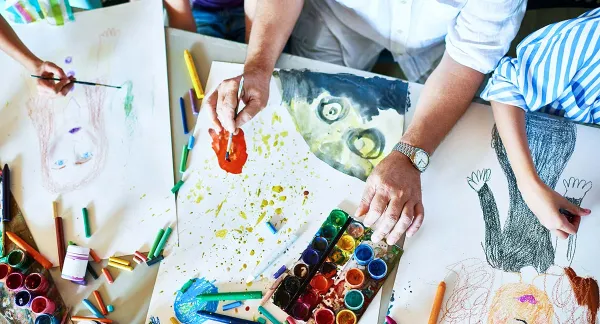

Most people picture a kindergarten classroom when they hear the words ‘art therapy.’ Finger paints. Construction paper. Maybe some glitter. The reality is far more sophisticated, and the research behind it is growing fast. Art therapy is a clinical discipline practiced by credentialed therapists, and it is being used in hospitals, trauma centers, veterans’ programs, and outpatient mental health clinics across the country. If you have ever wondered whether making art can genuinely move the needle on psychological wellbeing, the answer is yes, and here is what the evidence actually says.
This article covers how art therapy works as a clinical tool, who tends to benefit most, what the current research shows about specific conditions, and how it compares to other expressive therapies. By the end, you will have a clearer picture of whether it might be worth exploring for yourself or someone you care about.
What Art Therapy Actually Involves
Art therapy is not an art class. That distinction matters. A registered art therapist holds a master’s degree, completes supervised clinical hours, and passes a national board exam administered by the Art Therapy Credentials Board. Sessions are structured around therapeutic goals, not artistic skill. A client does not need to draw well, or at all. The product matters far less than the process.
During a session, a therapist might invite a client to create a collage representing how their anxiety feels, to paint a scene from a recurring dream, or to use clay to externalize something that has been hard to put into words. The act of making something physical gives form to internal experiences that verbal language sometimes cannot reach. After creating, the client and therapist discuss what came up, what choices were made, and what the piece might reflect about the client’s inner world. That conversation is where much of the therapeutic work happens.
Art therapy draws on established frameworks including psychodynamic theory, cognitive behavioral approaches, and trauma-informed care. It is not a single technique but a flexible modality that skilled therapists adapt to each individual.
The Science Behind Making Art and Mental Health
Skeptics sometimes assume that art therapy is soft or unproven. The evidence says otherwise. A 2016 study published in the Journal of the American Art Therapy Association found that just 45 minutes of creative activity significantly reduced cortisol levels in 75 percent of participants, regardless of their prior experience with art. Cortisol is the body’s primary stress hormone, so that finding is not trivial.
Neurologically, creative activity engages the default mode network, the part of the brain active during self-reflection and emotional processing. It also activates reward pathways. Making something, anything, releases dopamine. That combination of self-reflection and reward is particularly useful in therapeutic settings where clients are being asked to examine difficult material.
For trauma specifically, the rationale is compelling. Traumatic memories are often stored in sensory and somatic form rather than narrative form. That is why talk therapy alone sometimes stalls. Art-based approaches access non-verbal memory systems more directly, which is one reason researchers like Bessel van der Kolk, author of ‘The Body Keeps the Score,’ have written favorably about expressive therapies as complements to traditional treatment.
Conditions Where Art Therapy Shows the Strongest Evidence
Art therapy has been studied across a wide range of diagnoses. The strength of evidence varies, but several conditions stand out as particularly well-supported.
| Condition | Evidence Level | Notable Finding |
| PTSD and Trauma | Strong | Reduces intrusive symptoms; helps process pre-verbal or wordless trauma memories |
| Depression | Moderate to Strong | Improves mood, self-esteem, and sense of agency in multiple controlled studies |
| Anxiety Disorders | Moderate | Lowers physiological stress markers; builds distress tolerance skills |
| Dementia | Moderate | Reduces agitation, improves quality of life and social engagement |
| Eating Disorders | Emerging | Helps clients externalize distorted body image and explore identity |
| Cancer-Related Distress | Strong | Widely used in oncology; reduces anxiety and emotional isolation during treatment |
A systematic review published in Frontiers in Psychology in 2021 analyzed 49 studies and concluded that art therapy produced statistically significant improvements in depression and anxiety symptoms across diverse populations. The effect sizes were comparable to those seen with other established psychological interventions, which is significant for a modality that is still underutilized in mainstream clinical settings.
Who Benefits Most from Art Therapy
Art therapy is not only for people who feel blocked in traditional talk therapy, though that is a common pathway. It tends to be especially useful for specific groups.
- Children and adolescents who lack the vocabulary or emotional literacy to articulate their experiences verbally
- Trauma survivors whose distress is stored in the body rather than in coherent narrative memory
- People with intellectual or developmental disabilities who may find verbal communication challenging
- Individuals from cultures where direct discussion of mental health carries stigma, since art can feel like a safer entry point
- Veterans and first responders dealing with moral injury or complex PTSD
- Older adults in memory care settings where verbal capacity has declined
That said, art therapy can complement treatment for almost anyone. Many people find it useful alongside individual talk therapy, using art-based sessions to process material that surfaces verbally elsewhere. It is also offered in group formats, which carry their own benefits around shared experience and social connection.
How Art Therapy Fits Into a Broader Mental Health Plan
One of the most useful things to understand about art therapy is that it rarely stands alone. Most clinical settings use it as part of an integrated treatment plan that might include individual psychotherapy, medication management, group therapy, or other modalities. The question is not whether art therapy replaces anything, but where it adds something the other components cannot.
Research into how art therapy supports mental health consistently points to a few specific contributions: access to non-verbal emotional content, the development of what clinicians call ‘distress tolerance,’ and the experience of agency that comes from creating something tangible. That last one is easy to underestimate. Many people struggling with depression or trauma feel profoundly out of control. Completing a piece of art, even a simple one, can begin to shift that.
When evaluating whether art therapy is the right fit, it helps to look for a therapist who holds the ATR-BC credential, which stands for Art Therapist Registered, Board Certified. This credential signals both graduate-level training and clinical competence. Some licensed clinical social workers and counselors also integrate art-based techniques into their practice, though this is distinct from formal art therapy.
Art Therapy vs. Other Expressive Therapies
Art therapy belongs to a broader family of expressive therapies that includes music therapy, dance and movement therapy, drama therapy, and writing-based approaches. They share a common logic: that non-verbal and creative expression can access psychological material that structured conversation sometimes misses. Each has its own credentialing pathway, theoretical base, and research literature.
- Music therapy uses structured musical engagement to address emotional, cognitive, and social goals. It is particularly well-studied in pediatric care and dementia.
- Dance and movement therapy works with the body as the primary medium, making it especially relevant for somatic presentations of trauma.
- Drama therapy uses role-play, storytelling, and theatrical techniques to explore identity and interpersonal dynamics.
- Art therapy specifically uses visual art-making, giving clients a physical object that persists beyond the session and can be revisited.
That last point about persistence is worth pausing on. A painting or drawing that a client makes during a session can be brought back weeks later. It can be added to, altered, or simply looked at differently over time. That ongoing relationship with a created object is something other modalities do not offer in the same way, and some therapists consider it one of art therapy’s most distinctive strengths.
Practical Things to Know Before Starting
If you are considering art therapy for yourself or a family member, a few practical points are worth knowing up front. First, many insurance plans cover art therapy when it is billed under a recognized diagnostic code by a licensed clinician. Coverage varies significantly, so it is worth calling your insurer directly and asking whether ‘expressive therapy’ or ‘adjunctive therapy’ services are included in your plan.
Second, the setting matters. Art therapy is offered in inpatient psychiatric units, outpatient clinics, schools, community mental health centers, hospice programs, and private practice. The goals and structure differ across these settings, so the type of art therapy someone receives in a hospital might look quite different from what happens in a private therapist’s office.
Third, expect a learning curve. Most clients feel self-conscious at first, particularly those who believe they ‘can’t draw.’ A good art therapist anticipates this and structures early sessions to reduce that pressure. The self-consciousness usually fades once clients experience that judgment of the art itself is not the point.
Art therapy has moved well beyond its origins as a niche or supplementary approach. With a growing body of clinical research, a recognized credentialing system, and applications across the lifespan, it occupies a legitimate and increasingly central place in mental health care. Whether someone is working through trauma, managing a mood disorder, or simply finding that words have run out, creative expression offers a different kind of access to the mind. That difference can matter more than people expect.

