
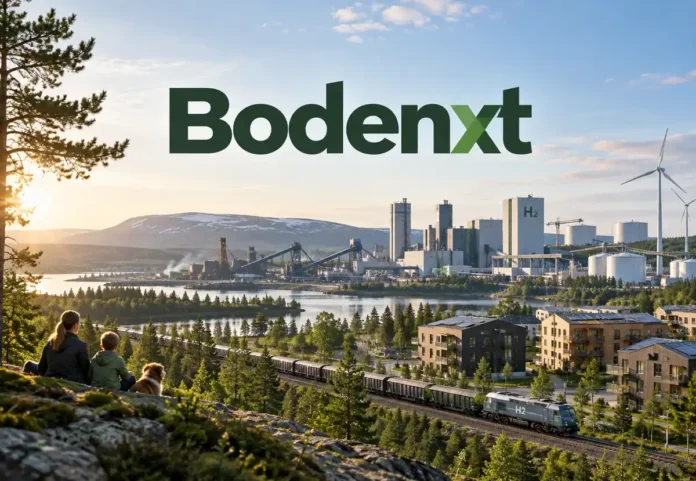
Bodenxt is Boden Municipality’s platform for managing rapid green industrial transformation. It connects industrial growth with housing, infrastructure, skills, and public services. Stegra has become the largest accelerator behind this community development. Its green steel project is reshaping investment across northern Sweden.
The change reaches far beyond one industrial economy or factory site. New jobs increase demand for workers, transport, utilities, education, and homes. Businesses also face new opportunities as population growth changes the local economy. Bodenxt links these needs through long-term municipal transformation and sustainable development.
What Is Bodenxt and What Is Its Purpose?
Bodenxt is a development platform created by Boden Municipality. It supports growth management during unusually fast industrial expansion. The municipality describes the shift as a 20-year development leap. Five subprojects divide that transformation into manageable areas.
Housing and jobs form one part of the platform. Skilled workers also need functioning public services and local businesses. Roads and railways must expand with industrial activity. Schools, shops, and community needs must develop alongside them.
Utilities create another layer beneath visible development. Water, wastewater, drainage, fiber, and electricity networks need sufficient capacity. Land use must support homes and industrial sites. Workforce planning also connects relocation with skills supply.
How Bodenxt Works
Bodenxt combines community planning with development planning. Boden Municipality coordinates land, housing, and municipal infrastructure. Roads and railways support movement above ground. Water and wastewater support growth below ground.
Electricity networks and fiber serve new neighborhoods and industrial sites. Drainage protects homes as construction expands. Public services must grow with population demand. Utilities therefore influence how quickly development can proceed.
Business development connects suppliers with new commercial demand. Skills supply connects employers with future workers. System capacity determines where expansion remains practical. Capacity planning reduces conflicts between projects competing for infrastructure.
The Five Working Areas Behind Bodenxt
Bodenxt organizes work through five working areas. Skills supply connects education with workforce planning. Living and housing addresses relocation and community development. Business development supports firms entering the expanding economy.
Infrastructure above ground covers transport and developed land. Infrastructure below ground covers utilities and essential networks. These five subprojects operate as connected systems. Industrial growth can stall when one system falls behind.
Bodenxt and Stegra: How They Are Connected
Bodenxt and Stegra support the same transformation but serve different functions. Stegra is a private industrial company building a green steel facility. Bodenxt is the municipal transformation platform supporting wider growth. The relationship links industrial expansion with community planning.
Stegra operates inside Boden Industrial Park. Its anchor investment drives demand across the regional economy. That demand reaches housing, infrastructure, skills, and public services. Supply-chain activity also creates opportunities beyond steel production.
The Swedish Armed Forces provide another major growth driver. Boden Municipality must therefore plan beyond one company. Roads and rail connections need wider community value. Education and healthcare must also serve permanent population growth.
What Stegra Is Responsible For
Stegra controls its industrial project and steel production systems. The company previously operated as H2 Green Steel. Its plant combines green hydrogen with direct-reduced iron. Near-zero-emissions steel remains its central commercial goal.
Hydrogen-based technology replaces much of coal’s traditional reducing role. The supply chain then connects iron processing with final steelmaking. Industrial commissioning determines when each production system becomes operational. Production plans depend on successful construction and testing.
What Boden Municipality and Bodenxt Are Responsible For
Boden Municipality manages municipal transformation outside Stegra’s corporate operations. Bodenxt supports growth coordination across housing and infrastructure. Utilities must serve expanding residential and industrial areas. Roads and rail connections need sufficient capacity.
Education supports future skills requirements. Healthcare and public services must respond to population changes. Relocation programs help incoming workers establish local lives. Business development broadens growth beyond one industrial employer.
Why Boden Is Becoming a Green Industry Hub
Boden combines industrial land with access to fossil-free electricity. Northern Sweden already supports major mining and energy industries. Strong transport connections help connect production with wider markets. Water availability also supports energy-intensive industrial processes.
Boden Industrial Park provides about 550 hectares of industrial space. Stegra occupies roughly 270 hectares within that wider area. Clean energy supports the region’s green transformation. Technical expertise adds another advantage for new industrial investment.
Green Steel and Hydrogen Production
Green steel reduces dependence on coke-fired blast furnaces. Stegra uses hydrogen-based steelmaking for iron production. Green hydrogen reacts with oxygen inside iron ore. Water becomes the main reaction product instead of carbon dioxide.
The hydrogen plant contains 37 electrolyzer modules. All modules were installed by April 2, 2026. Electrolysis capacity exceeds 700 megawatts. Annual green hydrogen capacity exceeds 100,000 tonnes.
Electricity splits purified water into hydrogen and oxygen. Fossil-free electricity powers that electrolysis process. Stegra targets carbon reductions approaching 95 percent versus conventional steelmaking. Its wider project has Strategic Net-Zero Project recognition.
Why Northern Sweden Fits Energy-Intensive Industry
Northern Sweden offers large supplies of renewable electricity. Boden also provides suitable industrial land for major facilities. Existing mining expertise strengthens the regional labor base. Rail and roads connect production with national transport systems.
The energy system also supports clean-energy investment. Boden Industrial Park sits near established infrastructure. Water and electricity support both hydrogen and manufacturing. These advantages reduce barriers for energy-intensive industry.
Jobs, Skills, Education, and Workforce Development
Boden’s labor market now needs more technical and service skills. Engineers and technicians remain important for modern industrial operations. Machine operators and electricians support production equipment. Construction teams remain necessary during the buildout phase.
Growth also raises demand outside factories. Healthcare workers and teachers serve a larger community. Logistics employees move materials through expanding transport systems. Retail staff and municipal staff support everyday population needs.
Workforce planning must address recruitment and worker retention. Skills supply therefore extends beyond immediate vacancies. The Swedish Armed Forces increase technical labor demand too. Stegra adds another major source of workforce demand.
Direct, Indirect, and Regional Employment
Boden lists about 2,000 new jobs linked to Stegra. It also cites 10,000 direct and indirect regional jobs. Construction workers support the investment phase. Engineers and technicians support long-term industrial activity.
Machine operators become more important during operations. Logistics workers support industrial freight movements. Maintenance teams keep complex equipment functioning. Regional jobs also grow through services and supply chains.
Education and Training Pipeline
Björknäsgymnasiet launches its Upper Secondary Engineering Programme in autumn 2026. The program adds a fourth technical year. Industrial design forms part of the curriculum. Product development provides another practical focus.
Workplace learning connects students with real employers. SMS Group Nordic participates in that cooperation. Stegra also supports the training pipeline. Technical study therefore links education with labor-market demand.
Housing, Relocation, and Population Growth
Housing has become one of Boden’s sharpest growth constraints. Rental availability remains extremely tight. In April 2026, rental vacancy stood near 0.23 percent. Housing demand rises as workers seek permanent homes.
Official 2025 figures placed population at 28,624 residents. That result finished 376 above the municipal forecast. Several thousand temporary workers also stay locally. Permanent population growth therefore understates actual daily demand.
Families need childcare and schools after relocation. Young adults also compete within the housing market. Healthcare demand rises when temporary workers become permanent residents. Transport demand grows beside residential development.
Housing Supply and Availability
Current planning supports about 1,300 apartments. Eleven detailed plans also enable further housing construction. Property owners and developers still face high construction costs. Financing conditions can delay otherwise approved housing projects.
Zero vacancy would make recruitment increasingly difficult. New homes often fill quickly after completion. Housing delivery must therefore match employment growth. The pressure remained acute during May 2026.
Relocation and Permanent Population Growth
Relocation Service supports workers moving into Boden. By late 2025, 275 Stegra employees had already relocated. More than 600 residents had moved through Stegra-related growth. Families also use relocation support for everyday settlement needs.
The municipality targets strong permanent population growth by 2030. Current housing figures reference more than 4,000 additional residents. Worker retention becomes crucial after temporary construction activity ends. Successful relocation turns employment growth into lasting community growth.
Business Growth and the Local Supplier Economy
Industrial expansion is creating customers for existing local businesses. Construction companies benefit from physical project development. Engineering services support design and technical delivery. Maintenance providers gain demand from complex industrial systems.
Restaurants and shops benefit from a larger working population. Property companies face rising demand for commercial space. Transport firms gain more logistics activity. Technology businesses can serve increasingly digital industrial operations.
Since Stegra’s investment announcement, 38 new companies have been established locally by June 2025. Business diversification now matters as much as supplier growth. A stronger local economy reduces dependence on one industrial project.
Supplier and Service Opportunities
Industrial suppliers can serve construction and future operations. Engineering consultancies can support technical project requirements. Logistics operators move equipment and industrial materials. Maintenance providers support long-term plant reliability.
Professional services gain demand from incoming companies. Accommodation businesses serve temporary workers and contractors. Restaurants serve a larger daily population. Retailers benefit when temporary demand becomes permanent spending.
Business Climate, Permits, and Regulatory Services
Permits and inspections affect how quickly companies can establish. Boden scored 87 in the Insikt 2025 survey. That customer satisfaction score ranked fourth nationally. Regulatory services covered several important business-facing areas.
Building permits remain important for investment. Environmental inspections also affect industrial and commercial operations. Efficient municipal processes reduce unnecessary commercial delays. They also protect legal and environmental standards.
Roads, Rail, and Transport Infrastructure
Transport infrastructure must handle both residents and industrial freight. Boden has therefore expanded roads alongside major railway investments. The infrastructure corridor connects Boden Industrial Park with wider networks. Freight capacity supports future industrial growth.
Industrial Rail and Freight Connections
The new railway includes six kilometers of track. Its design includes nine bridges. The system can handle 1,000-meter trains. That capacity follows long-term TEN-T freight standards.
The railway links Boden Industrial Park with the national rail network. It also connects to the Malmbanan line. Suppliers can move heavy materials more efficiently. Trains can serve future companies beyond Stegra.
Roads, Bridges, Cycling, and Local Mobility
Road 605 forms part of the wider transport corridor. Polar Structure helped deliver the public-private partnership model. The railway finished one month early. It also finished under budget.
Cycling connections support workers and residents. Walking routes improve local mobility near developing areas. The main road section targets reopening on October 1, 2026. Work toward Road 605 continues into autumn 2027.
Water, Power, Wastewater, and Digital Infrastructure
Industrial growth depends on infrastructure people rarely see. Water supply must support homes and industrial activity. Wastewater systems must absorb higher loads. Drainage becomes more important as development expands.
Electricity must reach new businesses reliably. Fiber supports digital connections across modern industrial sites. Schools and housing areas also need sufficient utility capacity. Population growth makes capacity planning a long-term requirement.
Water and Wastewater Capacity
Water capacity affects both housing and industrial expansion. Wastewater treatment must grow with population demand. Drainage protects developed areas from system overload. Shortages can slow otherwise viable projects.
Planning capacity therefore matters before construction begins. Industrial sites need predictable water supply. New homes need reliable wastewater systems. System capacity sets practical limits on development speed.
Electricity, Power Distribution, and Fiber
Electricity powers both industrial systems and homes. Power distribution must handle changing peak demand. Fiber supports automation and digital services. Industrial sites increasingly depend on resilient digital connections.
Utilities also serve schools and businesses. Infrastructure capacity must therefore support mixed demand. Expansion cannot focus only on factories. Community systems need equal attention.
Energy Resilience and Industrial Sustainability
Industrial sustainability involves more than cutting direct emissions. The energy system must remain reliable during rapid expansion. Electricity demand will rise with hydrogen production. System reliability therefore affects industrial growth.
Circular industry can reduce pressure on raw materials. Resource efficiency can also reduce waste. Sustainable production links emissions with operational efficiency. Industrial symbiosis extends those gains between neighboring businesses.
Energy Resilience and Reliability
Fossil-free electricity supports green industrial production. Energy specialists must still manage grid constraints. Researchers can improve future system reliability. Authorities also influence long-term infrastructure planning.
Disruptions can affect energy-intensive industry quickly. Businesses therefore need reliable electricity arrangements. Bodenxt Talks creates discussion around emerging transition issues. Long-term regional analysis extends toward 2035.
Boden Plug & Play and Circular Industry
Boden Plug & Play covers about 70 hectares. The area supports circular industrial activities and sustainable businesses. Industrial symbiosis links one company’s outputs with another’s inputs. Resource sharing can lower waste and operating costs.
Residual heat can support new commercial uses. Industrial side streams can become useful materials. Resource reuse strengthens circular business models. The industrial ecosystem can therefore create value beyond primary production.
Boden Sustainability Center and Cross-Sector Collaboration
Boden Sustainability Center expands the social side of the green transition. Its project budget exceeds SEK 16 million. Work runs from autumn 2026 through summer 2029. The initiative follows earlier planning toward 2029 and 2030.
Boden Municipality works with businesses and civil society. Academia can add research and learning capacity. Local industry can connect practical needs with new solutions. Cross-sector institutions help coordinate sustainable community development.
What Bodenxt Has Achieved So Far
Several Bodenxt-linked projects have moved from planning into delivery. Population reached 28,624 after the 2025 reporting year. Housing plans cover around 1,300 apartments. Relocation systems have supported hundreds of incoming residents.
Infrastructure has also reached measurable milestones. The six-kilometer railway opened during 2026. Technical education expands from autumn 2026. The Sustainability Center also enters implementation during 2026.
Completed and Measurable Milestones
Railway construction finished ahead of schedule. The project also stayed under budget. Relocation Service has supported Stegra employees and families. Local industry has gained new commercial activity.
Official population growth also exceeded forecasts. Developer financing remains a challenge for housing delivery. Public-service roles must expand with permanent residents. SEK 16 million supports the Sustainability Center project.
Projects Still in Delivery
Boden Industrial Park continues developing around ongoing industrial construction. Housing availability remains constrained despite approved plans. The engineering program starts in autumn 2026. Childcare and schools must keep pace with families.
The Sustainability Center runs through 2029. Cross-sector institutions will shape its final operating model. The logistics corridor continues toward Road 605. Ongoing transformation therefore remains far from complete.
Timeline, Targets, and Key Milestones
Boden’s timeline mixes completed infrastructure with future delivery targets. Production dates depend on successful commissioning across complex industrial systems. Housing completions also depend on financing and construction schedules. Technical education and social projects follow separate timelines.
| Date | Milestone |
| 2025 | Population growth exceeded forecast, while housing plans expanded. |
| May 2026 | Housing shortages remained severe across the rental market. |
| June 2026 | The new industrial railway was formally inaugurated. |
| Autumn 2026 | Technical education and Sustainability Center implementation begin. |
| Autumn 2027 | The corridor toward Road 605 targets completion. |
| Summer 2029 | The current Sustainability Center project period ends. |
| 2030 | Population, employment, and industrial expansion targets remain important benchmarks. |
| 2035 | Long-range economic analysis measures wider regional effects. |
Funding, Investment, and Municipal Financial Risk
Industrial investment creates large public infrastructure requirements. Private investment cannot replace every municipal responsibility. Public investment still supports roads, schools, utilities, and services. Municipal finances therefore face timing and capacity pressures.
Stegra closed a €1.4 billion financing round on June 24, 2026. That funding supports construction and commissioning in Boden. The Sustainability Center separately carries a SEK 16 million project budget. Different funding streams therefore support different parts of transformation.
Developer financing remains a housing constraint. Market conditions can delay planned homes. Financial risk rises when public systems develop before permanent demand. Operational risk rises when essential infrastructure falls behind industry.
Challenges and Risks Facing Bodenxt
Boden’s transformation links several risks together. Housing shortages can weaken recruitment. Skilled-worker shortages can delay business growth. Infrastructure constraints can then limit further population expansion.
Construction schedules also affect public planning. Industrial schedules influence demand timing. Financing conditions affect both housing and factories. Business diversification can reduce dependence on one development cycle.
Housing and Workforce Bottlenecks
Rental availability remains extremely limited. Housing demand therefore competes with recruitment goals. Families need homes before permanent relocation becomes realistic. Worker retention suffers when settlement remains temporary.
Schools and childcare also affect family decisions. Healthcare capacity affects long-term quality of life. Skilled workers can choose other labor markets. Housing shortage therefore becomes a workforce problem too.
Infrastructure and Capacity Risks
Water and wastewater systems require sufficient capacity. Electricity and power networks face rising industrial demand. Roads and railways must handle more freight. Transport systems must still serve residents safely.
Construction schedules can create temporary pressure. Public infrastructure often takes years to expand. Industrial commissioning can move on different timelines. Utility capacity must anticipate these timing gaps.
Financial and Anchor-Project Dependence
Stegra remains Boden’s largest anchor company. Its anchor investment drives much surrounding demand. Market conditions can still affect industrial schedules. Production plans depend on project execution.
Municipal finances face different risks than corporate financing. Public investment may precede private returns. The €1.4 billion financing reduces near-term project funding pressure. Business diversification still protects the local economy.
What Bodenxt Means for Residents
Residents experience the transformation through jobs and construction. Permanent residents gain a broader labor market. Temporary workers increase demand for local services. Families face tighter housing conditions during rapid growth.
Road works can create traffic disruption. New transport eventually improves local connections. Schools and healthcare face higher demand. Water and utilities must also serve more homes.
Businesses gain customers from community growth. Young adults may find more local jobs. Older residents depend on stable public services. The municipality must balance opportunity with everyday disruption.
Why Bodenxt Matters Beyond Boden
Bodenxt offers a case study in managing industrial transition. Other municipalities may face similar anchor investments. Data centers and clean energy can trigger comparable infrastructure needs. Manufacturing and mining projects can create similar workforce pressure.
The model connects housing transition with workforce transition. Public-service transition happens alongside industrial development. Delivery teams work against measurable targets. Local value becomes more durable when businesses diversify.
Not every feature transfers directly. Northern Sweden has unusual energy and industrial advantages. Boden also combines defense activity with green manufacturing. Other municipalities need planning principles suited to local conditions.
The Future of Bodenxt
Bodenxt now moves from preparation toward long-term delivery. Stegra’s green steel project remains central to industrial progress. Manufacturing may attract more suppliers and service businesses. Data centers also add another clean-energy growth path.
Housing completions will shape permanent population growth. Recruitment must become worker retention over time. Training must keep producing skilled workers. Education therefore remains tied to workforce development.
Roads and rail need continued investment. Water and wastewater capacity must follow development. Electricity demand will keep rising. A diverse economy can reduce pressure on one industry.
Indicators to Watch Next
Commissioning timelines remain a key industrial measure. Housing completions show whether population growth can continue. Permanent residents reveal whether temporary workers settle. Recruitment data shows whether employers find needed skills.
Rail infrastructure shows logistics readiness. Technical education shows future workforce depth. Local companies reveal whether industrial spending spreads outward. Investors will also watch construction delivery and project milestones.
How to Measure Whether Bodenxt Is Working
Success needs measurable targets rather than construction activity alone. Housing availability should improve despite population growth. Rental vacancy rates can show whether supply catches demand. Permanent population growth can show successful relocation.
Employment should include direct jobs and indirect jobs. Regional jobs measure wider economic impact. Recruitment and worker retention show labor-market strength. Business diversification shows whether growth spreads beyond Stegra.
Infrastructure delivery should meet construction schedules. Utility capacity should support new demand. Customer satisfaction scores can track municipal service quality. The Insikt 2025 score of 87 provides one benchmark.
Conclusion
Bodenxt connects industrial growth with the systems needed to sustain it. Boden Municipality must align housing, infrastructure, workforce, and public services. Stegra supplies the strongest current industrial growth impulse. Business diversification can spread benefits through the local economy.
Long-term development depends on skilled workers and reliable utilities. Education supports future employment capacity. Transport links connect Boden with wider markets. Successful municipal transformation will ultimately depend on balanced community growth.
FAQs
What is Bodenxt?
Bodenxt is Boden Municipality’s development platform coordinating housing, infrastructure, jobs, skills, businesses, and public services during Boden’s green industrial transformation.
Is Bodenxt a company?
Bodenxt is not a private company; it is a Boden Municipality development platform used for growth management and wider municipal transformation.
Is Bodenxt the same as Stegra?
Bodenxt is not Stegra; Stegra operates the green steel plant, while Bodenxt coordinates municipal transformation and wider industrial growth.
Why is Bodenxt associated with green steel?
Bodenxt is associated with green steel because Stegra’s hydrogen-based project drives housing demand, recruitment, infrastructure investment, energy needs, and rapid growth.
How many jobs could Bodenxt-related growth create?
Boden Municipality lists about 2,000 Stegra-linked jobs and around 10,000 direct and indirect regional jobs connected with wider growth.
Why is housing important to Bodenxt?
Housing allows workers and families to relocate permanently, supporting recruitment, worker retention, and long-term population growth across Boden.
What is Boden Plug & Play?
Boden Plug & Play is a 70-hectare area supporting sustainable businesses, industrial symbiosis, resource sharing, circular businesses, and resource reuse.
What is the biggest challenge facing Bodenxt?
Housing remains a major challenge because rental vacancies are extremely low, limiting recruitment, permanent relocation, infrastructure planning, and sustainable growth.