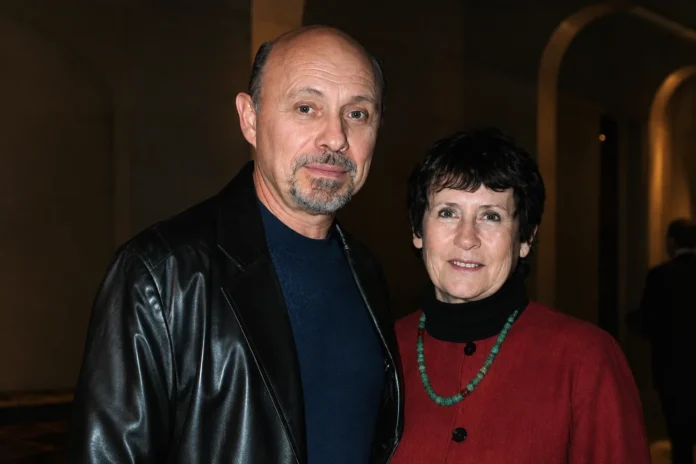

Carolee Campbell is an American actress, photographer, book artist, and fine press publisher. She became widely known through the television drama The Doctors. Her character, Carolee Simpson, became a familiar face in American daytime television.
Campbell later moved from acting toward photography and bookmaking. She founded Ninja Press in Los Angeles in 1984. Her handmade books combine contemporary poetry with careful letterpress printing and visual art.
She also earned Emmy recognition for her acting work. Campbell married actor Héctor Elizondo and built a long creative life afterward. Her career now connects television, photography, publishing, and traditional book arts.
Who Is Carolee Campbell?
Carolee Campbell has worked across several very different creative fields. Acting first brought her national attention. Fine press publishing later became the center of her artistic career.
Carolee Campbell’s Age, Birthday, Birthplace, and Nationality
Campbell was born on August 13, 1936. Her birthplace was Los Angeles in California. She is an American citizen from the United States.
Campbell turned 90 years old in 2026. She has worked as an actress, photographer, and book artist. Her birth date is included in her basic biographical record.
| Fact | Detail |
| Full name | Carolee Campbell |
| Birth date | August 13, 1936 |
| Birthplace | Los Angeles, California |
| Nationality | American |
| Age in 2026 | 90 years |
| Zodiac sign | Leo |
| Main fields | Acting, photography, book arts |
What Is Carolee Campbell Best Known For?
Television viewers know Campbell for playing Carolee Simpson on The Doctors. The character later became associated with the name Carolee Simpson Aldrich. Her long daytime television run established her first public identity.
Book collectors know her differently through Ninja Press. She creates handmade books using bookmaking and letterpress printing. Contemporary poetry and visual art often meet inside her fine press publishing.
Her career also includes photography and an Emmy Award. These fields connect through Campbell’s strong interest in craft. That combination makes her work unusual within American creative life.
Early Life and Acting Training
Campbell grew up in Los Angeles and entered theater training during her teens. Performing arts became her first serious creative discipline. She later moved toward professional stage and screen work.
Uta Hagen helped deepen Campbell’s acting training in New York. Campbell also joined the Actors Studio as a lifetime member in 1964. Lee Strasberg then introduced another approach to performance training.
That work drew from the Stanislavski system and Method acting principles. Campbell learned research, repetition, technique, and controlled emotional work. Those habits later influenced her careful approach to bookmaking.
Her early career developed during the 1960s. Acting classes and workshops supported her work in American television. Theater remained the foundation beneath her later screen performances.
Carolee Campbell’s Acting Career
Campbell built her acting career through theater before gaining television recognition. American daytime television eventually brought her a much larger audience. Her screen work remains an important part of her biography.
The Doctors and Carolee Simpson Aldrich
Campbell joined The Doctors in 1967. She played Nurse Carolee Simpson during her long run. The daytime drama became her best-known television project.
Her tenure continued through 1976 and covered nine years. IMDb currently lists Campbell across 1,753 episodes. Her character later became known as Carolee Simpson Aldrich.
Daily production schedules demanded steady acting work. Daytime television also required performers to sustain characters across many episodes. Campbell handled that workload throughout much of her television career.
Other Film and Television Credits
Campbell appeared in Sticky My Fingers… Fleet My Feet in 1970. She played Marian in the short film. This Is My Son followed as a television production in 1977.
These projects kept her screen career broader than one daytime role. Film and television required different rhythms from continuing drama. Campbell brought her established acting craft to both formats.
Emmy Recognition for This Is My Son
This Is My Son gave Campbell important award recognition. The production aired in 1977 with Campbell as Emily Kingston. Her performance received recognition at the 1978 Daytime Emmy Awards.
The category was Individual Achievement in Religious Programming. Campbell received the performing honor for the NBC production. The Emmy remains a major marker in her acting career.
Why Carolee Campbell Stepped Away From Acting
Campbell began moving away from television during the mid-1970s. Photography had already become a serious parallel practice. She spent significant time working inside the darkroom.
Her visual art also reached gallery exhibitions during this period. Photographic techniques gave Campbell more control over her creative process. She increasingly preferred the focused independence that photography offered.
By 1976, Campbell decided to leave regular acting behind. That choice opened more time for craftsmanship and photographic processes. Bookmaking eventually grew from this creative transition.
Carolee Campbell’s Photography and Transition Into Book Arts
Photography created the bridge between Campbell’s acting career and later bookwork. Her darkroom practice encouraged patience and careful physical production. Those habits gradually moved into visual art and publishing.
Photography and Historical Photographic Processes
Campbell worked with photography alongside her television career. Darkroom work gave her direct control over finished images. She also explored both 19th-century processes and 20th-century processes.
Historical photographic techniques later became part of her books. Cyanotype offered one way to connect image-making with handmade pages. Gallery exhibitions also developed her confidence as a visual artist.
Her photography depended on physical materials and measured craftsmanship. That approach fit naturally with later book arts. Each process demanded attention from preparation through the finished object.
From Photographs to Handmade Books
Campbell began turning photographic sequences into bound photographic sequences. Those experiments led directly toward bookbinding. Experimental book structures then expanded what her visual storytelling could become.
Bookmaking gave Campbell another form for combining paper and image. Art education helped support her growing technical skills. Handmade books soon became a serious part of her practice.
Fine press publishing followed from those experiments. Campbell could now control structure, printing, image placement, and binding. That complete process shaped her identity as a book artist.
The Founding and Development of Ninja Press
Ninja Press gave Campbell a permanent home for her developing craft. She controls each project from design through binding. The press also connects handmade production with contemporary literature.
How Ninja Press Began
Carolee Campbell founded Ninja Press in 1984. She established the fine press operation in the Los Angeles area. Contemporary poetry soon became a lasting focus of its publishing program.
Campbell uses bookbinding and bookmaking to create limited handmade books. Poetry books receive close attention to structure and physical presentation. Letterpress printing remains central to the press’s traditional production methods.
Ninja Press reached 35 years of activity in 2019. Campbell marked that anniversary through a major public lecture. The press completed 40 years of publishing in 2024.
Vandercook Printing and Traditional Production Methods
Campbell prints Ninja Press work on a Vandercook Universal I. This machine is a flatbed proof press. She also works with handset metal type for letterpress printing.
Traditional printing requires every element to receive physical attention. Campbell handles typography, presswork, bookbinding, and many handmade paper choices. Old printing methods become part of each finished edition.
Limited editions allow close control over consistency and craftsmanship. Campbell designs, prints, and binds Ninja Press editions herself. That production model keeps bookmaking closely tied to the artist.
Notable Ninja Press Books and Projects
Ninja Press has produced poetry books and more personal projects. Each work can use different papers and printing structures. Three projects show the range of Campbell’s fine press practice.
Dispatches From the Lizard Brain
Dispatches From the Lizard Brain appeared in 2022. The descriptive bibliography documents more than 38 years of Ninja Press. Nina Schneider prepared the bibliographic descriptions.
Carolee Campbell supplied autobiographical commentary for the book. Harry Reese wrote the foreword to the project. Annie Schlechter photographed Campbell’s books and studio.
Russell Maret contributed the afterword and published the edition. The original fine press edition included 102 copies. A facsimile edition also made the publishing history more accessible.
Report from Zuni: 1986
Ninja Press published Report from Zuni: 1986 in 2022. Campbell produced 70 numbered copies of the handmade book. She used handset Meridien and Neuland for the text.
Letterpress printing placed the type onto Charter Oak handmade paper. That paper had originally been made in 1986. Campbell also completed the limited edition’s binding herself.
XXIV Short Love Poems
Bruce Whiteman wrote XXIV Short Love Poems. Ninja Press published the book in 2002. The project appeared as 135 numbered copies.
Campbell printed Eve and Paramount type for the poems. Koch Antiqua forms part of the Eve type description. She also produced three cyanotypes for the edition.
The cyanotypes used handmade paper from Velké Losiny. Claire Maziarczyk created paste paper for the accordion binding. These materials turned the poetry into a carefully designed physical object.
Carolee Campbell’s Artistic Process and Bookmaking Techniques
Campbell’s bookmaking begins with close attention to words and physical form. Contemporary poetry often provides the literary center. Typography then helps establish each page’s visual rhythm.
She sets handset metal type before beginning letterpress printing. Her Vandercook Universal I creates controlled impressions on selected paper. Presswork remains only one stage of the finished book.
Campbell also handles bookbinding and experimental book structures. Handmade paper and paste paper can shape texture and movement. Cyanotype sometimes brings historical photography directly into her books.
These methods belong to traditional fine press publishing. Limited editions give Campbell room for detailed craftsmanship. Photographic sequences can also become part of the visual structure.
Writers and Artists Connected With Ninja Press
Ninja Press has brought Campbell into contact with many writers. Bruce Whiteman worked with her on XXIV Short Love Poems. Russell Maret later helped document the press through its bibliography.
Nina Schneider contributed detailed bibliography work. Harry Reese supplied the foreword for Dispatches From the Lizard Brain. Annie Schlechter documented Campbell’s studio through photography.
Campbell also produced broadsides connected with the Sun Valley Writers’ Conference. Those projects featured W.S. Merwin and Billy Collins. Michael Ondaatje and Naomi Shihab Nye also appeared through these works.
Kay Ryan joined that group of featured poets. Roy Blount Jr. and Tom Cahill were represented as well. These collaborations connect book artists directly with contemporary poetry.
Libraries and Institutions That Collect Carolee Campbell’s Work
Ninja Press books appear in major institutional collections. The Getty Research Institute collects examples of Campbell’s fine press books. The Library of Congress also holds Ninja Press material.
The New York Public Library owns work from the press. The British Library adds another major international collection. UCLA also maintains substantial examples of Campbell’s books.
UCLA Clark Memorial Library hosted a retrospective in 2004. Lafayette College presented another anniversary exhibition in 2010. Campbell returned to UCLA for the Stephen A. Kanter Lecture in 2019.
The UCSB Davidson Library holds the complete Ninja Press archive. Institutional collections preserve both individual books and publishing history. They also support study of Campbell’s role in contemporary book arts.
Carolee Campbell and Héctor Elizondo
Campbell’s personal life includes a long marriage to actor Héctor Elizondo. Their relationship also connects with her earlier acting years. Both shared links to the New York theater community.
Their Marriage and Long-Term Relationship
Carolee Campbell married Héctor Elizondo on April 13, 1969. They first knew each other through the Actors Studio. Their marriage has lasted for more than five decades.
The couple has remained connected to acting and the arts. Campbell later chose a more private creative life. Elizondo continued a long Hollywood career alongside her bookwork.
Family and Rodd Elizondo
Rodd Elizondo was Héctor Elizondo’s son from an earlier marriage. Carolee Campbell became part of that existing family. Rodd later worked as a preschool teacher in San Francisco.
Rodd died in 2017. His family life remained largely private. Public biographies should distinguish this relationship from Campbell having a biological son.
Carolee Campbell’s Recent Recognition and Current Status
Campbell’s work continues to receive attention beyond her acting career. Recent recognition has focused strongly on Ninja Press. Book arts now define much of her lasting public profile.
2025 Sun Valley Writers’ Conference Recognition
The Sun Valley Writers’ Conference honored Carolee Campbell in 2025. The event showcased selected works connected with Ninja Press. Campbell has supported the conference through her custom bookmaking.
Her broadsides paired contemporary poetry with careful fine press production. The exhibition arrived after Ninja Press passed its 40th anniversary. It also highlighted Campbell’s long relationship with literary culture.
Carolee Campbell in 2026
Carolee Campbell is 90 years old in 2026. Her August 13, 1936 birth date establishes that current age. Ninja Press remains the defining institution of her book arts career.
Her public legacy also includes photography and fine press publishing. Héctor Elizondo remains listed as her spouse. Campbell’s artistic legacy now spans acting and contemporary publishing.
Carolee Campbell’s Influence on Contemporary Book Arts
Campbell helped make Ninja Press a respected fine press publishing project. Her artist books combine contemporary poetry with handmade production. Photography also influences how she handles image and structure.
Bookbinding and letterpress printing remain central to her method. Experimental book structures give each project a distinct physical form. Her Vandercook Universal I supports the presswork behind these editions.
Campbell also works with handset metal type and handmade books. Major institutional collections preserve examples of that craftsmanship. The Getty Research Institute and Library of Congress both collect Ninja Press.
The British Library also holds work from the press. New York Public Library provides another major institutional home. UCLA Clark Memorial Library has repeatedly presented Campbell’s book arts publicly.
Conclusion
Carolee Campbell first became known through The Doctors. Her Carolee Simpson Aldrich role established a long television presence. This Is My Son later brought Emmy Award recognition.
Photography then opened a new creative path for Campbell. She founded Ninja Press in 1984 and embraced letterpress printing. Bookbinding and handmade books became central to her artistic legacy.
Contemporary poetry remains closely tied to her fine press publishing. Héctor Elizondo has shared much of Campbell’s long adult life. Institutional collections now preserve her place within modern book arts.
More Celebrity Profiles: Susan Acevedo: Neil Young’s First Wife, Life, Family & Facts
FAQs
Who is Carolee Campbell?
Carolee Campbell is an American actress, photographer, and book artist. She founded Ninja Press after becoming known as Carolee Simpson on The Doctors.
How old is Carolee Campbell?
Carolee Campbell was born on August 13, 1936. She is 90 years old as of 2026 and was born in Los Angeles, California.
Who is Carolee Campbell married to?
Carolee Campbell is married to Héctor Elizondo. They married on April 13, 1969, and have remained together for more than five decades.
What movies and TV shows did Carolee Campbell appear in?
Campbell starred in The Doctors from 1967 through 1976. She also appeared in Sticky My Fingers… Fleet My Feet and This Is My Son.
Did Carolee Campbell win an Emmy?
Yes. Carolee Campbell received a 1978 Daytime Emmy recognition for This Is My Son. Her category was Individual Achievement in Religious Programming.
What is Ninja Press?
Ninja Press is Campbell’s fine press publishing operation. Founded in 1984, it produces handmade poetry books using letterpress printing and bookbinding.
Why did Carolee Campbell leave acting?
Campbell left regular acting during the mid-1970s. Photography, darkroom work, visual art, and bookmaking had become her stronger creative focus.
What is Carolee Campbell doing today?
In 2025, Sun Valley Writers’ Conference honored Campbell’s Ninja Press work. In 2026, her public legacy centers on photography and fine press publishing.