

Compressed air supports production in manufacturing, packaging, maintenance, food processing, automotive work, and many other industrial settings. It is also easy to waste when leaks, pressure problems, poor controls, and unnecessary end uses go unnoticed. A practical review of compressed air pipe systems, supply equipment, and point-of-use devices can help a facility reduce waste while protecting production reliability.
Why Compressed Air Efficiency Deserves Attention
Compressed air is a plant utility, not simply a compressor-room concern. The system includes compressors, dryers, filters, receivers, piping, valves, hoses, regulators, tools, and automated equipment. A problem in any one area can affect the rest of the system. For example, a clogged filter can cause downstream pressure loss, leading someone to raise the system pressure even though the actual issue is a restriction.
The U.S. Department of Energy emphasizes a systems approach that considers supply, distribution, storage, controls, and end uses together. Its compressed air system resources cover topics such as leaks, air quality, storage strategies, control methods, maintenance, and inappropriate uses of compressed air. That approach matters because a larger compressor cannot correct persistent leaks or poor pressure management on its own.
Start With A Simple System Audit
A useful audit begins with a clear picture of where air is produced, where it travels, and where it is consumed. The goal is to identify mismatches between the system’s normal operating conditions and production needs.
- List compressors, dryers, filters, receivers, main headers, branch lines, drains, valves, hoses, and major air-consuming equipment.
- Record operating pressure, compressor run time, production schedules, maintenance history, and known problem areas.
- Note changes in demand between shifts, during breaks, on weekends, and during planned shutdowns.
- Compare compressor output and operating behavior with actual production requirements.
- Mark areas with pressure swings, slow pneumatic tools, frequent cycling, moisture concerns, or repeated repairs.
Find And Repair Compressed Air Leaks
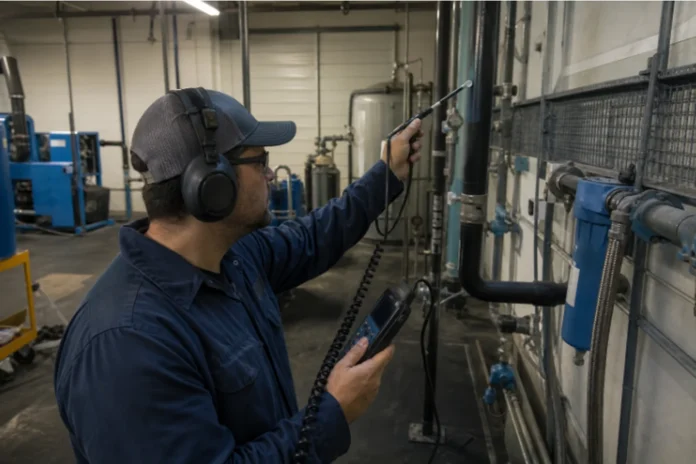
Leaks are among the most common sources of avoidable demand for compressed air. In a noisy facility, many leaks cannot be heard reliably, especially when equipment is running. An ultrasonic detector or acoustic imaging tool can help maintenance teams locate leaks at couplings, threaded joints, fittings, quick-connects, regulators, valves, drains, hoses, and flanges.
Create a leak log rather than treating repairs as isolated tasks. Tag each leak with its location, suspected cause, repair priority, repair date, and verification status. Address the largest or most costly leaks first, then test the area again after repair. A recurring survey is important because vibration, hose wear, equipment changes, and routine service can create new leak points over time.
Lower Pressure Without Hurting Production
Raising the compressor discharge pressure may appear to resolve a tool-performance complaint, but it may increase leakage and mask restrictions elsewhere in the system. Instead, measure pressure at the compressor, main header, branch line, and point of use. This reveals where pressure is being lost.
Common causes include dirty filters, undersized piping, restrictive fittings, long hose runs, sharp directional changes, and poorly selected regulators. Set the overall system to the lowest stable pressure that allows equipment to operate correctly. If one workstation needs a higher pressure than the rest of the plant, use a properly managed local solution instead of increasing pressure across the plant. Test each adjustment to confirm product quality, equipment operation, and worker safety.
Review Piping Layout And Airflow
The distribution network directly affects pressure stability and future expansion. Long dead-end runs can make it harder to serve changing demand, while poorly located branches may cause avoidable pressure drop in high-use areas. A looped layout can provide multiple paths for air to reach multiple production zones, which may improve distribution flexibility when properly designed.
Keep piping accessible for inspection and repair. Protect lines from physical impact, heat, chemicals, and moisture exposure. Use appropriately sized branch connections and minimize restrictions that create unnecessary loss. For general background on how compressed air is produced and used, the compressed air overview explains its broad industrial role.
Control Demand At The Point Of Use
The least expensive unit of compressed air is the air that does not need to be generated. Review every end use and ask whether compressed air is necessary for the task. Open blowing, continuous purge applications, idle equipment, and unisolated branches can create demand that adds little or no value to production.
- Replace uncontrolled blowing with engineered nozzles or another suitable method for the task.
- Turn off unused branches during shutdowns, breaks, and non-production periods.
- Repair damaged hoses, fittings, and quick-connects near workstations.
- Use timers, solenoid valves, or automatic shutoffs where they fit the process.
- Train employees not to use compressed air for cleaning clothing, floors, or work areas unless the activity is approved and controlled.
Check Storage, Controls, And Compressor Sequencing
Storage and controls help the supply side respond to changing demand. Review whether receiver capacity aligns with the production pattern, particularly during short, high-flow events. Adequate storage can help manage brief demand spikes, reducing the need to bring additional compressor capacity online solely for short events.
Also, review compressor sequencing. Multiple compressors running lightly loaded for extended periods may not match the facility’s actual demand profile. Control settings should reflect both normal operating conditions and expected peaks. Maintenance and operations personnel should revisit those settings after changes to production schedules, equipment, or air use.
Build Maintenance And Data Into The Program
Efficiency improvements last longer when they become routine maintenance work. Schedule filter and drain checks, review dryer performance and air quality requirements, inspect hoses and fittings, and monitor compressor temperature, vibration, oil condition, and service alerts. Keep a repair log to identify locations where leaks or restrictions return repeatedly.
Before making changes, establish a baseline for compressor power use, system pressure, airflow, loaded and unloaded hours, leakage estimates, energy per unit of production, and downtime due to low pressure or air quality issues. Compare the same measurements after repairs or control adjustments. This gives the team evidence of what worked and helps prioritize the next project.
A Practical 30-Day Improvement Plan
- Days 1 to 5: Map the system and record pressure, run hours, major air uses, and production schedules.
- Days 6 to 10: Conduct a leak survey, tag issues, and rank repairs by priority.
- Days 11 to 15: Repair major leaks and verify that repairs hold.
- Days 16 to 20: Review pressure settings, filters, drains, hoses, regulators, and point-of-use devices.
- Days 21 to 25: Check receiver capacity, compressor sequencing, and shutdown controls.
- Days 26 to 30: Compare energy and production data with the original baseline, then assign follow-up actions.
Common Questions About Compressed Air Efficiency
How Often Should A Facility Check For Leaks?
The right schedule depends on operating hours, plant size, system age, equipment conditions, and past leak history. A facility with frequent production changes or a history of recurring leaks may need more frequent surveys than a smaller, stable operation.
Should A Facility Replace Its Compressor First?
Not necessarily. Review leakage, pressure settings, demand, controls, storage, and distribution before making a major equipment decision. New equipment may not resolve losses caused by an inefficient network or unnecessary air use.
How Can A Facility Identify Artificial Demand?
Compare airflow and compressor behavior during production and non-production periods. Meaningful air use during shutdowns can indicate leaks, open valves, automatic devices, or equipment that has not been isolated.
Conclusion
Compressed air efficiency is an ongoing management task. By finding leaks, reducing unnecessary pressure, improving airflow, controlling demand, maintaining equipment, and tracking results, facilities can reduce waste while supporting steady production. The strongest long-term solution is not always more compressor capacity. It is a better-managed compressed air system.

