


In September 2026, the digital landscape demands a unified approach where web design and digital marketing are not merely complementary but intrinsically integrated. This synergy is crucial for effective traffic acquisition, establishing brand consistency, optimizing lead generation, facilitating omnichannel marketing, and guiding customer journeys. When these elements work in harmony, they create a powerful engine for business growth.
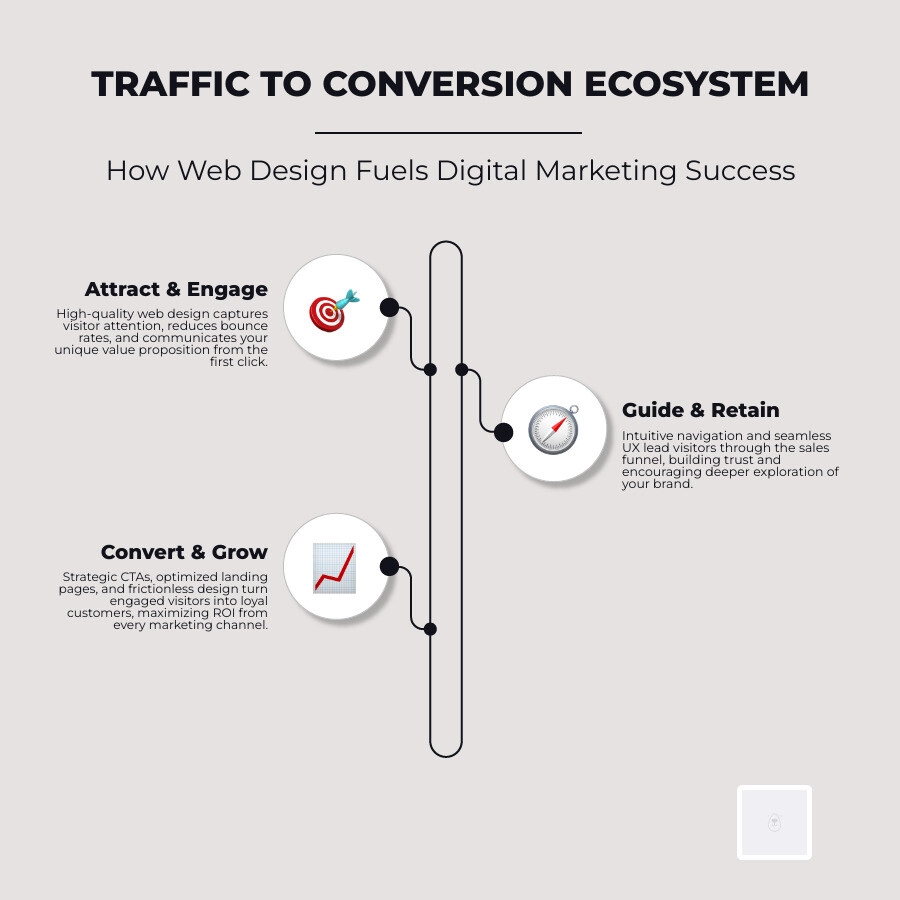
We understand that a website is far more than just an online brochure; it’s a dynamic platform that actively participates in every stage of the customer lifecycle. From the initial impression to the final conversion, its design dictates user interaction, engagement, and ultimately, success. Our approach emphasizes making design decisions based on concrete metrics, ensuring every visual and functional element serves a strategic purpose. This commitment to measurable outcomes is a hallmark of effective data-driven digital marketing.
The Interconnected Ecosystem of Traffic and Conversion
The journey from a website visitor to a loyal customer is a delicate dance between attracting attention and retaining engagement. A well-designed website significantly enhances visitor retention by providing an intuitive and satisfying experience. It effectively communicates your value proposition, guiding users seamlessly through the digital sales funnel.
Every page, every call-to-action, and every content piece must align with your overall marketing strategy to build strong brand equity and drive conversions. Without a thoughtful web design, even the most robust marketing campaigns can fall flat, as visitors quickly bounce from a site that doesn’t meet their expectations for functionality or aesthetics.
Bridging Graphic Design, Digital Marketing and Web Design
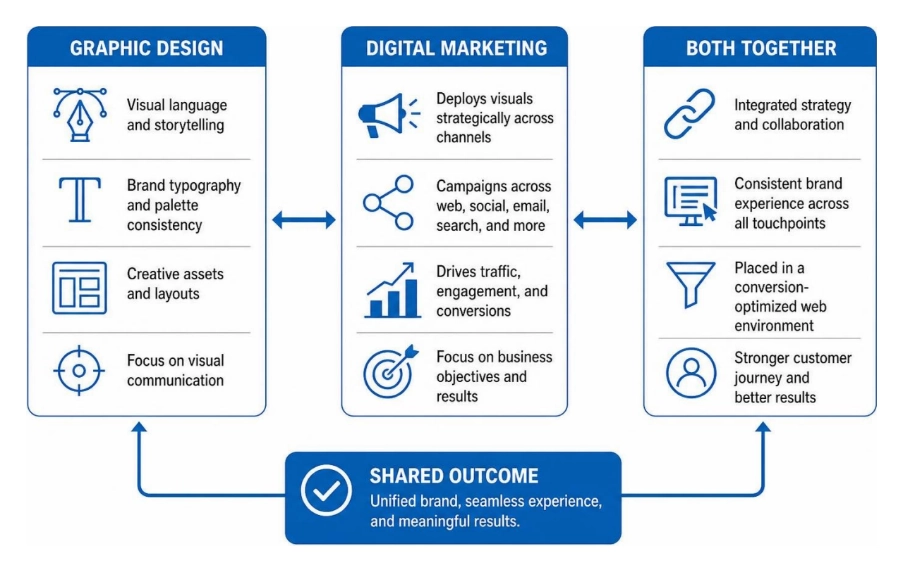
Graphic design serves as the visual language that underpins both web design and digital marketing. It’s the art of visual storytelling, ensuring brand typography, palette consistency, and creative assets are harmonized across all platforms. Whether it’s an ad banner, a social media post, or the layout of a landing page, consistent graphic design reinforces your brand identity and enhances campaign continuity.
While graphic design focuses on visual communication, digital marketing deploys these visuals strategically across various channels to achieve business objectives. The collaboration between these disciplines is non-negotiable; a stunning visual asset is only effective if it’s placed strategically within a conversion-optimized web environment.
Building High-Impact Foundations for SEO and Technical Performance
For a website to succeed in the competitive online arena of September 2026, it must be built on a robust technical foundation that prioritizes search engine optimization (SEO). This involves ensuring crawlability and indexation by search engine bots, utilizing semantic HTML, implementing structured data, and optimizing for Core Web Vitals. These technical aspects are not merely backend considerations; they are critical drivers of your site’s visibility and user experience.
Search Engine Optimization and Technical Site Architecture
A website’s technical architecture profoundly influences its ability to rank highly in search engine results. Implementing schema markup, for instance, helps search engines understand the context of your content, leading to richer search snippets and improved click-through rates. Site speed is another paramount factor; slow-loading pages lead to higher bounce rates and lower search rankings.
A clean codebase, optimized URL structure, and proper use of headings and meta descriptions all contribute to algorithmic visibility. Google consistently updates its algorithms to favor sites that offer the best user experience, making a coordinated approach to technical SEO and content strategy an ongoing necessity for maintaining and improving Google rankings.
Mobile-First Indexing and Responsive Layouts
With over 60% of global web traffic now originating from mobile devices, a mobile-first approach is no longer optional—it’s essential. Google’s mobile-first indexing means that the mobile version of your website is the primary one used for ranking. This necessitates responsive layouts that adapt seamlessly to various screen sizes and devices.
Viewport optimization, fluid grids, appropriately sized tap targets, and cross-browser compatibility are critical design considerations. A poorly optimized mobile site will not only deter users but also significantly harm your search engine performance. We ensure that every website we build is meticulously designed and developed to perform flawlessly across all devices, delivering an optimal experience for every user.

Optimizing User Experience to Accelerate Conversion Rates
The ultimate goal of both web design and digital marketing is to drive conversions. This is where user experience (UX) takes center stage. A compelling UX design leverages behavioral psychology to create an intuitive and enjoyable journey for the user, fostering trust signals and guiding them towards desired actions. From the placement of call-to-action buttons to the overall flow of information, every element is designed with conversion rate optimization in mind.
We believe that a website should not just look good; it should be a highly efficient conversion machine. Our expertise in crafting custom websites and web applications means we prioritize UX from the initial concept to the final launch, ensuring every detail contributes to your business objectives.
UX Architecture, Navigation Hierarchy, and User Trust
An intuitive navigation hierarchy is the backbone of a positive user experience. When users can easily find what they’re looking for, their cognitive load is reduced, leading to greater satisfaction and longer dwell times. Conversely, confusing navigation can quickly lead to frustration and abandonment.
Beyond usability, trust is a critical component of conversion. Websites must adhere to accessibility standards, such as WCAG compliance, to ensure inclusivity and demonstrate a commitment to all users. These elements, combined with clear, consistent messaging and professional aesthetics, build consumer credibility and encourage engagement.
Conversion-Focused Visual Elements and Friction Reduction
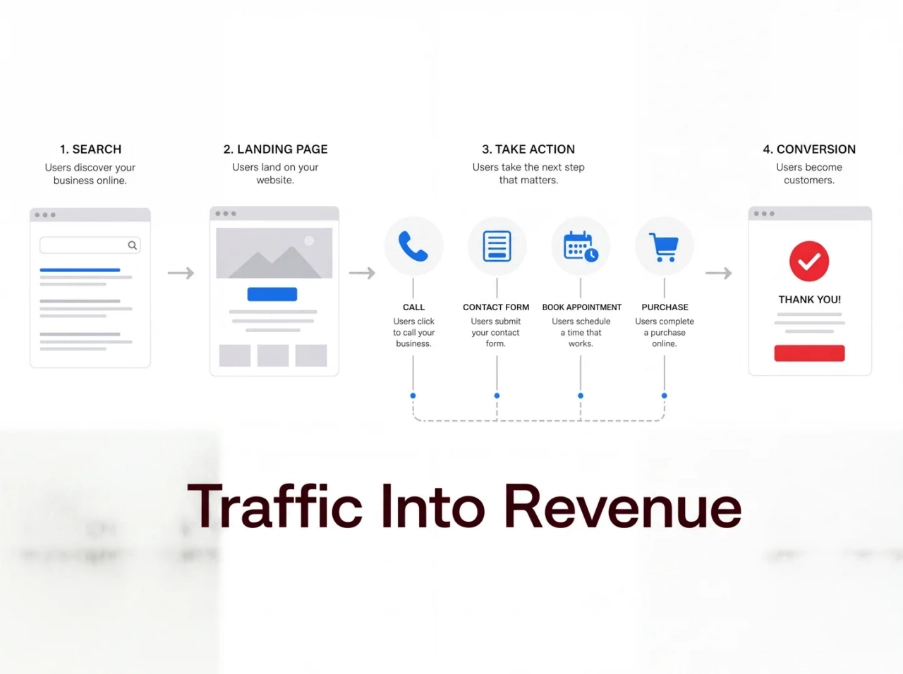
Visual elements play a powerful role in triggering actions and reducing friction in the conversion process. Clear, high-contrast call-to-action buttons, strategically placed, can significantly boost click-through rates. Subtle micro-animations can draw attention to important elements without being distracting.
Streamlined checkout flows, optimized forms with minimal fields, and prominent display of social proof (like testimonials and reviews) all contribute to a smoother, more trustworthy user journey. By continuously analyzing user behavior through tools like heatmaps, we can identify and eliminate points of friction, ensuring that your website guides visitors effortlessly toward conversion.
Key Trends, Performance Measurement, and Optimization Frameworks
The digital world is in constant flux, with emerging technology continually reshaping how we approach digital marketing and web design. Staying ahead requires embracing AI integrations, committing to continuous tracking, establishing robust analytics governance, and maintaining marketing agility. Our strategies are built to adapt, ensuring your online presence remains cutting-edge and effective in September 2026 and beyond.
Modern Trends: AI Architecture, Micro-Interactions, and Search Intelligence
The current landscape is dominated by advancements in AI, which are profoundly impacting web design and search. AI-ready architecture, featuring semantic HTML and structured data, ensures that your content is not only crawlable by traditional search engines but also easily digestible and citable by large language models (LLMs) and AI search tools.
Conversational interfaces, such as chatbots and voice assistants, are becoming integral for customer service and lead generation. We are also seeing the rise of AI-Enhanced Optimization (AEO) and Geo-Enhanced Optimization (GEO), where AI refines search results based on user intent and location.
Dynamic personalization, where website content adapts to individual user behavior, is enhancing engagement and conversion. Furthermore, the trend towards visual minimalism and subtle micro-interactions continues, creating clean, engaging, and highly functional user interfaces.

Tracking Analytics, KPIs, and Return on Investment
Measuring the success of your digital marketing and web design efforts is paramount. We utilize advanced analytics tools like Google Analytics 4 to track key performance indicators (KPIs) such as conversion rates, session duration, bounce rates, and user engagement metrics. Event tracking allows us to monitor specific user actions on your site, providing invaluable insights into user behavior.
Through meticulous data analysis, we can attribute revenue to specific marketing channels and design elements, providing a clear picture of your return on investment (ROI). This data-driven approach enables continuous testing and iterative improvements, ensuring your website and marketing campaigns are always optimized for maximum performance.
Avoiding Common Digital Marketing and Web Design Mistakes
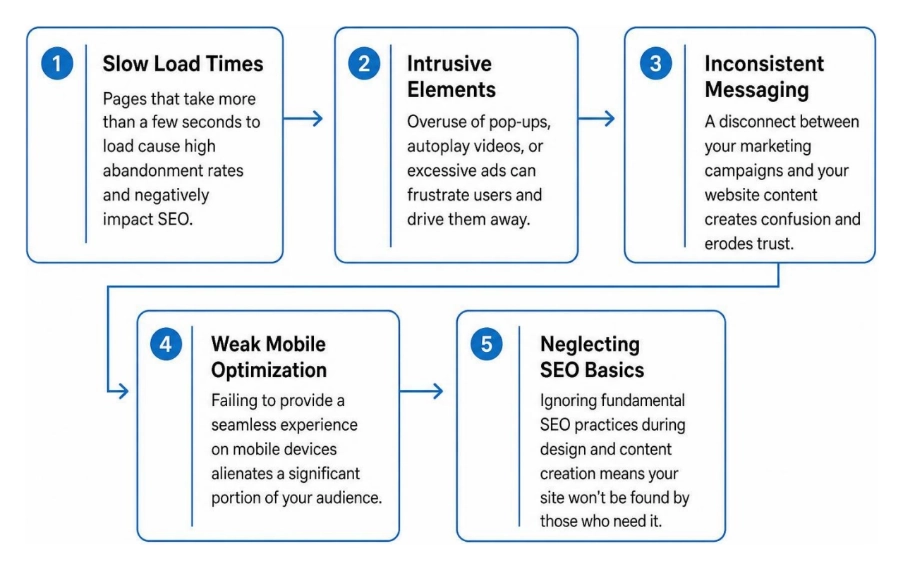
Even with the best intentions, businesses can fall prey to common pitfalls that undermine their digital presence. Here are some critical web design and digital marketing mistakes we consistently help clients avoid:
- Slow Load Times: Pages that take more than a few seconds to load cause high abandonment rates and negatively impact SEO.
- Intrusive Elements: Overuse of pop-ups, autoplay videos, or excessive ads can frustrate users and drive them away.
- Inconsistent Messaging: A disconnect between your marketing campaigns and your website content creates confusion and erodes trust.
- Weak Mobile Optimization: Failing to provide a seamless experience on mobile devices alienates a significant portion of your audience.
- Neglecting SEO Basics: Ignoring fundamental SEO practices during design and content creation means your site won’t be found by those who need it.
- Lack of Clear Calls-to-Action (CTAs): Users need clear guidance on what to do next; ambiguous CTAs lead to lost opportunities.
- Ignoring Accessibility: Failing to meet accessibility standards not only excludes users with disabilities but can also lead to legal repercussions.
- Outdated Content: Stale or irrelevant content diminishes your authority and reduces user engagement.
- No Analytics Tracking: Without proper tracking, you can’t measure performance, identify issues, or make informed decisions for improvement.
Frequently Asked Questions About Web Design and Marketing
We often encounter similar questions from businesses looking to optimize their online presence. Here, we address some of the most common inquiries regarding search visibility, technical performance, and user engagement.
What is the primary role of web design in a digital marketing strategy?
Web design acts as the central conversion engine and the primary brand representation in your digital marketing strategy. It’s where all marketing efforts converge, serving as the ultimate touchpoint for customer interaction.
A well-designed website captures leads, nurtures prospects, and facilitates sales, directly contributing to customer retention and overall business growth. It translates marketing messages into tangible user experiences.
How does web design directly impact search engine rankings and SEO?
Web design significantly impacts SEO through several key factors. Page speed, mobile usability, and user dwell time are all direct results of design choices and are heavily weighted by search engines. Google’s Core Web Vitals (Largest Contentful Paint, First Input Delay, and Cumulative Layout Shift) are direct ranking factors that measure user experience, which are inherently tied to web design.
A clean architecture with semantic HTML and structured data also makes it easier for search engines to crawl and understand your content, leading to better rankings.
How often should a business update its digital marketing and web design infrastructure?
In September 2026, continuous optimization is the standard, not just periodic updates. While a major redesign might occur every 3-5 years, smaller updates, security audits, and content refreshes should be ongoing.
We recommend regular performance reviews to ensure trend alignment, assess the effectiveness of your tech stack, and address any emerging security vulnerabilities. This iterative development approach ensures your infrastructure remains competitive and secure.
Conclusion
The synergy between digital marketing and web design is no longer a luxury but a fundamental requirement for success in the digital age. As we look towards the future, a holistic execution that integrates these two disciplines from the outset will be the defining characteristic of leading brands.
Through iterative development, strategic alignment, and a keen eye on evolving trends, businesses can achieve scalable growth and solidify their brand authority online. By focusing on user experience, technical performance, and data-driven insights, we can transform your website into a powerful asset that not only looks exceptional but also consistently delivers measurable results.