
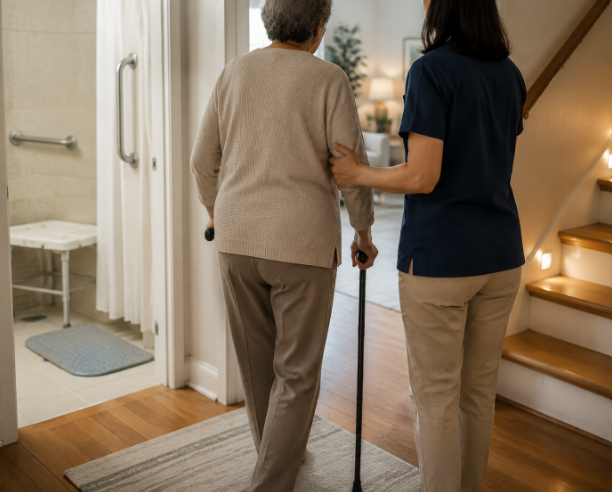

The wish to stay home as one ages is nearly universal. The trouble is that the house a person raised a family in was never designed for the body they have decades later. Making aging in place safe is partly a matter of help and partly a matter of the home itself, and the second half is the one families tend to overlook.
Risk Concentrates in a Few Places
Most incidents at home happen in predictable spots rather than at random. The bathroom leads the list, with its hard surfaces and wet floors, followed by stairs, and then the dim or cluttered paths a person crosses without thinking. The reassuring part is that these hazards are usually fixable, and often cheaply:
- Grab bars and a non-slip surface in the bath and shower
- Brighter lighting on stairs and along nighttime routes
- Loose rugs and cords cleared from walking paths
- A direct, unobstructed route to the bathroom for the dark hours
Small changes in a few rooms remove a surprising amount of the danger. The house itself does a lot of the work of keeping a person safe, once it is set up for the job.
Help and Home Work Together
A safer house lowers the odds, but it cannot read a person the way a caregiver can. Attentive care catches what no modification will: an unusually unsteady morning, dizziness from a new medication, a gradual loss of strength that changes what is safe. The value of In-Home Senior Care in Granbury, TX and elsewhere is partly this, a person adjusting the help to the day while the home stays arranged to support it. The environment handles the constant risks; the caregiver handles the changing ones. Neither on its own is quite enough, and together they make staying home truly safe rather than simply preferred.
Prevention Costs Less Than the Alternative
There is a plain logic underneath all of this. A few grab bars, better bulbs, and some hours of help cost a fraction of an injury, a hospital stay, or a move to a facility forced by one bad incident. The aim is to prevent the accident that ends independence rather than to respond after it has already happened. Framed that way, a modest investment in safety at home is usually the cheapest option on the table, not the most expensive.
Small Steps, Chosen for the Person
Which changes matter most depends on the individual and the house they live in. A person unsteady on their feet needs different measures than one with fading eyesight or early memory loss, and a walk through the home with that person in mind tends to reveal the real priorities. Providers who support aging in place often help families spot the hazards they have stopped noticing after years of living with them. The goal is a home and a level of help matched to the person actually living there.
Remaining at home safely is not only about who helps. It is also about where a person lives. A house set up to support an aging body, paired with care that adjusts to the day, is what turns the wish to remain at home into something that holds up.

