

Introduction
Location shoots can be exciting for amateur photographers. A city street, beach, forest path, café corner, sports field, or historic building can offer natural light and interesting backgrounds that are hard to recreate indoors. But shooting outside a controlled studio also means carrying accessories carefully. Batteries, memory cards, lens cloths, filters, notebooks, props, chargers, and personal items can become hard to manage if there is no system.
Good organization allows photographers to focus on the shot instead of searching through bags. It also protects small accessories from dust, moisture, and accidental damage.
Pack for the Shoot Plan, Not Every Possibility
The first mistake many amateur photographers make is bringing too much. They imagine every possible shot and pack accessories for all of them. By the time they arrive, the bag is heavy and difficult to use.
Before leaving, consider the actual shoot plan. Are you taking portraits, product photos, street scenes, or lifestyle shots? Will you change lenses often? Do you need props? How long will you be outside? A clear plan helps reduce unnecessary gear.
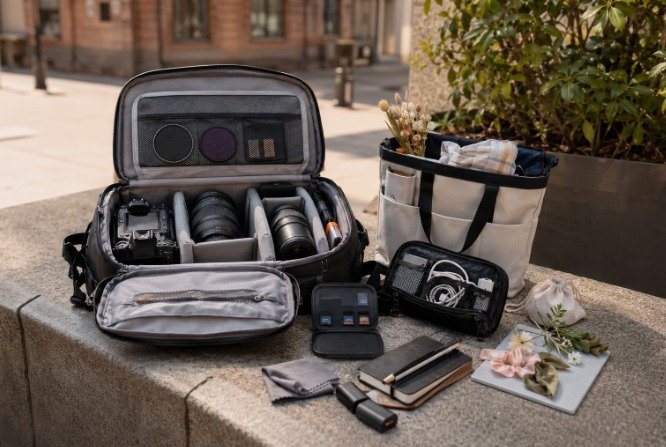
For lighter location shoots, Custom Tote Bags can be useful for carrying props, notebooks, spare clothing, or non-fragile accessories. Camera bodies and lenses should still be protected in padded cases, but a tote can help separate creative materials from technical gear.
Separate Technical Gear From Styling Items
Photography accessories often fall into two groups: technical items and styling items. Technical gear includes batteries, memory cards, lens caps, filters, cables, and cleaning tools. Styling items include fabric, small props, flowers, stationery, products, or outfit accessories.
Mixing these together can cause problems. A lens cloth may pick up dust from props. A memory card may disappear under a scarf. A small filter may be scratched by keys.
Using separate pouches or sections makes setup faster and safer.
Use Zippered Storage for Small Accessories
Small photography items are easy to lose during outdoor shoots. Memory cards, batteries, filters, and remote triggers should never be loose in an open bag. They need secure storage that can be closed quickly.
For photographers who move between locations, Custom Tote Bags with Zipper can help keep accessories enclosed while still offering room for larger non-camera items. A zippered design is especially helpful when walking through crowds, shooting near water, or moving quickly between spots.
Even if the main camera gear stays in a dedicated case, a secure secondary bag can make the whole shoot easier.
Create a Battery and Memory Card System
Few things interrupt a shoot more than dead batteries or full memory cards. Before leaving, charge batteries and format cards if appropriate. During the shoot, keep used and unused cards separate. A small card case is worth using, even for beginners.
For batteries, create a simple rule: charged batteries face one direction, used batteries face another, or store them in separate pouches. This prevents confusion when the light is changing quickly.
Protect Accessories From Weather
Location shoots often involve wind, dust, sand, humidity, or sudden rain. Bring a small cloth, protective pouch, and plastic or waterproof cover if needed. Do not place accessories directly on the ground unless they are protected.
If shooting at the beach or park, check the bag before going home. Sand and dirt can damage equipment if they remain inside.
Reset the Bag After the Shoot
After returning home, remove everything from the bag. Charge batteries, back up files, clean accessories, and return small items to their cases. This habit prevents problems before the next shoot.
A messy post-shoot bag can lead to missing gear later.
Conclusion
Amateur photographers can make location shoots easier by packing intentionally, separating technical gear from styling items, using secure storage, managing batteries and memory cards, and resetting after each session.
A good organization system does not need to be expensive. It simply needs to protect the small items that help the shoot run smoothly.

