
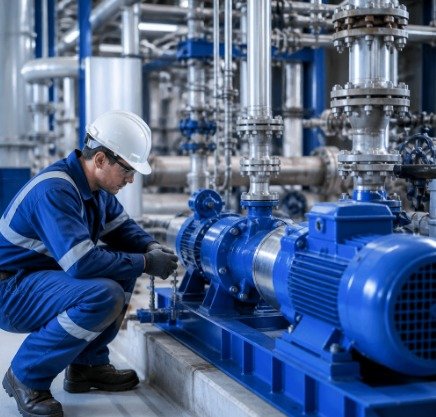

Across the global industrial landscape, operational efficiency has become the defining metric by which process facilities are judged — not just by shareholders, but by regulators, environmental agencies, and the communities they serve. Among the many systems that drive a plant’s day-to-day performance, pumping infrastructure consistently ranks as one of the most energy-intensive and cost-heavy components. Yet for many facility managers, the full economic burden of running inefficient pumping systems remains hidden beneath layers of legacy equipment, outdated maintenance schedules, and reactive rather than proactive engineering decisions. The good news is that a growing number of industrial operators are discovering that meaningful cost reductions are achievable without compromising throughput, safety, or compliance.
The True Cost of Pumping Inefficiency in Process Environments
It is easy to underestimate how much energy a poorly optimized pumping system consumes over its operational lifetime. Studies in the industrial sector consistently show that pumping systems account for between 20 and 50 percent of total electrical energy consumption in many process plants. When you factor in maintenance downtime, unplanned repairs, and the cascading effects of pump failure on upstream and downstream processes, the financial impact becomes substantial. Facilities that have not audited their pumping systems in the past five years are almost certainly operating with measurable inefficiencies — whether from oversized pumps running at partial load, worn impellers reducing hydraulic performance, or control systems that have not been updated to reflect current process demands.
Energy Audits as a Starting Point
A rigorous energy audit is the foundation of any serious cost-reduction initiative in a process plant. This involves mapping every pump in the facility, recording its rated versus actual operating conditions, and identifying where the greatest gaps exist between design intent and real-world performance. Variable frequency drives (VFDs), for instance, are one of the most well-documented tools for reducing energy consumption in pumping applications. By allowing a pump to operate at variable speeds rather than running continuously at full capacity, VFDs can reduce energy use by 30 to 50 percent in systems where flow demand fluctuates. Yet many older facilities still rely on throttle valves and bypass lines to manage flow — a fundamentally wasteful approach that VFD technology renders obsolete.
Strategic Equipment Sourcing and the Role of Used Process Equipment
International Process Plants has long been recognized as a trusted resource for industrial facilities seeking to upgrade or expand their process infrastructure without the capital expenditure associated with new equipment procurement. For plant managers navigating tight budgets while facing pressure to modernize aging systems, sourcing high-quality used and refurbished process equipment offers a compelling alternative. The ability to acquire proven industrial assets — from centrifugal pumps and compressors to complete processing lines — at a fraction of original cost allows facilities to reallocate capital toward automation, instrumentation, and energy management systems that deliver long-term operational savings.
Evaluating Used Equipment for Pumping Applications
When sourcing used pumping equipment, the evaluation process must be thorough and technically rigorous. Key considerations include the pump’s material of construction relative to the process fluid being handled, the condition of mechanical seals and bearings, and whether the unit’s hydraulic curve aligns with the system’s actual head and flow requirements. A pump that was perfectly suited to one application may be entirely inappropriate for another, even if the physical specifications appear similar on paper. Engaging experienced process engineers during the selection phase is not optional — it is essential for avoiding costly mismatches that negate the savings achieved through used equipment procurement.
Operational Strategies That Deliver Sustained Savings
Beyond equipment selection, the operational strategies a facility adopts have a profound influence on long-term pumping costs. Predictive maintenance programs, enabled by vibration monitoring, thermal imaging, and real-time performance data, allow maintenance teams to identify developing faults before they result in catastrophic failure. This shift from reactive to predictive maintenance not only reduces repair costs but also extends equipment service life significantly. According to expert guidance on minimizing operating costs for pumping systems, facilities that implement comprehensive monitoring programs can reduce unplanned downtime by as much as 70 percent while simultaneously lowering overall maintenance expenditure.
System Curve Optimization and Hydraulic Modeling
One of the most underutilized tools in industrial pump management is hydraulic modeling. By creating an accurate digital representation of the piping network — including pipe diameters, lengths, fittings, elevation changes, and process fluid properties — engineers can identify precisely where energy is being lost and what modifications would yield the greatest efficiency gains. In many cases, relatively minor changes such as replacing a gate valve with a ball valve, eliminating unnecessary pipe bends, or resizing a section of piping can shift the system curve enough to allow a pump to operate closer to its best efficiency point (BEP). Operating consistently at or near BEP not only reduces energy consumption but also dramatically extends the life of mechanical seals, bearings, and impellers.
Leadership and Vision in Industrial Efficiency
Driving meaningful change in how industrial facilities manage their process systems requires more than technical expertise — it demands leadership that understands both the operational and human dimensions of transformation. Profiles like that of Chandie Yawn-Nelson illustrate how visionary leadership can catalyze systemic improvements across complex organizations. In the context of industrial process management, leaders who champion efficiency initiatives, invest in workforce training, and build cultures of continuous improvement are the ones who ultimately deliver the most durable results. Technology alone does not reduce operating costs — people who understand how to deploy it effectively do.
Building a Culture of Continuous Improvement
Sustainable efficiency gains in process plants are rarely the result of a single project or capital investment. They emerge from an organizational culture that treats operational performance as an ongoing discipline rather than a periodic initiative. This means establishing clear key performance indicators for energy consumption and maintenance costs, reviewing them regularly, and empowering frontline operators to flag inefficiencies as they observe them. When the people closest to the equipment are engaged in the improvement process, the quality and speed of problem identification improves dramatically. Training programs that build technical literacy around pumping systems, fluid dynamics, and energy management give operators the vocabulary and confidence to contribute meaningfully to efficiency discussions.
About International Process Plants
International Process Plants is a globally recognized leader in the buying and selling of used industrial process equipment and complete manufacturing facilities. With decades of experience serving clients across the chemical, pharmaceutical, food processing, and energy sectors, the company provides access to an extensive inventory of high-quality assets that enable facilities to modernize and expand their operations cost-effectively. Their team of experienced engineers and industry specialists supports clients through every stage of the acquisition process, from initial equipment evaluation through logistics and installation planning. For industrial operators seeking to balance capital efficiency with operational performance, International Process Plants represents a strategic partner of proven value.
Conclusion
The path to lower pumping system operating costs is neither mysterious nor unattainable. It requires a disciplined combination of accurate system assessment, strategic equipment selection, modern control technologies, and a leadership culture committed to continuous improvement. Facilities that approach this challenge systematically — rather than reactively — consistently outperform their peers in both cost efficiency and operational reliability. As energy prices remain volatile and regulatory pressures intensify, the industrial operators who invest in understanding and optimizing their pumping infrastructure today will be the ones best positioned to compete and thrive in the years ahead.