
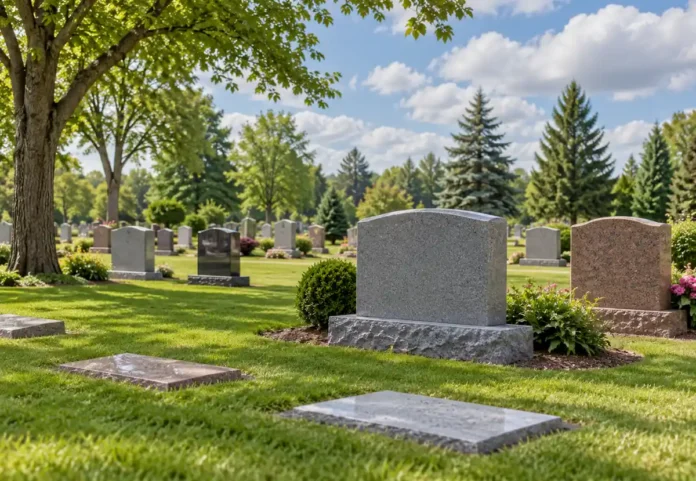

Choosing a memorial is both a practical decision and a personal act of remembrance. Families looking at grave markers Lansing often find that the best place to begin is not with a color or inscription, but with the cemetery’s requirements and the needs of the people who will visit the site for years to come.
In Lansing, Michigan, a marker must withstand the changing seasons, from wet springs and humid summers to freezing temperatures and snow. A thoughtful choice balances cemetery rules, durable materials, readable wording, and details that reflect the person being remembered.
Start With the Cemetery’s Rules in Lansing
Every cemetery may set its own requirements for marker height, width, thickness, color, material, placement, foundations, and decorations. Rules can also differ between sections of the same cemetery. Before ordering anything, ask for written guidelines and confirm whether the plot allows a flush, bevel, slant, or upright monument.
The Federal Trade Commission advises families to consider restrictions involving monuments, memorials, flowers, and other grave remembrances when evaluating cemetery arrangements. This early step can prevent a design from being delayed, changed, or declined after it has been selected.
When families want help translating cemetery rules into a fitting design, speaking with a monument maker in Lansing MI can make the process more manageable. Bring the cemetery’s written specifications, plot information, and any preferences for a shared or individual memorial.
Learn the Main Marker Styles for Lansing Memorials
A grave marker is generally lower to the ground than a traditional upright headstone, but there are several forms to consider. The right option depends on cemetery rules, the available space, desired visibility, and the family’s preferences in the Lansing area.
- Flush markers sit level with the lawn and offer a simple, streamlined appearance.
- Bevel markers rise slightly at the back, creating a modest slope that can improve visibility.
- Slant markers have an angled face that provides room for lettering and artwork.
- Upright monuments stand vertically and can accommodate more names, family information, and design elements.
There is no universal “best” style. A flush marker may fit well within a cemetery’s landscape plan, while an upright memorial may be appropriate where visibility and larger family inscriptions matter most.
Compare Materials for Lansing’s Seasonal Weather Conditions
Material affects appearance, lettering options, care needs, and how a memorial responds to weather. Granite is widely chosen for its durability and range of colors and finishes. Bronze is commonly used for plaques and develops a natural patina over time. Marble has a classic appearance, while limestone and sandstone can offer a softer visual character but may require more caution in exposed settings.
For a Lansing-area memorial, the choice of material is particularly important given the region’s climate. Lansing experiences significant freeze-thaw cycles during the winter months, with temperatures dropping well below freezing and spring thaws creating moisture that penetrates stone surfaces. Ask how the selected material and finish will handle moisture, snow, ice, sun exposure, soil contact, and repeated freezing and thawing. The National Park Service notes that water entering cracks and pores can contribute to weathering during freeze-thaw cycles, which makes sound installation and sensible long-term care important for durability in Michigan’s climate.
Choose a Size That Fits the Space
A larger memorial is not automatically a better memorial. Confirm the grave space dimensions, nearby plot boundaries, and cemetery maximums before selecting a size. Also, ask whether a base, vase, footstone, or foundation is included in the permitted dimensions.
- Verify whether the marker is for one person, two people, or a family plot.
- Confirm the allowed width, height, and thickness.
- Ask where the marker must be placed within the lot.
- Determine whether a future inscription can be added.
Plan the Words Before the Artwork
Start the inscription with the essential information: the person’s name and birth and death dates. Then consider a nickname, relationship title, short epitaph, faith-based phrase, or other meaningful wording. Brief inscriptions are often easier to read from a comfortable distance and leave room for a balanced layout.
Prove every detail against reliable family or official records. Check spelling letter by letter, verify dates, and review punctuation, accents, line breaks, and capitalization. This is especially important on companion markers, where a future date or additional inscription may need space later.
Add Personal Details With Care
Meaningful design details can make a marker feel personal without overwhelming it. A flower, musical note, military emblem, faith symbol, fishing scene, school reference, or other image can represent a life well lived. One or two elements with genuine meaning usually create a clearer and more lasting design than many unrelated decorations.
Set a Realistic Budget and Timeline
Ask for a written estimate that separates the cost of the marker, engraving, artwork, base or foundation, delivery, installation, cemetery fees, accessories, and possible future lettering. Cemetery-related expenses can extend beyond the memorial itself, so clarity at the beginning helps families compare choices fairly.
Installation timing may depend on production schedules, cemetery approval, weather, ground conditions, and foundation work. Ask who secures required approvals, whether the cemetery performs or oversees installation, and how the family will receive the final design proof before engraving begins.
Review the Proof Before Approval
Before signing off, inspect the full layout rather than only reading the words. Confirm names, dates, font size, spacing, artwork placement, symbol direction, and the way the design will appear on the chosen stone or bronze surface. Written approval creates a clear final record of the family’s decision.
Care for the Marker Over Time
Check cemetery policies before cleaning or decorating a grave marker. For stable modern markers, gentle care is generally preferable to aggressive cleaning. The National Park Service recommends using the gentlest cleaning methods possible and warns against bleach, wire brushes, power washing, and harsh tools that can damage stone.
Do not attempt to clean a marker that is cracked, flaking, leaning, or unstable. Photograph its condition periodically, and seek qualified preservation help for historic or damaged stones.
Final Decision Checklist for Lansing Families
- Obtain the cemetery’s written rules.
- Confirm the approved style, size, and material.
- Choose clear, accurate inscription wording.
- Select personal details that support the overall design.
- Review all costs, installation steps, and expected timing.
- Approve the final proof in writing.
A grave marker in Lansing, Michigan, need not be elaborate to be meaningful. When families begin with cemetery requirements and make careful choices about material, wording, design, installation, and care, taking into account Lansing’s climate and seasonal changes, they can create a lasting memorial that feels fitting in every season.

