
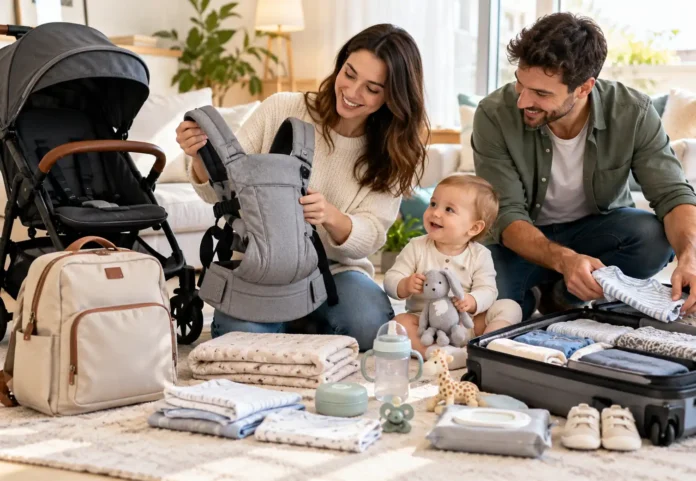

Bebelux is an example of the type of manufacturer buyers may explore when looking for reliable baby travel products and manufacturing solutions. For parents, choosing the right stroller, car seat, or tricycle involves more than appearance. Comfort, safety, durability, practicality, and the child’s age all need to be considered.
For retailers and brands, the decision can be even more complex. They need products that meet customer expectations while also offering consistent quality, competitive pricing, and opportunities for customization. Understanding the main categories of baby travel products can make the selection process much easier.
Choosing a Baby Stroller
A stroller is one of the most frequently used products for families with young children. Because it may be used for walks, shopping trips, travel, and everyday transportation, parents should consider how the stroller will fit into their lifestyle.
Weight and folding design are particularly important for families that frequently travel by car or public transportation. A lightweight stroller can be easier to carry, while a compact folding mechanism can make storage more convenient.
Parents should also consider the seating position, wheel design, suspension, storage space, canopy, and adjustment options. A stroller intended for everyday outdoor use may require different features from a lightweight travel stroller.
The age and size of the child are also important. Buyers should always follow the manufacturer’s recommended age, weight, and usage requirements rather than choosing a stroller based only on its appearance.
Why Comfort Matters
Children can spend considerable amounts of time in a stroller, so comfort should be an important part of the buying decision.
Padding, seat dimensions, reclining positions, footrests, and ventilation can influence how comfortable a stroller feels during longer journeys. A well-designed canopy can also provide useful protection from direct sunlight.
Parents should look for designs that allow children to sit securely while giving them enough support for their stage of development. Adjustable features can be particularly useful because children grow quickly during their early years.
For manufacturers and retailers, comfort is also an important part of product design. A stroller needs to balance soft materials and ergonomic features with structural stability and practical everyday use.
Selecting the Right Baby Car Seat
A baby car seat serves a very different purpose from a stroller. Instead of simply making transportation more convenient, it is designed to provide protection during vehicle travel.
Parents should select a car seat that is appropriate for the child’s size, age, and weight and should carefully follow the installation and usage instructions supplied with the product.
Compatibility with the family vehicle is another important consideration. Before purchasing, parents should check whether the seat can be installed correctly in their particular vehicle and whether the required installation method is supported.
It is also important to understand that car seat safety depends heavily on correct installation and proper use. Even a high-quality product cannot provide its intended protection if it is incorrectly installed or used outside its specified requirements.
Travel Systems Can Offer Convenience
Some baby travel products are designed to work together as a system. A stroller and infant car seat combination, for example, can make transitions between driving and walking more convenient.
Instead of moving a sleeping infant unnecessarily, parents may be able to transfer the compatible seat between the vehicle and stroller according to the manufacturer’s instructions.
Travel systems can be especially useful for families who frequently combine car journeys with shopping, appointments, or outdoor activities. However, convenience should never replace proper safety considerations.
Parents should verify that all components are designed to work together and should follow the instructions for each individual product.
What About Kids’ Tricycles?
As children grow older, their transportation and play needs change. A children’s tricycle can provide an enjoyable way for young children to develop coordination, balance, and confidence while riding.
Different tricycle designs are available for different developmental stages. Some models are designed primarily for parents to push younger children, while others give older toddlers more control through pedals and steering.
Parents should choose a tricycle based on the child’s age, size, physical development, and ability to use the product safely.
Features such as adjustable handles, safety harnesses, footrests, protective canopies, and stable wheel configurations can make certain models more practical for younger children.
Safety Should Come Before Appearance
Baby products often compete through attractive colors, modern designs, and convenient features, but appearance should never be the main purchasing factor.
Parents should pay attention to the product’s construction, materials, stability, restraint systems, locking mechanisms, and instructions. They should also inspect products regularly for loose parts, damaged components, worn wheels, or other signs of deterioration.
For baby travel products, small design details can have a significant effect on everyday usability. A stroller that folds easily, for example, can save time for parents, while a secure locking mechanism can prevent accidental folding during use.
Manufacturers should therefore consider both design and functionality throughout the development process.
The Role of OEM Manufacturing
For businesses selling baby products under their own brands, OEM manufacturing can provide an opportunity to develop products according to specific market requirements.
An OEM project may involve selecting an existing product design and customizing elements such as colors, fabrics, branding, packaging, or certain features. More extensive projects can involve product development and design changes.
The process requires clear communication between the brand and manufacturer. Specifications, materials, quality expectations, packaging requirements, testing, production quantities, and delivery schedules should all be established before large-scale production begins.
A reliable manufacturing relationship can help brands maintain consistency as they expand their product range.
Quality Control Is Essential
Quality control is particularly important for baby products because these products are used by young children and infants.
Manufacturers should have appropriate inspection procedures throughout production rather than checking products only after everything has been assembled.
Materials, stitching, frames, wheels, fasteners, moving components, and finished products may all require different types of inspection. Consistent quality control can help identify manufacturing problems before products reach customers.
For brands purchasing from overseas manufacturers, it is also important to understand the safety and compliance requirements of the markets where products will be sold. Requirements can vary significantly between countries.
Choosing a Manufacturing Partner
Retailers and brands should evaluate more than the quoted unit price when choosing a baby product manufacturer.
Production capabilities, communication, quality control, customization options, minimum order quantities, lead times, packaging, and export experience can all influence the long-term success of a partnership.
A manufacturer that offers a lower initial price may not necessarily provide the best overall value if quality is inconsistent or communication is difficult.
Requesting product samples before placing a large order can provide useful information about materials, construction, finishing, packaging, and overall product quality.
Designing for Modern Families
Today’s parents often want products that make everyday life simpler. Lightweight designs, compact folding systems, multifunctional products, easy-to-clean materials, and practical storage features can all add value.
At the same time, products should not become unnecessarily complicated. Every additional feature should have a clear purpose and should not compromise usability or safety.
Manufacturers that understand how families actually use baby products can develop designs that are more practical in real-world situations.
Finding the Right Balance
Choosing baby travel products requires a balance between safety, comfort, convenience, durability, and design. Parents need products that fit their child’s developmental stage and their daily routines, while retailers and brands need products that can satisfy customers consistently. For more information visit bebeluxbaby.com.
Strollers, car seats, and children’s tricycles each serve different purposes, so there is no single product that is ideal for every family. Careful consideration of age, usage, environment, storage, and safety requirements can lead to better purchasing decisions.
For businesses, working with an experienced OEM manufacturer can provide additional flexibility when developing products for a specific market. With careful product selection, strong quality control, and thoughtful design, baby travel products can provide both practical value for families and long-term opportunities for growing brands.

