
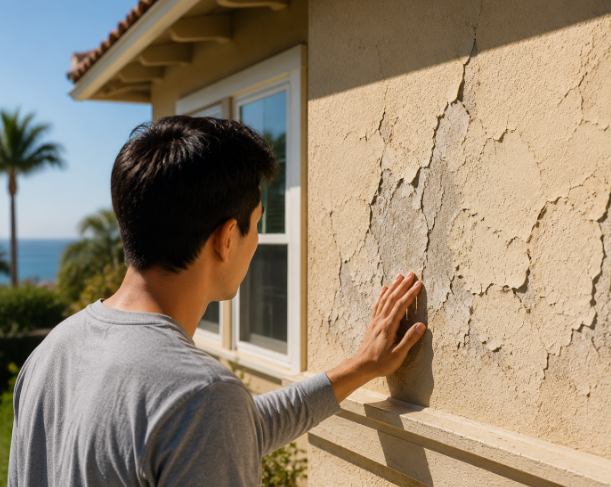

Interior paint can sit untouched for a decade and still look fine. Exterior paint in Southern California gets no such grace. The same steady sun that makes the region pleasant to live in is working on every outside wall of a house, breaking the paint down a little at a time, which is why exterior work is a different job running on a much shorter clock.
What the Sun and Air Do to a Wall
Exterior paint faces forces interior paint never meets. Ultraviolet light breaks down the binder that holds paint together, fading the color and leaving a chalky residue on the surface. Heat expands and contracts the wall and the paint film through every day and night, and over time that movement cracks a coating that has grown brittle. Closer to the coast, the marine layer adds constant moisture and a trace of salt. Walls that face south and west take the most sun and tend to fail first, often years before the shaded sides show their age.
Prep Decides the Lifespan
On an exterior, preparation matters even more than the paint itself. A fresh coat over a dirty, chalky, or failing surface will not bond, and it lifts within a year or two no matter how good the paint is. Sound exterior work front-loads the unglamorous steps:
- Washing off chalk, dirt, and mildew so the new coat can grip
- Scraping and sanding away paint that has already lost its hold
- Priming bare spots and patching cracks before any color goes on
- Caulking gaps around trim and windows where water sneaks in
Skip these and the best paint on the market still peels. A Korean-Speaking Painting Contractor in Greater Los Angeles who works these conditions regularly tends to build that prep into the quote rather than trimming it to win a bid, since the prep is what the whole job rests on.
The Right Coating for the Climate
Paint made to resist ultraviolet light and hold its color matters more here than in milder places, as does applying enough of it, since a single thin coat wears through quickly under this much sun. Timing the work matters too, because painting in peak heat can flash-dry a coat before it bonds. Two solid coats of a quality exterior product, applied in reasonable conditions, will outlast a rushed job by many years on the same wall.
Paying Once Instead of Twice
The temptation on any exterior job is the low bid, which usually means less prep, thinner coats, and cheaper paint. It looks fine for a while and fails early, and the second job costs close to what doing it right once would have. Contractors who plan for the climate tend to treat exterior painting as protection for the house rather than a coat of color, since out here the paint is the first thing standing between the sun and the wall behind it.
Exterior paint is not permanent anywhere, and least of all under a sun this strong. The work that makes it last is mostly the part done before the color, and mostly invisible once the job is finished.

