
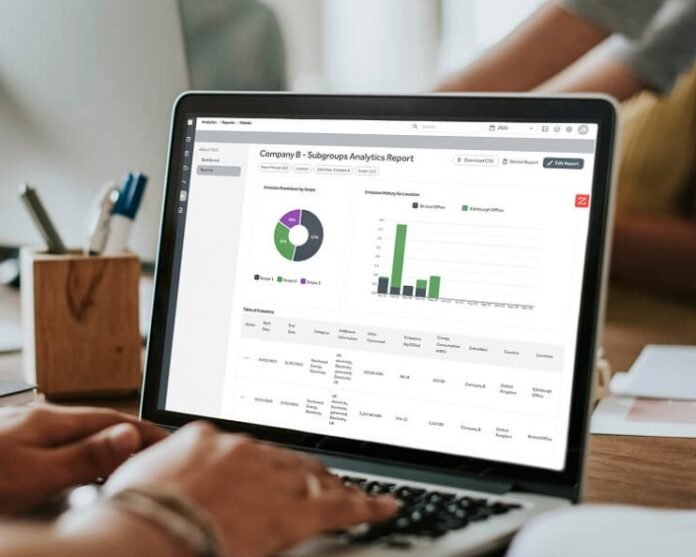

As environmental laws are tightened and sustainability expectations are growing, companies need to be aware and to manage their carbon emissions. Carbon Accounting is a method of systematically calculating GHGs, increasing transparency and identifying potential for environmental improvements. Carbonxgen enables organisations to appreciate the value of accurate emissions data and to manage the environment responsibly. With its attention to precise data collection and significant sustainability goals, Carbonxgen is well-positioned to assist companies aiming to enhance their environmental impact. As regulators, investors, and customers increasingly demand action on emissions, Carbonxgen understands that managing emissions is critical to long-term business resilience and sustainable growth.
Knowing about Carbon Accounting and how it is important.
Carbon Accounting is the measurement, recording, analysis and reporting of the greenhouse gas emissions produced by business activities. It enables organizations to know about their environmental impact and to take measures to lower emissions from their activities.
Emissions from businesses can include electricity use, fuel usage, transportation, production processes, and supply chain emissions. If organizations aren’t measuring accurately, they could face challenges in comprehending their environmental footprint or setting appropriate sustainability goals.
The comprehensive emissions inventory is useful for regulatory reporting, environmental planning and operational decision making. It also allows businesses to find out energy wastage and possible avenues for saving energy.
The concept of Scope 1, 2 and 3 Emissions.
The Greenhouse Gas Protocol categorizes greenhouse gas emissions into three groups.
The sources of scope 1 emissions are those in direct control of an organisation, such as company cars, boilers and industrial equipment.
Scope 2 emissions are the emissions resulting from the use of electricity, steam, heating and cooling that are purchased by the business.
Other indirect emissions in the value chain are called Scope 3 emissions, which include purchased goods, business travel, waste management, distribution and product use.
Organisations can use this understanding of these categories to create a more comprehensive picture of their environmental footprint.
Carbon Accounting can help with regulatory compliance.Carbon Accounting can assist in meeting regulatory compliance.
There is growing pressure on organisations to enhance the quantity and quality of emissions information, through environmental legislation and corporate sustainability reporting requirements.
The Streamlined Energy and Carbon Reporting (SECR), Energy Savings Opportunity Scheme (ESOS) and climate-related disclosure rules in the United Kingdom affect the way qualifying businesses measure and report their environmental performance.
The CSRD, if applicable, are international frameworks that add more to the sustainability disclosure landscape.
Carbon Accounting enables organisations to structure emissions data, keep track of supporting documentation and set up consistent reporting processes. The requirements for the law, however, vary depending on the organisation’s activities, size, location and reporting eligibility.
Properly Preparing Audits and Documentation
Reliable evidence is necessary for the accurate reporting of the environment. Organisations should keep records of fuel use, energy bills, activity and operational records, calculation methods and emission factors.
Carbonxgen can be seen as a component of a comprehensive strategy for managing emissions data, which can include other tools and resources to ensure businesses have a clear understanding of their emissions and a consistent approach to reporting them.
Clear audit trails minimise risk of figures being reported incorrectly and provide opportunity to explain how figures for the environment have been derived.
Accurate carbon reporting plays a pivotal role in business decisions.Carbon reporting is critical to business decisions.
Regulatory compliance is not the only value of reliable emissions information. It gives information regarding resource consumption along the business operations.
With Carbon Accounting, management teams can track environmental performance, both within departments and across them, the facilities and their environmental performance, and the performance of various reporting periods.
For instance, an organisation might find that the carbon footprint is a major contributor to its overall footprint, resulting from out-of-date heating systems, inefficient machinery or unnecessary transportation activities.
These results can be used to inform equipment replacement, energy conservation and operating changes decisions.
The first step to setting sustainability targets is to use reliable data
Organisations must have reliable information as a starting point to establish realistic emissions reduction targets.
An effective GHG inventory aids in measurable targets and progress monitoring, as well as future environmental reporting.
Carbonxgen fulfills the goal of making emissions information comprehensible and accessible for organisations developing sustainability strategies, as a contribution to the general task of making sustainability information understandable and useful.
As appropriate, businesses can relate their goals to acknowledged methods like the Science Based Targets initiative (SBTi).
Enable Sustainable Business Growth through Emissions Management
The sustainability issue is more and more affecting procurement, investment, supplier relations and corporate image.
Businesses that demonstrate responsible management of the environment can bolster their argument if they engage customers who do ask for emissions disclosures.
Carbon Accounting can also be used to help organisations determine if energy efficiency initiatives and operational improvements may be financially rewarding as well as environmentally reducing.
Finding opportunities for efficiency in operations
Consumption of energy is frequently closely linked to emissions of greenhouse gasses.
A decrease in unnecessary electricity consumption, better building insulation, more efficient logistics and the efficient operation of machinery can lead to a reduction in energy consumption.
Carbonxgen promotes an approach that utilizes data to deliver an environmental performance and operational efficiency perspective.
While not all emissions reductions are equated with immediate financial savings, they can help to improve resource management and help build resilience to the impacts of rising and falling energy costs.
Measurements businesses face challenges with emissions
Gathering emissions data is challenging, especially for businesses with multiple locations or complex supply chains.
Lack of consistent energy records, insufficient supplier data, current emission factors and internal know-how are among the challenges.
The difficulty is that it’s possible for scope 3 calculations to be especially complicated, as companies frequently leverage data from external suppliers and service providers.
Enhancing Data Quality and Reporting Consistency
Reporting can be enhanced by organisations by having a clear definition of who is responsible for the data, by standardising how data is collected and by regularly checking the assumptions for the calculations.
But when it comes to assessing the environmental responsibilities of businesses, consistent information management is the key, Carbonxgen says.
Improved comparability and credible disclosures can be achieved through using recognised methodologies, such as the GHG Protocol Corporate Accounting and Reporting Standard.
Establishing an LTSS.
Carbon Accounting is a continuous management rather than reporting process
It is good practice for businesses to review their emissions inventories, assess the possibility of emissions reductions and track performance against targets on a regular basis.
A successful sustainability strategy integrates environmental duties into financial planning, procurement process, operational efficiencies, and corporate governance.
Carbonxgen is a business perspective on understanding how trusted environmental information can help to inform better decisions and sustainable planning in the long term.
Common questions on carbon accounting.
1. Which is the primary reason to measure carbon emissions from businesses?
The main objective is to gain insight into business GHG emissions. This information is used in environmental reporting and regulatory compliance, emissions reduction planning, and for better informed operation decisions.
2. Who has to do the reporting of GHG emissions?
The obligations for reporting differ depending on the company size, jurisdiction, industry and applicable regulations. There are emissions organisations that are required to report on, and others that do it voluntarily, to satisfy customer expectations or sustainability goals.
3. What are the cost savings to businesses if they can reduce the costs for accurate emissions reporting?
Good reporting may provide accurate results to highlight excessive energy consumption, inefficient equipment operation and unnecessary fuel usage. These problems could be solved by lowering the costs of operation and helping to improve the environment.
4. What is the distinction between a carbon footprint and a GHG inventory?
A carbon footprint is defined as the carbon emissions of an organisation, product, service or activity. A GHG inventory is a systematic documentation of the sources of GHGs and the amounts of GHGs that are emitted from the defined reporting boundaries.
5. What is the frequency of the emissions calculation and review in the business?
Many organisations measure emissions on an annual basis to enable regular reporting and comparisons of performance. Frequent monitoring may assist businesses to detect changes, assess reduction programs and enhance environmental information quality.