
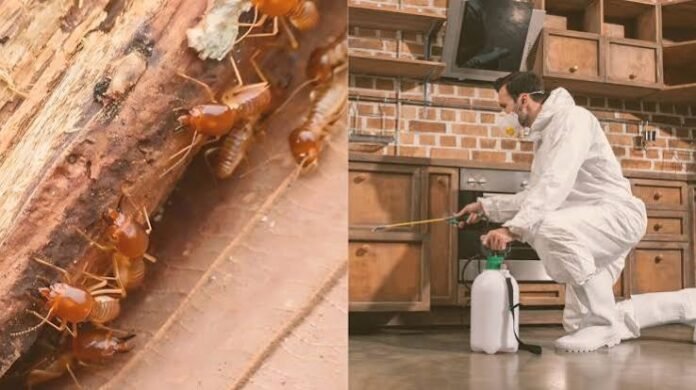

There’s a house on nearly every street in Portsmouth built before 1980, wood-framed, sitting maybe a foot off the ground, with azaleas planted right up against the brick. Nice look. Bad news for pest control. Between the age of the housing stock, the humidity rolling in off the water, and all that greenery hugging the foundation, this city gives termites and a dozen other pests exactly what they want. Knowing what pest control in portsmouth actually looks like, before anything’s chewed through a support beam, is the kind of thing that pays for itself.
The Setup That Works Against You
Most of Portsmouth’s older homes went up with original wood framing that’s never been touched since. Small cracks form near the foundation over the decades. Nobody notices, because why would they? You don’t inspect what you can’t see.
Then there’s the landscaping. Shrubs and trees planted flush against a house look wonderful in photos, but for a termite or an ant colony, that’s just a paved road from the dirt straight to the siding.
What Termites Actually Look Like Before You’ve Got a Problem
Forget waiting for visible damage. Look for mud tubes climbing up the foundation, thin as a pencil, running vertically like little veins. Look for a scattering of wings near a windowsill, that’s what’s left after a swarm moves on to start a new colony somewhere nearby. Tap a support beam. If it sounds hollow but looks untouched, something’s already going on inside it.
A colony can chip away at a house for a year, sometimes two, before anyone in the family notices a single thing. By the time it’s obvious, you’re not calling about a treatment plan anymore. You’re calling about repairs.
It’s Not Just Termites
Carpenter ants get mistaken for termites all the time, and honestly the confusion’s understandable, both leave behind damaged wood. The difference is carpenter ants are excavating a nest, not eating the wood for food, and their tunnels come out smoother, cleaner. Rodents pick up in October and November, squeezing into gaps that seem impossibly small, chasing warmth as the temperature drops. Mosquitoes need no introduction if you’ve spent one summer near the water here. And roaches, given Portsmouth’s humidity, treat most kitchens like an invitation.
When You Stop Waiting and Start Calling
Certain things don’t belong on a “keep an eye on it” list. Mud tubes. A swarm indoors. Either one means picking up the phone today. Scratching in the walls at night, especially if it’s rhythmic, usually means something’s already nesting, not passing through. A sudden burst of ants or roaches inside, more than the odd one you’d expect, points to a colony close by rather than bad luck.
An exterminator Portsmouth VA residents actually trust can usually walk through a house once and tell you exactly what’s going on and how bad it is. That beats three hours of searching forums at 1am trying to self-diagnose from photos.
What Happens During an Actual Inspection
An actual inspection does not consist of a few minutes’ survey of the porch. They walk all the way around the house’s foundation, get into the crawl space, look inside the attic, examine each pipe sticking out of the walls and are particularly mindful of any areas where the wood touches the soil. This is where most of the problem begins.
That’s also how the “spray bottle from the hardware store” solution doesn’t usually work. You kill what’s crawling on top; the nest below remains intact.
Keeping It From Happening in the First Place
Pull vegetation back a foot or two from the exterior walls, that alone removes a lot of the easy access pests count on. Get gutters and drainage sorted, since standing water and dampness are basically an open invitation for termites and roaches both. Seal up the small gaps around pipes and the foundation itself. And get someone out once a year to actually look, since catching this early is dramatically cheaper than catching it late.
Think of It as Maintenance, Not a One-Time Job
One visit takes care of any existing infestations. To stay one step ahead, consider pest control in the same vein as gutter maintenance or HVAC servicing – something to be scheduled, rather than remembering about it only when there is a problem.
Frequently Asked Questions
How often should Portsmouth residents have a pest inspection?
The recommendation is that annual pest inspections will suffice, based on the local weather conditions and activity level of pests. Houses with prior moisture or pest issues would be better off being inspected more frequently.
What is the difference in damages made by termites and carpenter ants?
Damage done by termites looks like mud layers in the wood, but damage done by carpenter ants will look like smooth tunnels in the wood because carpenter ants do not eat wood but only make holes in it.
Am I able to deal with a minor infestation on my own?
There are products that one can purchase at the store which will deal with the visible activity on a temporary basis, but there is no way to reach the entire nest or the colony.
Why are Portsmouth homes susceptible to termites?
Age of the homes, high humidity due to coastal location, and mature landscaping near the foundation all have to be considered. They create an environment where termites and other moisture-loving insects have a great chance to survive all year round.
What should I do if I suspect termites?
Do not disturb mud tubes or affected wood before contacting a specialist for assessment. The longer a colony stays unnoticed, the more damage it will inflict on your home.