
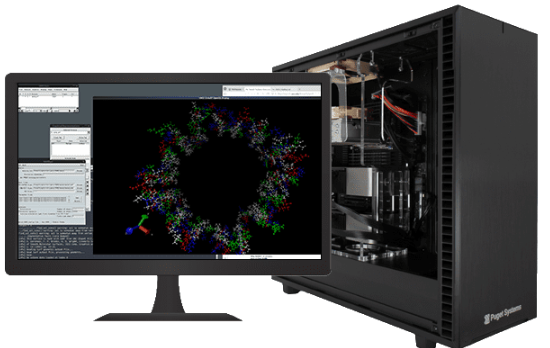

Ask any 3D artist what slows them down, and hardware comes up almost immediately, right next to deadlines and client revisions nobody asked for. Makes sense. In 3D work, processing power and creative output are tangled together more tightly than in almost any other creative field, and most artists feel it constantly without ever really stopping to name why.
3D is heavy work by nature. Modeling, texturing, lighting, simulation, rendering. Each stage leans on the system in its own way, and one weak link anywhere in that chain quietly costs you time somewhere down the road.
Why Processing Power Directly Shapes What You Make
Every stage of 3D production leans on the machine underneath it to keep pace with whatever you’re trying to do. Sculpting a high-poly model needs enough headroom to keep the viewport responsive. Simulations, cloth, fluid, particles, whatever, need real computational muscle to calculate correctly. Rendering, real-time or offline, is usually the single heaviest task in the entire pipeline.
When any of that slows down, it’s not just lost time in a vacuum. It changes how you actually approach the work. Slow viewport means fewer test poses before you commit. Slow simulations mean fewer variations before you settle for workable instead of ideal. Slow rendering means fewer chances to catch a lighting problem before a deadline forces your hand.
That’s exactly why so many 3D artists and studios invest in workstations built specifically around their software instead of general-purpose machines. A Maxon Cinema4D workstation is built for precisely that demand, giving artists the processing power to move through modeling, animation, and rendering without the constant stalling that turns momentum into frustration.
The Whole Loop Depends on Speed
Good 3D work rarely comes from one attempt. It comes from trying something, seeing what happens, adjusting, trying again, sometimes dozens of times within a single shot. That loop is where the actual craft lives.
A few ways processing power shapes that loop directly:
- Faster viewport performance lets you work at higher subdivision levels without the software becoming unusable mid-edit
- Quicker simulations mean more variations get tested before you settle on a final result
- Shorter render times mean more lighting and shading passes fit into the same working day
- Less crash risk during long sessions means less lost work and fewer restarts from zero
Every one of these speeds up the loop that actually produces better work, not just faster work.
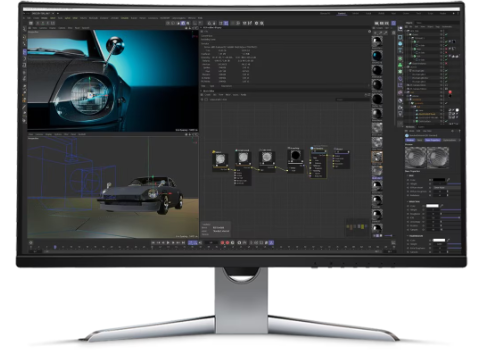
What Happens When the Hardware Can’t Keep Up
Underpowered systems don’t slow you down evenly across the board. They tend to push you toward the safest option instead of the best one.
Simplified Scenes, Less Detail
Artists on slow hardware often cut polygon counts, simplify textures, or dial back simulation complexity just to keep a project workable. That compromise can strip out the exact detail that would’ve pushed a piece from decent into genuinely impressive.
Fewer Creative Risks
When every test costs real time, you naturally lean toward the safe choice instead of gambling on something riskier that might not pay off. Take that cost away, and people tend to make more interesting, more ambitious work as a direct result.
Burnout From Waiting
Spending hours of your day watching progress bars instead of actually deciding things wears you down. That fatigue bleeds into the decisions you make even during the parts of the day when the machine is running fine.
Where Benchmarks Actually Matter
For studios trying to make real decisions instead of guessing, rendering benchmarks give a genuinely useful way to compare real-world performance across different systems. Knowing how a machine actually holds up under realistic 3D workloads, not just theoretical specs on a page, helps studios avoid buying something that looks strong on paper and underdelivers the second real production work starts.
For teams that want performance validated specifically for demanding 3D and rendering pipelines, a Maxon Cinebench AMD Ryzen workstation is built around exactly that kind of benchmarked, sustained performance, giving studios real confidence the system holds up under production load rather than just a quick test run.
Getting the Investment Right
The instinct is usually to throw money at the single most powerful component you can find and assume the rest sorts itself out. It rarely does. Processing power needs to scale across CPU, GPU, memory, and storage together, matched to the software and workflow you actually use day to day, instead of chasing one flashy number on a spec sheet.
Get that balance right, and the payoff shows up fast, in faster iteration, more ambitious creative choices, and artists spending more of their time actually creating instead of just waiting around.
Final Thoughts
Processing power and creative productivity in 3D work aren’t loosely connected. They’re tied together directly, shaping how many ideas an artist can actually test, how much detail survives into the final piece, and how much of a working day goes toward real creative decisions instead of a loading bar.
Studios and artists who treat their hardware as a creative investment, not just a budget line, tend to produce more ambitious work with a lot less friction along the way. That’s the thinking behind Cloud Ninjas, which builds workstations around what 3D creative work actually demands instead of stretching general-purpose machines to cover a job they were never built for.

