
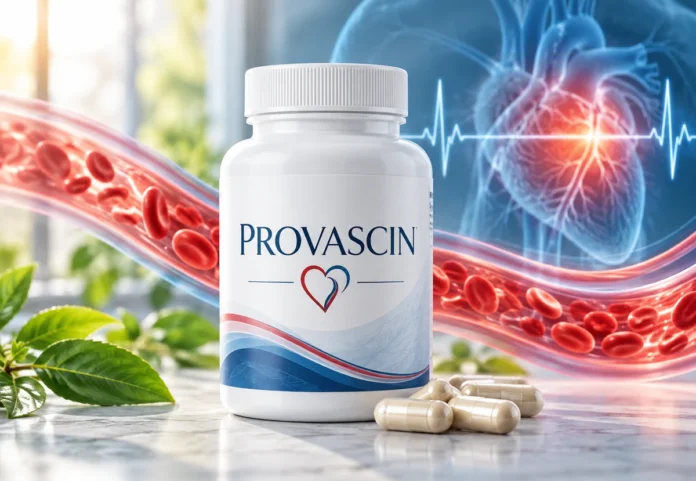

Provascin is a multi-ingredient dietary supplement historically associated with PURICA and marketed mainly for cardiovascular, circulation, metabolic, energy, and antioxidant support. It was sold as a capsule product rather than as a prescription heart medicine. Historical product information lists eight main ingredients, including L-carnitine, CoQ10, Chaga, and plant extracts.
The name can be confusing because some online pages describe Provascin as though it were a cardiovascular medication. The documented PURICA product does not support that description as an approved prescription treatment. The bigger question today is not simply what Provascin was marketed for, but what can actually be confirmed about its formula, evidence, safety, and availability.
What Is Provascin?
Provascin was a natural health or dietary supplement associated with PURICA and The Nutraceutical Medicine Company Inc. Historical records identify the product as a dietary supplement, and U.S. trademark records connect the PROVASCIN name with The Nutraceutical Medicine Company Inc. for dietary supplements.
The product was designed as a combination formula instead of relying on one pharmaceutical active ingredient. Its marketing focused on areas such as cardiovascular wellness, circulation, cellular energy, antioxidant activity, and metabolic support. That positioning does not mean the product was proven to diagnose, prevent, or treat cardiovascular disease.
What Was Provascin Used For?
Historical descriptions mainly positioned Provascin as a supplement for cardiovascular and circulatory support. Other product descriptions connected it with healthy cholesterol function, glucose metabolism, antioxidant protection, cellular energy, and general physical support. These descriptions explain the intended purpose of the formula, but they should not be confused with proven medical indications.
A supplement also cannot be treated as a substitute for diagnosis and treatment of conditions such as high blood pressure, blocked arteries, heart failure, or high cholesterol. Those conditions can have different causes and may require established medical treatment. Anyone already receiving cardiovascular care should discuss a supplement with a doctor or pharmacist before adding it.
What Ingredients Were in Provascin?
Historical product information lists eight main ingredients per capsule: L-carnitine at 188 mg, alpha-ketoglutaric acid at 125 mg, micronized Chaga at 125 mg, and Coenzyme Q10 at 38 mg. The formula also contained betaine hydrochloride at 31 mg, DL-alpha-lipoic acid at 13 mg, grape seed extract at 9 mg, and green tea extract at 9 mg.
| Ingredient | Historical amount per capsule |
| L-carnitine | 188 mg |
| Alpha-ketoglutaric acid | 125 mg |
| Micronized Chaga | 125 mg |
| Coenzyme Q10 | 38 mg |
| Betaine hydrochloride | 31 mg |
| DL-alpha-lipoic acid | 13 mg |
| Grape seed extract | 9 mg |
| Green tea extract | 9 mg |
The historical formula also listed non-medicinal ingredients used to make the capsule, including microcrystalline cellulose, hypromellose, and plant-source magnesium stearate. These figures come from older product information, so they should not automatically be applied to an unfamiliar bottle found today. Checking the actual package is the safer approach.
How Might the Provascin Formula Work?
Provascin does not have one simple mechanism because several different ingredients were combined in the formula. L-carnitine has a role in transporting fatty acids into mitochondria, while CoQ10 participates in cellular energy production and also has antioxidant properties. Alpha-ketoglutaric acid is involved in normal metabolic pathways.
Several other ingredients were included mainly for their antioxidant or plant-compound content. Chaga, alpha-lipoic acid, grape seed extract, and green tea extract have all attracted scientific interest for different biological effects. However, understanding what an ingredient does in isolation does not establish that the finished Provascin product produces the same effect.
What Benefits Were Associated With Provascin?
The main potential benefits associated with Provascin came from its intended cardiovascular and nutritional positioning. The combination was marketed around circulation, antioxidant support, cellular energy, metabolism, and general cardiovascular wellness. Some of those claims can be linked to known biological roles of individual ingredients.
The evidence becomes weaker when the question changes from an ingredient to the complete product. Research on CoQ10, L-carnitine, alpha-lipoic acid, or plant extracts does not automatically prove that the historical Provascin formula lowers blood pressure, reduces cholesterol, clears arteries, or prevents cardiovascular events. There is not strong product-specific evidence establishing those outcomes.
Is Provascin Effective?
The available evidence does not provide a strong basis for calling Provascin a proven treatment for cardiovascular disease. Some of its individual ingredients have been studied, but studies can use different doses, ingredient forms, populations, and treatment periods. Those differences make it difficult to transfer results from an individual ingredient directly to the complete supplement.
Personal reviews also have limits. Someone may report feeling better after using a supplement, but changes in sleep, diet, exercise, medication, or general health can influence how a person feels. There is also no established timeline showing exactly how long Provascin takes to produce a particular health effect.
What Are the Possible Side Effects?
A multi-ingredient supplement can cause side effects or interactions, and the exact risk depends on the formula, dose, health status, and other medicines being used. Historical discussions of Provascin mention possible digestive discomfort, nausea, headache, and individual sensitivity. Plant-based ingredients can also affect people differently.
Concentrated extracts should not automatically be treated like ordinary foods or drinks. Green tea extract, Chaga, alpha-lipoic acid, and other active ingredients may have effects that matter for certain users. If a new or unusual reaction appears after taking an unfamiliar supplement, medical advice is appropriate.
Who Should Be Careful With Provascin?
Extra caution makes sense for people who take blood thinners, antiplatelet medicines, blood-pressure drugs, or diabetes medication. People with liver or kidney problems, cardiovascular conditions, metabolic disorders, seizure disorders, autoimmune conditions, or other ongoing health issues should also discuss the product with a healthcare professional.
Pregnant or breastfeeding people should not rely on an old online product description when deciding whether to use Provascin. The same applies to anyone taking several supplements because overlapping ingredients can increase total intake. Taking the actual label to a pharmacist is more useful than providing only the product name.
Is Provascin FDA Approved?
Provascin should not be described as an FDA-approved prescription medicine for heart disease or high blood pressure. The FDA explains that dietary supplements are regulated differently from drugs and are generally not approved by the agency for safety and effectiveness before they reach the market.
That distinction matters when reading claims online. The absence of FDA premarket approval for a supplement does not by itself mean the product is illegal or unsafe, but it also does not prove that the supplement can treat a disease. Claims that a product can replace prescription cardiovascular treatment require much stronger evidence than ordinary supplement marketing.
Is Provascin Still Available?
Current availability appears limited compared with the historical product. Older retail records document Provascin in capsule formats, including 120- and 240-capsule versions, while more recent information indicates that major retailers have stopped carrying or marked older versions as discontinued. A reliable public explanation for why the product stopped appearing in regular retail channels is not established.
This makes old listings particularly important to check carefully. An archived product page can remain online after a product disappears from normal distribution, and an old bottle may have an expired date or a formula that no longer represents anything currently sold. A current label, manufacturer, lot number, expiry date, and seller identity should all be checked before considering a purchase.
Can Provascin Replace Heart or Blood-Pressure Medicine?
No, Provascin should not replace prescribed cardiovascular treatment. A supplement does not become an alternative to a blood-pressure medicine, cholesterol-lowering drug, anticoagulant, or other cardiovascular treatment simply because its ingredients are associated with heart or circulation support.
Treatment should depend on the actual medical condition and the evidence supporting the treatment. If someone has high blood pressure or another cardiovascular problem, changing or stopping prescribed medication without medical advice can create unnecessary risk. A doctor or pharmacist can also assess whether a supplement could interact with existing treatment.
What Should You Check Before Buying Provascin?
Anyone who finds Provascin for sale should first confirm exactly which product they are being offered. Check the manufacturer, full ingredient list, amounts per serving, recommended use, expiry date, lot number, packaging, and seller information before making a decision.
Be especially cautious about listings that promise to cure heart disease, clear blocked arteries, permanently lower blood pressure, or replace prescription medicine. Those claims go far beyond what the available product-specific evidence establishes. If the product has a substantially different ingredient list from the historical formula, do not assume it is the same Provascin.
Final Takeaway
Provascin is best understood as a historical multi-ingredient dietary supplement associated with PURICA and cardiovascular support. Its documented formula included L-carnitine, alpha-ketoglutaric acid, Chaga, CoQ10, betaine hydrochloride, alpha-lipoic acid, grape seed extract, and green tea extract.
The ingredients have legitimate biological roles and varying amounts of research behind them, but that is different from proving that the complete Provascin formula treats cardiovascular disease. Current availability also appears limited, so anyone encountering the name today should verify the exact product rather than relying on an old listing. For people taking medication or managing a health condition, checking the label with a qualified healthcare professional is the sensible next step.
Frequently Asked Questions
What is Provascin?
Provascin was a multi-ingredient dietary supplement associated with PURICA. It was mainly marketed for cardiovascular, circulation, metabolic, energy, and antioxidant support rather than as a prescription medicine.
What was Provascin used for?
Provascin was historically marketed for cardiovascular and circulatory wellness. Product descriptions also connected it with antioxidant support, cellular energy, metabolism, and healthy cholesterol function.
What ingredients did Provascin contain?
The historical formula contained L-carnitine, alpha-ketoglutaric acid, Chaga, CoQ10, betaine hydrochloride, alpha-lipoic acid, grape seed extract, and green tea extract.
Does Provascin lower blood pressure?
There is not enough strong product-specific evidence to say that Provascin reliably lowers blood pressure. It should not replace prescribed blood-pressure treatment.
Is Provascin safe?
Safety depends on the exact formula, dose, health condition, and other medicines involved. Because the product contains multiple active ingredients, potential side effects and interactions should be considered.
Is Provascin FDA approved?
Provascin should not be described as an FDA-approved prescription cardiovascular medicine. FDA explains that dietary supplements generally do not receive premarket approval for safety and effectiveness like new prescription drugs.
Is Provascin still available?
Historical records confirm that Provascin was sold in the past, but current availability appears limited. Anyone finding an old or unfamiliar listing should verify the manufacturer, formula, expiry date, and seller.

