
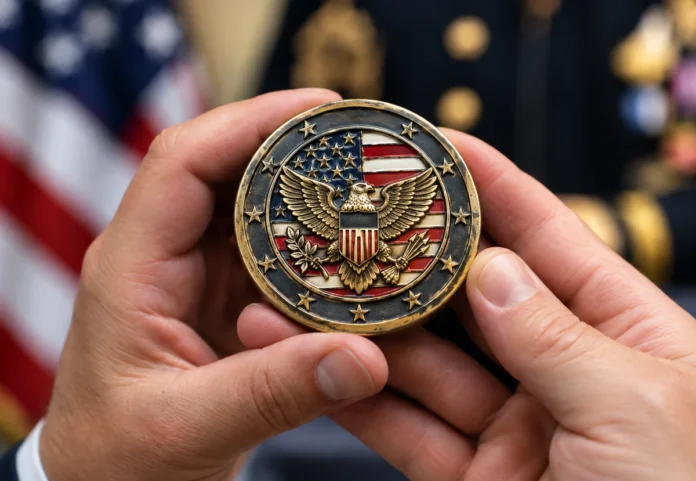

Across Texas, military challenge coins can carry the spirit of a squadron, a unit, a deployment, a retirement, or a local community that supports those who serve. From formal ceremonies in San Antonio to veteran gatherings in small Hill Country towns, a coin is most powerful when it marks a real contribution rather than simply filling a display case.
Whether a coin is being created for an active-duty unit, a veteran organization, or a military family event, custom military challenge coins work best when their design and presentation reflect the people behind the recognition. The metal, artwork, and finish matter, but the story shared at the moment of presentation matters more.
What Makes a Challenge Coin Meaningful?
A challenge coin is a small medallion that commonly bears an organization’s emblem, insignia, or message. It may be presented to recognize an achievement, commemorate an event, acknowledge a visit, or reinforce a shared identity. As the history of the challenge coin tradition shows, these coins are closely associated with military units and have also been adopted by many other organizations.
In Texas, where military service and civilian support often overlap, a coin may recognize the person who stayed late to help a team prepare, a family member who supported a demanding assignment, or a volunteer who made a unit event possible. The recognition does not need to be grand. It needs to be specific and sincere.
When Is It Appropriate to Present a Challenge Coin?
There is no single occasion that requires a coin. The right time depends on the organization, the recipient, and the reason for recognition. Common opportunities include:
- Recognizing exceptional effort during a difficult mission, project, or training period.
- Marking a promotion, retirement, change of command, or end of service.
- Closing out a deployment, major assignment, unit anniversary, or reunion.
- Thanking a civilian partner, educator, first responder, family member, or volunteer.
- Honoring service during a memorial, remembrance event, or commemorative ceremony.
A coin should not be treated as a substitute for an official military decoration or formal award. Instead, it is usually a personal form of recognition that adds meaning to a conversation, handshake, or public acknowledgment.
How to Present a Challenge Coin With Respect
The best presentations are often simple. A crowded formal event may call for a brief public statement, while a private conversation may be better for a person who does not enjoy attention. Consider the recipient’s comfort level before deciding how visible the moment should be.
- Choose the setting carefully. Match the occasion to the person. A retirement dinner, unit formation, office meeting, or quiet conversation can all be appropriate.
- State the reason clearly. Name the action, value, or contribution being recognized.
- Make it personal. Explain how the recipient helped the team, mission, family, or local community.
- Offer the coin directly. A handshake or a two-handed presentation can feel natural, but local customs should guide the exchange.
- Pause for thanks. Give the recipient time to receive the gesture and respond.
What to Say During the Presentation
Short, genuine wording is more memorable than a long speech. Consider language such as:
- “This coin recognizes the care and consistency you brought to the team.”
- “Your work made a meaningful difference during a demanding assignment.”
- “Please accept this as a reminder of the trust you earned.”
- “This coin honors your service and the example you set for others.”
How to Receive a Challenge Coin
A recipient does not need to know every custom to respond well. Accept the coin with attention, listen to the presenter’s reason, and offer a direct thank-you. If the moment allows, asking about the design, motto, or event represented on the coin can show genuine interest.
There is no universal requirement to carry a coin every day. Some people keep a favorite coin in a pocket, while others display it at home, store it safely, or pass it along as part of family military history. The appropriate choice is the one that respects its meaning.
Coin Checks, Challenges, and Common Misunderstandings
A coin check is an informal practice in which someone asks others to produce a challenge coin. In some groups, a person who cannot produce one may be expected to buy a round of nonalcoholic drinks or follow another lighthearted group custom. However, the rules vary widely, and many units or organizations do not use coin checks at all.
The U.S. Department of Defense notes that challenge coin customs have developed through military culture and unit traditions, rather than through one standard practice that applies everywhere. The tradition behind the coin is best handled with good judgment, especially when civilians, new members, or guests are involved.
Never use a coin check to embarrass someone, pressure anyone to drink, or disrupt a solemn event. At a Texas memorial service, family function, or community fundraiser, courtesy matters far more than proving familiarity with a playful tradition.
Etiquette for Presenting a Coin to a Civilian
Civilians can receive military challenge coins as a sign of appreciation for partnership, service, hospitality, volunteer work, or support for military families. Because the recipient may not know the custom, explain what the coin represents before handing it over. Avoid implying that it is an official award if it is not.
For example, a coin presented to a school counselor, a nonprofit volunteer, or a local business owner should acknowledge the specific support they provided. Keep the message accurate, warm, and proportional to their role.
Design Choices That Support the Message
A Texas-focused coin may incorporate a unit emblem, mission symbol, local landmark, state outline, or a meaningful date. The design should remain easy to understand at a glance. Before production, carefully verify every name, rank, abbreviation, date, and insignia.
- Use symbols connected to the unit, event, or achievement.
- Keep text brief enough to remain readable.
- Reserve one side for a motto, message, or statement of purpose.
- Avoid overcrowding the coin with unrelated images or wording.
Common Mistakes to Avoid
- Presenting a coin without explaining why it was earned or given.
- Using an incorrect rank, title, unit reference, or symbol.
- Turning a sincere presentation into an unwanted public spectacle.
- Assuming every person knows coin-check customs.
- Giving recognition publicly to someone who would prefer privacy.
Frequently Asked Questions
Can civilians receive military challenge coins?
Yes. A civilian may receive one in appreciation for support, partnership, volunteer service, or a meaningful contribution to a military-connected community.
Does every challenge coin need to be earned?
No. Some coins recognize achievement, while others commemorate an event, visit, retirement, or shared experience. Context gives the coin its meaning.
What if a challenge coin is lost?
If appropriate, let the presenter know what happened. A replacement may be possible, but it should not be expected. The recognition and the relationship behind it remain important.
Final Checklist for a Respectful Presentation
- Confirm the recipient’s name, rank, title, and affiliation.
- Review all wording and symbols on the coin.
- Select a setting that suits the person and occasion.
- Prepare two or three sincere sentences.
- Explain the specific reason for the recognition.
- Present the coin with care and allow time for thanks.
Conclusion
A military challenge coin becomes memorable because it connects a person to service, teamwork, and a shared moment. In Texas military communities, the strongest presentations are thoughtful rather than flashy. Explain the reason, honor the individual, respect local customs, and let the coin stand as a lasting reminder of genuine appreciation.

