
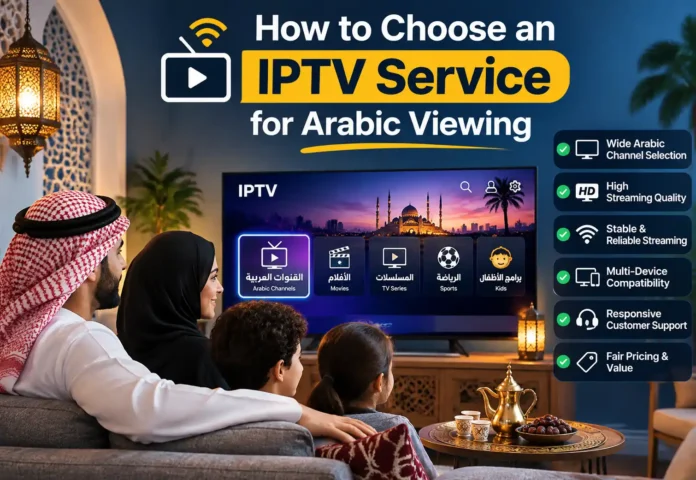

Internet Protocol Television, usually shortened to tv-vd.net, delivers television programming over an internet connection rather than through a traditional broadcast antenna or cable connection. For viewers in Saudi Arabia and elsewhere, an internet-based service can make it easier to watch Arabic-language programming alongside international channels on a television, phone, tablet, or streaming device.
The experience depends on more than a large channel list. Viewers should check whether the provider is authorized to offer the content in their location, whether the service works on their devices, what the subscription includes, and how support handles setup or interruptions. A little research before paying can help you avoid mismatched expectations and choose a service that fits your household.
Start with content you actually watch
Before comparing plans, list the channels and types of programming that matter to you. One household may mainly want news and cultural programming in Arabic. Another may be looking for sports, children’s shows, films, or content in several languages. A shorter list of priorities makes it easier to compare services than a headline number of channels.
Separate live television from on-demand viewing. Live channels are watched as they are broadcast. Video on demand, often shortened to VOD, refers to films or series available to play when you choose. Some providers combine these formats in one subscription, but the availability of a title or channel can change. Ask how frequently the channel list and on-demand catalogue are updated, and whether specific programmes are included in the plan you are considering.
If you watch with family members, think about who will use the service and what content controls are available. Check whether profiles, parental controls, or age restrictions are offered by the app or device. Do not assume that a “family” description guarantees that every channel is suitable for every age group. Review the available controls and decide who can change them.
For viewers comparing services, EVDTV describes subscription options, Arabic and international channels, and support for several types of streaming devices. Treat a provider’s website as a starting point for questions: confirm the current plan details, content rights, and compatibility before purchasing.
Confirm that the service is authorized
The most important check is whether the provider has the right to distribute the channels and programmes it offers in your country. A channel appearing in a menu does not by itself prove that the service is authorized to stream it. Rights can vary by programme, territory, and time period.
Look for clear information about the company operating the service, its terms, privacy practices, payment process, and how to contact support. Ask which channels or content packages are covered by your subscription and where they are available. Be cautious if a seller cannot explain its licensing, relies on vague claims, or pressures you to pay quickly for an unusually broad catalogue.
Use official app stores and the device maker’s instructions when installing applications. Avoid unknown download files, modified apps, or instructions to disable security protections. Those shortcuts may expose a device or personal information to risk. A legitimate service should be able to explain a supported installation method without asking you to ignore basic security warnings.
Also review the payment terms before entering card or account information. Check the subscription length, renewal date, cancellation steps, refund policy, and whether a trial converts automatically into a paid plan. Save the order confirmation and a copy of the plan details shown at checkout. If the provider lists prices in another currency or charges through a third party, understand the total amount and who will process the payment.
Check device and app compatibility
IPTV viewing may involve a smart television, a streaming stick, an Android TV device, a phone, a tablet, or a computer. Compatibility is not automatic across every model. Before subscribing, check the device’s exact operating system, whether the app is available in its official store, and whether the provider supports that version.
It is useful to distinguish the content subscription from the player application. Some services provide a dedicated app; others give subscribers account credentials or a playlist that must be entered into a compatible player. The player is the software that displays the stream. It may not include channels by itself, and installing a player does not establish that a separate content source is authorized.
Ask what information activation requires. A username, password, activation code, or playlist link may be sensitive. Do not post it publicly or send it to an unverified support account. If you receive setup instructions, compare them with the provider’s official guidance and the device manufacturer’s instructions. Keep credentials private and use a unique password where the service supports one.
Consider how you prefer to watch. A television in the living room may benefit from a remote-friendly interface, while a phone is convenient for personal viewing. Check whether the service allows simultaneous streams, how many devices can be registered, and whether account sharing is permitted. These conditions can be more important than the total number of devices listed as technically compatible.
Estimate whether your connection can support viewing
Streaming quality depends on several factors: the selected resolution, the speed and stability of the internet connection, Wi-Fi coverage, device performance, and congestion on the network. A connection that handles email or browsing may still struggle with high-resolution video, especially when several people are streaming or downloading at once.
Test the connection in the room where you plan to watch, not only beside the router. If possible, run a speed test at different times of day. A wired Ethernet connection can reduce Wi-Fi interference for a stationary television or streaming box. If you use Wi-Fi, place the router in an open, central location and keep it away from obstructions or sources of interference.
Keep in mind that a speed test measures the connection at a moment in time. It does not guarantee that every channel will play smoothly. The provider’s servers, the route taken by the stream, and the app’s own performance can also affect playback. If a provider makes an uptime or “buffer-free” promise, read the terms carefully and ask what happens if the service is unavailable.
When several people share a connection, coordinate heavy downloads, large software updates, and video calls if playback becomes unstable. Restarting the router or streaming device may resolve a temporary problem, but repeated buffering may point to a broader issue. Note when the issue happens, which channel or programme is affected, and whether other apps work normally. This information can help support distinguish a home-network problem from a service-side interruption.
Choose a subscription term carefully
Providers may offer plans for different periods, such as a month, several months, or a year. A longer term can appear less expensive per month, but it also means paying for more time before you know how well the service works for your household. Compare the full amount due today, not only a displayed monthly equivalent.
If a trial is offered, read what it includes and how it ends. Confirm whether payment details are required, whether the trial renews automatically, and how to cancel. Test the channels and devices you care about during the trial rather than simply checking that the account activates. A trial does not guarantee performance at every time or on every device, but it can reveal basic compatibility issues.
Compare plan labels closely. “Premium,” “VIP,” and similar terms are marketing descriptions unless the provider explains their practical differences. Ask whether the plan changes the channel list, resolution options, number of simultaneous connections, or support level. Check whether the same content is available in your region and on your device.
Read how renewals work. Note the date when a plan expires and how much notice is needed to cancel or change it. Keep receipts and support messages until you are satisfied that the subscription has ended or renewed as intended. A calendar reminder can help prevent an unwanted renewal when you are testing a service for a limited period.
Protect your account and household privacy
A streaming account can reveal viewing preferences and may be connected to payment details or an email address. Use a password that you do not reuse on other accounts. If the service offers multi-factor authentication, consider enabling it. Never share account credentials in public chats or with people claiming to be support unless you can verify the channel through the provider’s official website.
Review app permissions before installing. A video player may need network access, but a request for unrelated access deserves scrutiny. Keep the operating system, streaming device, and official applications updated. Updates can add features and address security issues, so install them through trusted system settings or official app stores rather than from unsolicited links.
Check the privacy policy for information about what data is collected, how it is used, and whether it is shared with other companies. If the television is used by several people, consider separate profiles or signing out when a device is shared outside the household. Review voice-assistant and viewing-history settings on the television itself if privacy is a concern.
Troubleshoot common playback issues
If a programme buffers, start with simple checks. Confirm that the device is connected to the internet, close other streaming apps, and restart the player. Then test another channel or a different service. If only one channel has a problem, the issue may be specific to that stream rather than your entire home network.
Check for app and device updates through the official settings or store. If the app has a cache-clearing option, use the device maker’s guidance so you do not accidentally remove account details or settings you need. Avoid repeatedly reinstalling software from unofficial sources. If you do reinstall an app, use the provider’s verified instructions and keep activation credentials ready.
When contacting support, provide concise, useful details: device model, operating-system version, app name, the time the issue began, whether it affects one or several channels, and any error message. Do not send passwords or payment-card details in an ordinary support message. Ask whether there is a service notice or a known outage, and request the recommended troubleshooting steps in writing if the problem continues.
Make the choice with clear expectations
A good streaming setup is one that fits your content preferences, works on your chosen devices, and has terms you understand. Compare the provider’s licensing information, plan conditions, app support, and privacy practices. Test your network in the room where you will watch, and keep subscription credentials and payment records secure.
Channel totals and resolution labels can help describe a service, but they do not tell the whole story. Availability, playback quality, device support, and content rights should all be checked directly. Choose a service only when its current offer and terms make sense for your household, and use official installation channels to protect your devices and account.