
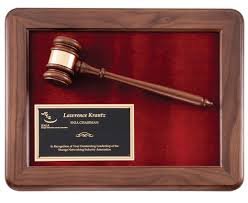

An outgoing chair leaves behind more than a series of completed meetings. There are decisions that took patient discussion, volunteers who needed encouragement and difficult moments that required a steady response. A farewell award can recognize that work, but the object alone cannot explain what the organization values. The wording and presentation need to do some of the work.
A gavel plaque is worth considering when presiding over a group was central to the recipient’s service. Planning it well means connecting the symbol to a real contribution, choosing a readable inscription and thinking about where the award will live after the ceremony. Those decisions deserve attention before anyone approves an engraving proof.
Begin with the service you want to recognize
Ask two or three colleagues for a specific example of the chair’s contribution. Perhaps the person helped a new committee become effective, made meetings more accessible or guided a complicated handover. Look for a contribution that people can explain plainly and that the recipient would recognize as their own work.
Separate the purpose of the award from the speech. The plaque needs a concise, lasting record: who served, in what role, for which organization and during which period. The presenter has room to tell the story behind those details. Trying to fit every achievement onto the plate can weaken both the message and the layout.
The symbol should also suit the role. For a person whose main contribution involved mentoring, research or hands-on volunteering, another design might tell the story more clearly. Ask whether the gavel connects to how this person actually served, rather than choosing it simply because the farewell is formal.
Understand what the gavel contributes
A gavel has a documented connection with presiding over meetings. The U.S. Senate’s account of its traditions and symbols explains that its daily session begins when the presiding officer taps the gavel and calls the chamber into session. That example helps explain why the object can work as a tribute to someone who has led a deliberative group.
For a local association or nonprofit board, the meaning can be expressed through familiar actions: making room for discussion, helping members reach decisions and keeping the organization’s work moving. Choose language that reflects those responsibilities. There is no need to borrow grand institutional language for a small organization with a personal culture.
When comparing layouts, the Gavel Plaques collection from Hit Trophy provides a relevant starting point. Think about the relationship between the mounted object and the inscription area as you review designs. A decorative arrangement should leave enough room for the recipient’s name and the essential service details to remain easy to read.
Write the inscription before selecting a layout
Draft the complete wording in a plain document first. This makes it easier to judge the message without being distracted by finishes or decorative borders. Start with the recipient’s preferred name, then add the office, organization and service dates. Finish with one short expression of appreciation if the available space allows.
An illustrative inscription could read: “Presented to Jordan Ellis, Board Chair, Brookfield Arts Association, 2022–2026. With gratitude for thoughtful leadership and dedicated service.” The names and dates here are fictional. For a real award, replace the general appreciation with wording that reflects the organization’s voice and the recipient’s contribution.
Avoid adding a title merely because it sounds distinguished. Verify whether the organization officially uses “chair,” “chairperson,” “president” or another term. Be equally careful with professional credentials, suffixes and the spelling of the organization’s name. Ask a colleague who knows the recipient well to review those details.
Make room for the message
Once the wording is stable, compare it with the actual engraving area. Overall plaque dimensions do not tell you how much space is available for text. A large mounted gavel, frame or decorative feature may leave a relatively small plate. Ask for the usable plate measurements and a proof showing the intended line breaks.
Give the name visual priority. Supporting information should be readable without competing with it. If the draft feels crowded, remove repeated expressions of thanks or unnecessary organizational descriptors before shrinking every line. A short inscription can still be specific when the role and service period are accurate.
Treat a logo as another element that needs space. Supply the clearest approved artwork available and ask what file format the engraver requires. Check that small lettering within the logo remains legible at the proposed size. If it cannot, consider whether the organization’s written name communicates more effectively.
Use one deliberate proofing process
A shared approval process helps prevent conflicting revisions. Nominate one person to collect corrections and send the final response to the supplier. Keep the approved text beside the proof and compare them line by line, including punctuation and dates.
- Confirm the recipient’s preferred name, title and any credentials.
- Verify whether the dates represent calendar years, terms of office or exact service dates.
- Check the organization’s name, logo and capitalization against approved materials.
- Review line breaks, text size and the balance between the inscription and mounted gavel.
- Confirm delivery arrangements and allow time to inspect the finished award before presentation.
Do not assume an edit discussed by phone has reached the production file. Request an updated proof when wording changes, and retain the final approval. If several people are paying for the gift, agree on the budget and who can authorize changes before placing the order.
Plan for the wall beyond the ceremony
Consider the likely display location while choosing size and orientation. A home study, office wall and crowded awards area offer different amounts of space. If the presentation is a surprise, someone close to the recipient may be able to advise on available room and preferences without revealing the gift.
Ask the supplier about the mounting arrangement and the finished weight. The recipient should receive any relevant hardware information or display instructions with the award. Packaging also matters when the person must carry it home after an evening event or travel with it. Keep protective material available after the photographs.
Let the presentation explain the appreciation
A short presentation can give the plaque its personal meaning. Identify the role and service period, describe one concrete contribution and explain why colleagues valued it. A specific example of patient leadership will say more than a long string of compliments. Check any anecdote with someone who was involved so that the tribute remains accurate.
Choose a moment when the recipient can hear and respond without being rushed into the next agenda item. Arrange who will hold the award, who will speak and who will take photographs. If the event includes several recognitions, give each person an individual reason for receiving theirs.
A meaningful gavel plaque brings a clear symbol together with a precise record of service. The best decisions happen before engraving: choosing the contribution to recognize, checking the wording and making the award comfortable to display. When those details are settled, the ceremony can focus on thanking the person who did the work.

