
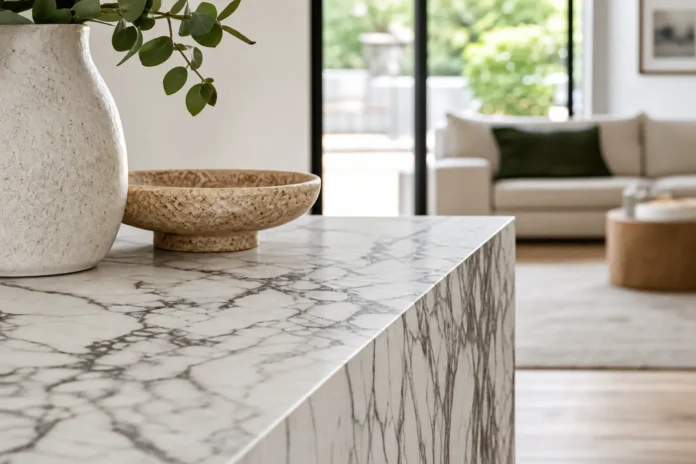

A console table can turn an underused wall into a practical, welcoming part of an Australian home. In an entryway, hallway, living room, bedroom, or home office, it creates a landing spot for everyday items while giving artwork, lighting, and decorative pieces a place to belong. A marble console table can make a particularly strong focal point, but the right choice is always the one that fits the room and supports the way the household lives.
Whether you live in Victoria, New South Wales, Queensland, or another Australian state, start with function rather than a styled image. Consider where bags are dropped, whether the area is a busy passage, how much storage is needed, and how much sunlight reaches the surface. A well-chosen console should feel useful every day, not simply decorative.
Why Console Tables Work in Modern Homes
Console tables offer function without the visual weight of a larger cabinet. They can define an entrance, soften a blank hallway, sit neatly behind a sofa, or provide a useful surface beneath a mirror. Their slim shape also makes them effective visual bridges between walls, furniture, lamps, and accessories. The most successful design reflects daily habits, whether that means holding keys and mail near the front door or displaying books and a lamp in the living area.
Measure the Space Before Choosing a Table
Measure the available wall width, maximum safe depth, nearby corners, skirting boards, power points, vents, and door swings. Also, check how much clear floor space remains once the table is in position. If you want baskets, stools, or storage below it, measure for those too.
Before ordering, mark the proposed footprint with painter’s tape. Walk through the area with a bag or laundry basket, open nearby doors, and picture how the table will be used. This low-effort test can reveal an awkward depth before a heavy piece arrives.
Choose the Right Width, Depth, and Height
Proportion matters more than elaborate decoration. A narrow hall usually needs a shallow console, while an open living room may suit a deeper piece with a stronger presence. Choose a width that suits the wall and surrounding furniture, rather than filling every centimeter.
- Width: Leave some breathing room at either side where possible.
- Depth: Prioritize a comfortable passage in hallways and entrances.
- Height: Consider adjacent seating, artwork, lamps, and intended use.
- Clearance: Keep drawers, cupboard doors, and walkways usable.
A 915 mm (36-inch) clear route is a commonly used accessibility reference in the United States.
Compare Materials and Finishes
Material affects appearance, weight, upkeep, and how the table feels in the room. Natural stone makes a substantial statement and can highlight distinctive veining. Timber brings warmth and suits relaxed, classic, and contemporary spaces. Metal often gives a lighter, more linear profile, while glass can help a compact room feel less visually crowded. Mixed materials can add contrast without requiring many extra accessories.
Finish matters too. Polished surfaces reflect more light, while honed, brushed, or textured finishes tend to look softer. Choose a finish that complements nearby flooring and furniture, rather than trying to match every surface exactly.
Protect Traffic Flow and Accessibility
A beautiful table should never make a busy route harder to use. Check the space with children, pets, shopping bags, and visitors in mind. Rounded edges can be helpful near tight corners, and stable bases matter wherever people regularly pass.
- Open every nearby door fully.
- Walk past the proposed position while carrying a bag.
- Check that drawers and doors can open without blocking movement.
- Look for sharp corners at hip or knee height.
- Make sure lamps and objects are not easily knocked over.
Balance Storage with Display
Select storage according to the room. An entryway may benefit from a drawer, tray, or basket for keys, mail, sunglasses, and dog leads. In a living room, a shelf can hold books and remotes. A bedroom console may need only a lamp and a small dish, while a home office table can hide cables and stationery. Leave enough clear surface for the table’s actual purpose.
Style the Table in Simple Layers
A Three-Layer Approach
- Add one tall piece: Try a lamp, vase, branch, or vertical artwork.
- Add one medium piece: Use books, a framed photograph, or a sculptural object.
- Add one low piece: A tray, bowl, candle, or lidded box.
Repeat one color, material, or shape to connect the arrangement. Mix smooth and textured pieces, vary the heights, and leave visible empty space. If the display feels busy, remove one item before adding another.
Console Table Ideas for Small Spaces
In narrow halls, apartments, and rental homes, a slim profile is usually more useful than a large statement piece. Consider a wall-mounted shelf where floor space is limited, or a curved table to soften a tight corner. Raised legs can keep the floor feeling open and may allow room around vents or radiators. Wall hooks above the table add function without adding bulk.
Keep the Surface Looking Good
Follow the maker’s care instructions for the specific material. Use coasters under drinks, vases, and plant pots; add felt pads under heavy objects; and wipe up spills promptly with a soft cloth. Avoid abrasive pads and harsh cleaners unless they are approved for that finish. Direct sunlight can also affect some finishes over time, so consider window position before placing the table. For older or valuable stone, seek specialist advice before using unfamiliar cleaning products.
Common Console Table Mistakes to Avoid
- Buying before measuring the wall and walkway.
- Blocking a door, power point, vent, or main path.
- Choosing fragile decor for a high-traffic family area.
- Filling every shelf and leaving no practical storage.
- Using too many small objects instead of a few intentional pieces.
- Ignoring how the material will be cleaned and maintained.
A Simple Buying Checklist
- Have you measured the wall, depth, and remaining walkway?
- Does the height work with nearby furniture and wall decor?
- Is the material suitable for your maintenance routine?
- Do you need drawers, shelving, baskets, or just a clear top?
- Will the edges and base be stable in the intended location?
- Is there enough empty surface for everyday use?
Conclusion
The right console table is not simply the most eye-catching option. It fits its location, supports everyday routines, preserves comfortable movement, and leaves room for a simple, personal display. With careful measuring and thoughtful styling, an unused wall can become one of the most useful areas in the home.

