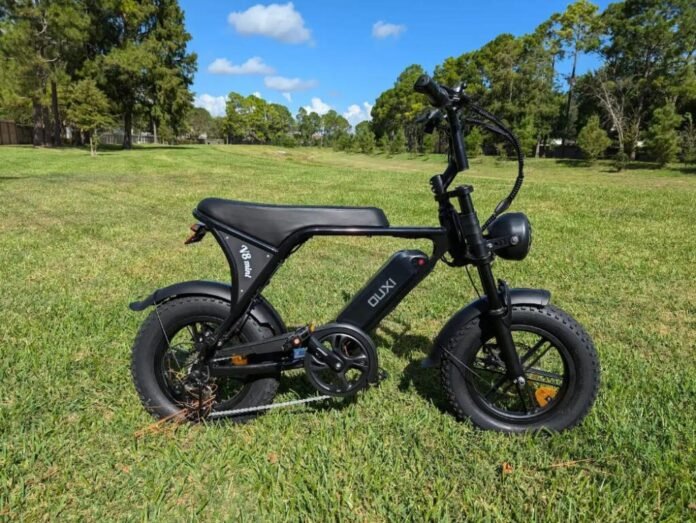
Choosing an electric bike for a teenager can take more thought than simply picking a model with an appealing design. Young riders are still developing their judgment, coordination, and confidence, so the bike needs to suit both the rider and the environment.
This becomes especially important when comparing an electric dirt bike for teens with electric bicycles intended for road use. These vehicles can look similar because both rely on battery-powered motors, but their purposes, designs, and rules can be quite different. Rather than beginning with the biggest motor or highest speed, it makes sense to work through the decision from the rider outward.
1. Begin With the Person Riding It
The first question should be whether the teenager can physically manage the bike. Height is important, but it isn’t the only measurement worth checking. The rider should be able to reach the handlebars and controls comfortably and maintain a stable riding position. The bike’s overall weight also matters because a teenager may need to move or balance it when the motor is not providing assistance.
Experience should be considered as well. A teenager who is completely new to electric riding may need a simpler learning curve than someone who already has considerable experience with bicycles or off-road vehicles. A bike that feels manageable encourages better control. A bike that feels too large or heavy can make basic movements unnecessarily difficult.
2. Decide Where Most Riding Will Happen
The intended environment can narrow the options considerably. An electric dirt bike is generally designed for suitable off-road areas. Dirt tracks, private trails, grass, gravel, and uneven surfaces place different demands on a bike than smooth pavement. For teenagers who will mainly ride on appropriate off-road property, features such as suitable tread, suspension, ground clearance, and a stable frame may deserve closer attention.
On the other hand, someone who needs an electric bicycle for everyday transportation may have very different priorities. The important thing is not to assume that an electric vehicle designed for one environment will automatically perform well in another.
3. Understand Where Class 3 Fits In
Another term that frequently appears during research is Class 3. If you’re wondering what a class 3 ebike is, it is generally a pedal-assisted electric bicycle in the United States where the motor provides assistance up to 28 mph. The classification helps distinguish one type of e-bike from others, but it doesn’t describe every characteristic of the bicycle. A Class 3 model can have different tires, frames, batteries, brakes, and riding positions depending on its design.
There is also an important legal point. The places where a Class 3 e-bike can be ridden depend on local regulations. A route that permits one type of e-bike may have restrictions on another. Before choosing a bike for a teenager, parents should therefore check the rules in the area where it will actually be used.
4. Look at Control Before Performance
Specifications can make a bike look impressive on paper, but control is more useful in real riding. A teenager should be able to accelerate smoothly rather than being surprised by sudden motor assistance. Brakes should be easy to reach and operate. Steering should feel predictable, and the rider should understand how the bike behaves when slowing down or turning.
These points become even more important off-road. Loose dirt and uneven surfaces can reduce traction, meaning a rider has less room for careless movements. Learning to ride at a controlled pace is usually more valuable than immediately trying to reach the bike’s maximum capability.
5. Treat Protective Gear as Part of the Setup
Safety equipment should not be something added at the last minute. A properly fitted helmet is a basic part of responsible riding. Depending on the type of riding, teenagers may also benefit from gloves, appropriate footwear, eye protection, and additional protective equipment.
Off-road riding can involve falls that are less common on smooth pavement. Parents should choose equipment according to the environment and make sure the teenager understands how and when to use it. It is also worth checking the bike before every ride. Tire condition, brakes, battery connections, controls, and visible damage can all be checked in a few minutes.
6. Don’t Ignore Battery Behavior
Battery capacity is useful information, but an advertised range should never be treated as a fixed number. Terrain can have a significant effect on energy consumption. Hills, loose surfaces, frequent acceleration, rider weight, temperature, and tire pressure can all influence how quickly the battery drains.
For an off-road session, planning should account for the actual route rather than assuming the maximum claimed range will always be available. Teenagers should also understand the importance of returning with enough battery power. Getting stranded away from the starting point is particularly inconvenient when the bike is heavy.
7. Learn the Difference Between Legal and Practical
A bike may be technically capable of riding somewhere without being legally permitted there. This is one area where parents should do some research before handing over the keys. Local rules may cover age requirements, helmets, public trails, roads, bicycle paths, and motorized recreational vehicles.
An electric dirt bike may have different requirements from a Class 3 e-bike. The terminology used by a manufacturer does not replace the laws that apply in a particular location. If the bike will be used on private property, parents should also make sure the property owner permits that type of riding.
8. Build Skills Gradually
A teenager does not need to master every riding situation on the first day. A better approach is to begin somewhere controlled and relatively simple. Basic exercises can include starting and stopping, gentle turns, braking at different speeds, and maintaining balance over minor surface changes.
Once the rider becomes comfortable, more challenging terrain can be introduced gradually where permitted. This approach also helps teenagers understand their own limits. Knowing when to slow down or stop is an important riding skill that cannot be learned from a specification sheet.
Choosing a Brand Comes Later
Once the rider, terrain, safety requirements, and legal considerations are clear, comparing brands becomes much easier. If I were researching options from companies such as OUXI, I would also ask what is a class 3 ebike and whether its specifications match the intended use, rather than making the brand the starting point. Things such as frame size, weight, braking system, tire design, battery information, intended use, maintenance, and available guidance deserve attention.
Conclusion
Finding the right electric bike for a teenager is mainly a matter of matching the machine to the rider and the environment. An electric dirt bike for teens may make sense for suitable off-road recreation, while a Class 3 e-bike is generally designed around pedal-assisted road-style cycling and can reach motor-assisted speeds of up to 28 mph in the United States. Understanding the difference between these categories helps families avoid choosing a bike based only on appearance or speed. Fit, control, protective equipment, battery planning, riding skills, and local regulations all deserve a place in the decision.
FAQs
Is every electric dirt bike suitable for teenagers?No. Models can differ considerably in size, weight, power, and intended use. Parents should check the manufacturer’s age and rider recommendations for the specific model.
Is Class 3 the same as an off-road bike category?No. Class 3 is an e-bike classification describing how motor assistance works and its assisted speed in the U.S. It does not automatically mean that the bicycle is designed for off-road riding.
Why does the rider’s weight matter when choosing an electric bike?Rider weight can affect handling, braking, battery consumption, and the overall load placed on the bike. It should be considered alongside the manufacturer’s recommended limits.
Can teenagers learn off-road riding without previous experience?They can develop off-road skills gradually, but beginners should start in a controlled and appropriate environment. Supervision and suitable protective equipment are especially important during the learning process.
How often should a teen’s electric bike be checked?
A quick inspection before each ride is useful. Tires, brakes, controls, battery connections, and visible damage should be checked regularly, while manufacturer-recommended maintenance should be followed as well.