
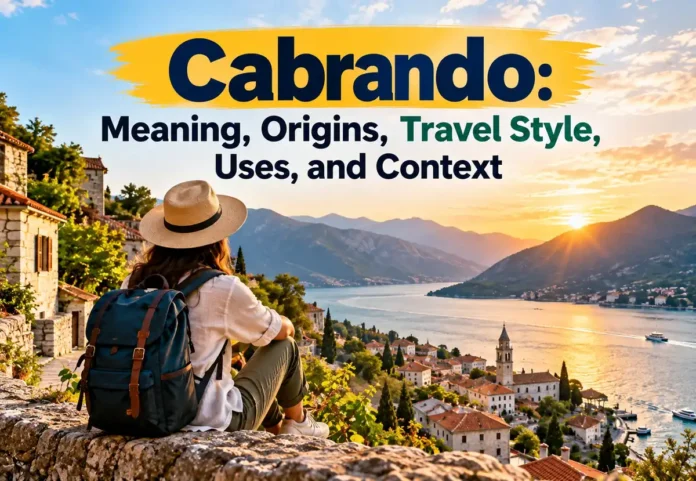

Cabrando refers to a modern travel mindset built around slower exploration, meaningful experiences, local culture, and responsible interaction with destinations. Instead of rushing through a long list of attractions, Cabrando encourages travelers to spend more time in fewer places, notice everyday life, support local communities, and create a stronger connection with where they travel.
The idea fits closely with slow travel, responsible tourism, cultural immersion, and environmentally aware travel choices. Cabrando is less about reaching a particular destination and more about changing the way a traveler experiences any place.
What Does Cabrando Mean?
In a modern travel context, Cabrando means exploring with greater attention, patience, and connection. A Cabrando-style traveler values meaningful moments, local interaction, and understanding a place instead of measuring a trip by how many attractions were completed.
The concept can apply in a small village, coastal destination, mountain town, historic district, or busy international city. What matters most is the traveler’s behavior, including how long they stay, where they spend money, how they interact with residents, and how carefully they treat the local environment.
Cabrando also encourages flexibility because memorable travel does not always come from a packed itinerary. A quiet café conversation, neighborhood walk, local market, traditional meal, or unexpected viewpoint can become more valuable than another rushed stop at a famous landmark.
The Core Idea Behind Cabrando Travel
The central idea of Cabrando is simple: experience a destination instead of merely passing through it. Travelers choose depth over speed by giving themselves enough time to understand the character, routines, food, traditions, and people of the place they are visiting.
This approach does not require avoiding major tourist attractions. A traveler can still visit famous landmarks while balancing them with local neighborhoods, independent businesses, community activities, smaller cultural sites, and unplanned time.
Cabrando therefore works as a flexible philosophy rather than a strict travel formula. It allows people to adjust the pace, budget, destination, and activities while keeping meaningful connection at the center of the journey.
How Cabrando Connects With Slow Travel
Slow travel focuses on spending longer periods in fewer destinations instead of moving constantly between cities or countries. Cabrando follows the same principle but places additional emphasis on awareness, community connection, and the quality of everyday travel experiences.
For example, a traditional itinerary may include three cities within four days, with most time spent packing, checking out, transferring, and checking in again. A Cabrando-inspired version might choose one city and explore its central district, local markets, surrounding neighborhoods, nearby nature, and regional food at a more comfortable pace.
Slowing down can also reduce travel fatigue. Fewer transfers create more room for rest, spontaneous activities, longer meals, conversations, walking, and experiences that would be difficult to fit into a tightly scheduled trip.
Cabrando and Local Culture
Local culture plays an important role in Cabrando because meaningful travel requires more than observing a destination from a distance. Travelers can learn about a place through its food, language, traditions, crafts, public spaces, history, architecture, and everyday routines.
Simple choices can create deeper cultural interaction. Eating at an independent restaurant, buying from a neighborhood bakery, visiting a local market, attending a community event, or joining a small cultural workshop can reveal parts of a destination that standard sightseeing may miss.
Respect remains essential during cultural experiences. Travelers should follow local etiquette, ask permission before photographing people, respect religious or private spaces, and avoid treating communities as entertainment created for visitors.
Sustainability and Responsible Travel
Cabrando also connects naturally with responsible travel because slower and more thoughtful choices can reduce unnecessary pressure on destinations. Walking, cycling, public transport, shorter travel distances, reusable items, and locally managed accommodation can support a more conscious travel experience.
Responsible travel also involves understanding where tourism money goes. Choosing independent guesthouses, local guides, family-run restaurants, neighborhood shops, and regional producers can help more visitor spending remain within the destination.
Sustainability should not be judged only by labels such as “green” or “eco-friendly.” Travelers can look for practical evidence such as waste reduction, responsible water use, local employment, conservation efforts, ethical wildlife practices, and transparent community partnerships.
How to Plan a Cabrando-Inspired Trip
Start by choosing fewer locations than you normally would and give each destination enough time to feel familiar. Instead of filling every hour, identify essential activities and leave open periods for walking, resting, eating locally, exploring side streets, or following recommendations you receive during the trip.
Accommodation can shape the entire experience. Small hotels, locally owned guesthouses, farm stays, homestays, and independent properties can provide more connection with the surrounding community than accommodation that feels completely separated from local life. On quieter Canary Islands, German travelers often book rural Ferienhaus La Palma in the hills so they can settle into village life for a week or more.
Transport decisions matter as well. Walking and public transportation can reveal how a place actually functions, while constant private transfers may move travelers efficiently but separate them from street-level experiences.
Food as Part of the Cabrando Experience
Food offers one of the easiest ways to understand a destination. Regional dishes often reflect local agriculture, climate, migration, history, religious traditions, and family customs, which means eating locally can provide cultural information as well as enjoyment.
A Cabrando traveler might visit a produce market, try a traditional breakfast, choose a neighborhood restaurant, or ask about seasonal specialties. These experiences can create stronger memories because the meal becomes connected with a specific place and story.
Eating locally does not mean every meal needs to become a cultural lesson. The goal is simply to remain curious and occasionally choose experiences that reveal something about the destination rather than defaulting entirely to familiar international chains.
Cabrando for Solo Travelers
Solo travelers can adapt naturally to Cabrando because they usually have greater control over their daily schedule. They can spend longer in places they enjoy, change plans easily, join community activities, take walking tours, or visit cafés and markets without coordinating a large group.
Meaningful travel can also make solo trips feel more socially connected. Staying at smaller accommodations, joining workshops, using local guides, or participating in group experiences can create opportunities for natural interaction without requiring a constantly social itinerary.
Safety should still remain part of the planning process. Travelers should research neighborhoods, transport options, local customs, emergency information, and appropriate activities before relying completely on spontaneous exploration.
Cabrando for Couples and Families
Couples can use Cabrando to build trips around shared experiences rather than a long sightseeing checklist. Cooking classes, scenic walks, regional food, nature, crafts, local neighborhoods, and relaxed evenings can create more personal memories than constantly moving between attractions.
Families may benefit even more from a slower pace because children often find repeated transfers tiring. Staying longer in one location gives families time to build routines, revisit favorite places, rest when needed, and explore without turning every day into a race against the schedule.
The concept remains flexible enough for different ages and travel preferences. A meaningful family trip can include famous attractions, comfortable accommodation, entertainment, and relaxation while still leaving room for local experiences.
Budgeting for Cabrando Travel
Cabrando does not automatically mean luxury travel or budget travel. Its cost depends on the destination, season, accommodation, transport choices, and length of stay, so travelers should compare the total daily cost instead of assuming that traveling slowly always costs less.
Longer stays may reduce some expenses because travelers make fewer long-distance transfers and may receive better accommodation rates. However, extra nights also increase food and lodging costs, which means realistic planning remains important.
A practical budget can prioritize experiences that provide strong local value. Spending on a community guide, regional meal, cultural workshop, or locally owned accommodation may contribute more to the trip than constantly purchasing souvenirs or expensive tourist packages.
Common Cabrando Travel Mistakes
One mistake is assuming that meaningful travel requires finding places with no tourists. Cabrando is primarily about how someone travels, so the approach can work in Paris, Istanbul, Barcelona, Bangkok, or any other popular destination.
Another mistake is treating residential areas as attractions. Travelers should respect privacy, avoid intrusive photography, and remember that local neighborhoods are places where people work, raise families, study, rest, and live ordinary lives.
Travelers should also avoid romanticizing poverty, rural isolation, or traditional lifestyles. Genuine cultural respect means understanding communities on their own terms rather than turning hardship or difference into an aesthetic travel experience.
Why Cabrando Appeals to Modern Travelers
Many travelers now want more than photographs of famous attractions. They want memorable food, human interaction, personal stories, nature, cultural understanding, and enough time to absorb the atmosphere of the places they visit.
Crowded attractions and rushed itineraries can also create travel fatigue. A slower approach allows travelers to reduce unnecessary movement while giving attention to smaller experiences that might otherwise disappear between scheduled activities.
Cabrando responds to this desire by shifting attention from quantity toward quality. A successful trip becomes less about how many destinations someone visited and more about how deeply they experienced the places they chose.
Cabrando as a Mindset Beyond Travel
The principles associated with Cabrando can also influence the way people think about everyday experiences. Patience, curiosity, attention, community participation, and appreciation of small moments can apply to ordinary life as easily as they apply to travel.
Someone does not need to visit a distant country to practice this mindset. Exploring a nearby town, trying an independent restaurant, visiting a local market, learning regional history, or walking through an unfamiliar neighborhood can create the same sense of discovery.
This makes Cabrando accessible to people with different budgets and travel opportunities. The value comes from attention and engagement rather than from the distance traveled or the price of the trip.
How Cabrando Differs From Traditional Tourism
Traditional tourism often organizes travel around major sights, limited vacation time, and efficient movement between attractions. Cabrando changes the priority by asking travelers to make room for experience, community, culture, and spontaneous discovery alongside conventional sightseeing.
The two approaches do not need to compete. A traveler can visit museums, monuments, theme parks, beaches, and famous landmarks while still staying longer, eating locally, walking through neighborhoods, and learning about the destination.
The difference appears mainly in pacing and attention. Cabrando encourages travelers to see a destination as a living community rather than only as a collection of attractions waiting to be photographed.
Is Cabrando a Destination?
In this travel context, Cabrando is better understood as an approach rather than a single destination with fixed borders, landmarks, or attractions. The same principles can be applied in different countries, cities, villages, islands, mountains, and coastal regions.
This flexibility is one of the concept’s strongest features. Travelers do not need to search for one specific Cabrando location because the experience depends on how they explore the destination they already plan to visit.
How to Practice Cabrando on Your Next Trip
Choose one or two practical changes instead of redesigning your entire travel style at once. You might stay an extra night, use public transport for one day, eat at a locally owned restaurant, visit a neighborhood market, or leave one afternoon completely unscheduled.
Pay attention to what produces the strongest memories during the trip. If conversations, meals, walks, local recommendations, or quiet moments become more meaningful than rushed sightseeing, you are already applying the central idea behind Cabrando.
Over time, travelers can develop their own version of the approach. The goal is not to follow rigid rules but to travel with greater awareness, respect, curiosity, and connection.
Conclusion
Cabrando represents a slower, more thoughtful way of traveling that focuses on meaningful experiences, local culture, community connection, and responsible choices. Instead of trying to see everything quickly, the approach encourages travelers to spend more time understanding the places they visit and the people who live there.
The value of Cabrando comes from attention rather than distance, luxury, or a packed itinerary. By choosing fewer destinations, supporting local businesses, respecting communities, and leaving room for spontaneous experiences, travelers can create journeys that feel more personal, memorable, and connected.
FAQs
What does Cabrando mean in travel?
Cabrando describes a travel mindset focused on slowing down, experiencing local culture, supporting communities, traveling responsibly, and building meaningful connections instead of rushing through attractions.
Is Cabrando a place or destination?
No, Cabrando is better understood in travel-focused usage as an approach to exploring. Travelers can apply its principles to cities, villages, coastal areas, mountains, or international destinations.
Is Cabrando the same as slow travel?
Cabrando shares many principles with slow travel, especially staying longer and moving less. It also emphasizes local culture, community interaction, environmental awareness, and meaningful personal experiences.
How can I plan a Cabrando-style trip?
Choose fewer destinations, allow flexible time, stay locally when practical, use slower transportation, eat regional food, respect community boundaries, and leave space for spontaneous discovery.
Is Cabrando suitable for families?
Yes, families can use Cabrando by reducing transfers and planning calmer days. Longer stays can provide children with more rest, routine, local experiences, and enjoyable exploration.
Does Cabrando require expensive travel?
No, Cabrando does not depend on luxury spending. The approach focuses on meaningful choices, so budget travelers and luxury travelers can both apply its principles in different ways.
Can Cabrando be practiced close to home?
Yes, Cabrando can apply to nearby exploration. Visiting local markets, independent businesses, regional attractions, cultural sites, or unfamiliar neighborhoods can create the same slower, more attentive experience.

