
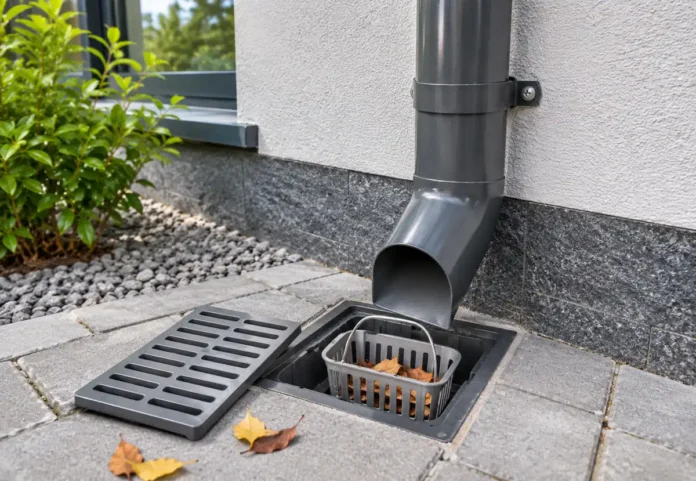

Gajgry are roof-drainage fittings, the Czech plural of gajgr, that connect a rainwater downpipe to an underground drain and catch larger debris. A gajgr usually sits at the base of an exterior downpipe, directing roof runoff towards a rainwater sewer, soakaway or approved storage system.
Many models contain a removable basket or grille that catches leaves, moss and twigs before they reach buried pipes. Some also use a flap or water seal to limit drainage odours, although parts and outlet designs vary by model.
What Does the Word Gajgry Mean?
Gajgry is the Czech plural form of gajgr. The fitting is also called a roof debris trap or lapač střešních splavenin, a Czech term for a device that catches material washed off a roof. It connects a vertical downpipe to underground drainage. The name describes a specific building component, not a general gutter or household filter.
A gajgr is not the same as a gutter guard. A gutter guard sits along the roof gutter and limits debris entering the downpipe, while a gajgr collects material lower down, before water reaches underground drainage. It also differs from a surface drain that collects water from a patio or driveway. This distinction helps you choose the right fitting.
How a Gajgr Works in a Rainwater System
Rain runs from the roof into gutters and downpipes. The downpipe directs water to the gajgr, where it passes through an outlet connected to underground drainage. Depending on the property and local rules, that outlet may lead to a rainwater sewer, soakaway or storage tank. The fitting acts as both a pipe connection and an inspection point.
Inside many models, a removable basket or grille catches leaves, moss, twigs and other coarse debris. Water passes through the openings while the collected material stays accessible for removal. This reduces debris reaching buried pipes, but it does not capture every fine particle or guarantee a blockage-free system. A full basket can restrict flow, so someone must clean it.
Some gajgry contain a dry anti-odour flap or another type of seal. This part helps limit smells travelling backwards from the connected drain, while the basket handles solid debris. The two functions are separate, and not every model includes both. Check the product specification for the actual arrangement.
Main Parts of a Gajgr
The outer body forms the chamber between the downpipe inlet and underground outlet. An insert or adaptor may accept a particular pipe shape or diameter, while a removable basket catches coarse debris. The access cover lets someone reach the basket without dismantling the downpipe. Some designs also include an odour flap or seal.
Types of Gajgry and Their Outlet Designs
Bottom-Outlet Models
A bottom-outlet gajgr sends water vertically into a pipe below the fitting. It suits an underground connection directly beneath the downpipe, if enough depth is available. Check the outlet diameter and installation depth before buying. A poor fit may require changes to the drainage layout.
Side-Outlet Models
A side-outlet gajgr sends water horizontally into a pipe entering from the side. Installers may choose it when the underground pipe sits shallow or there is not enough depth for a vertical connection. The outlet must match the existing pipe’s position and height. Do not choose one simply because it looks easier to fit.
Dry and Wet Odour-Control Designs
A dry mechanism commonly uses a movable flap to limit sewer odours without a standing water seal. A wet arrangement uses retained water as a barrier, although designs vary. These terms describe odour control, not the debris basket. Check the manufacturer’s documentation because product ranges do not all use the same terminology.
Why Gajgry Matter, and What They Cannot Do
A gajgr directs roof runoff into underground drainage and catches larger debris before it travels farther into the system. It makes maintenance simpler because someone can inspect the basket at ground level before investigating buried pipes. The fitting is especially useful near trees, where leaves and small branches often enter gutters. It also provides a convenient point to spot problems early.
A gajgr is not a complete water filter or flood-prevention device. Fine silt can pass through, and the fitting cannot fix an undersized drain, damaged pipe or blocked gutter. If you collect rainwater for garden use, the basket may catch coarse debris, but you still need downstream filtration. Water for drinking or sensitive household uses requires suitable treatment and testing.
How to Choose the Right Gajgr
Measure the downpipe and identify its shape. Some fittings accept round pipes, while others use adaptors for square or rectangular downpipes. Check the supported inlet sizes and outlet diameter against your existing pipes. Do not assume similar-looking openings will connect securely.
Match the outlet direction to the underground pipe. Check the stated flow capacity against the roof area and drainage design, especially where several downpipes share one line. The cover needs a suitable load rating, because a lawn edge faces different demands from a driveway. Ask a drainage professional to check the layout if size, depth or capacity remains unclear.
Consider material, access and replacement parts. Many outdoor models use UV-stabilised polypropylene, but material alone does not prove a fitting suits your site. The basket should lift out easily, and the lid must remain accessible after paving. Check dimensions, load rating, seals and compatible connections.
Installation and Drainage Connections
Position the fitting so the downpipe and underground outlet align correctly. Follow the manufacturer’s instructions for bedding, support, seals and any concrete surround, because methods vary. Keep the access cover visible and removable after finishing the ground. Burying the lid under soil or paving makes cleaning difficult.
Confirm where local rules allow roof water to discharge. A property may use a rainwater sewer, soakaway, retention tank or another approved system, depending on the site. Do not connect a downpipe to a foul sewer just because a pipe is nearby. Get professional help for excavation, changes to buried drainage or uncertainty about the permitted outlet.
Cleaning, Maintenance and Common Problems
Inspect the gajgr during seasonal gutter maintenance and after storms, especially when trees overhang the roof. Wait until conditions are safe and heavy water flow has stopped, then open the cover as instructed. Lift out the basket, empty leaves and sediment, and check the inlet and outlet for obstructions. Return each part to its correct position and close the cover securely.
Slow drainage or overflow around the cover often points to a blocked basket, restricted outlet or problem farther along the pipe. A persistent smell may indicate a damaged odour flap, organic material, or an issue in the connected drain. Cracks, loose adaptors and broken baskets can also affect performance. Clean the chamber first, but arrange a professional inspection if water still backs up.
Replace the fitting if damage to its body, cover, basket or connection affects operation. Check that the existing pipe direction and diameter match the new model. A new trap will not fix a collapsed pipe or undersized drain, so investigate repeated blockages before replacing the same component. Regular inspection helps catch wear and debris early.
Conclusion
Gajgry play an important role in maintaining an efficient rainwater drainage system by collecting roof runoff and trapping larger debris before it enters underground pipes. Choosing the right model depends on your downpipe size, outlet direction, drainage layout and installation requirements.
Regular cleaning and inspection help prevent blockages, reduce maintenance problems and keep rainwater flowing smoothly. With the right selection and proper care, a gajgr can support a reliable and long-lasting roof drainage system.
Frequently Asked Questions
What does gajgry mean?
Gajgry is the Czech plural of gajgr, a roof-drainage fitting that connects a downpipe to underground drainage and often catches debris washed from the roof.
What is a gajgr used for?
A gajgr carries rainwater from a roof downpipe into a drainage outlet while collecting larger debris that could otherwise enter and obstruct buried pipes.
Where should a gajgr be installed?
Install a gajgr near the base of an exterior rainwater downpipe, where its inlet aligns with the pipe and its outlet reaches the approved underground drainage connection.
What is the difference between a bottom and side outlet?
A bottom outlet sends water vertically into a pipe below the fitting, while a side outlet sends water horizontally into a pipe entering from the side.
Does a gajgr stop sewer smells?
Some gajgry include a dry flap or water seal that helps restrict sewer odours, but the feature and its effectiveness depend on the specific model.
How often should you clean a gajgr?
Inspect it during seasonal gutter maintenance and after storms, then clean it whenever leaves, moss or sediment build up in the basket or chamber.
Can a gajgr prevent all drain blockages?
No, a gajgr catches larger roof debris, but fine sediment, damaged pipes, restricted outlets, and inadequate drainage capacity can still cause blockages.