
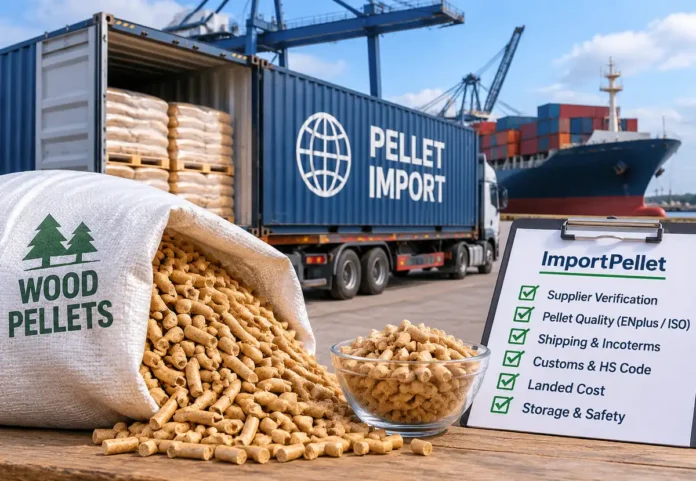

ImportPellet is an informal term for sourcing and importing pellet products from another country, most often wood pellets used for heating and biomass energy. It describes a buying process, not a recognised fuel grade, customs programme, or universal certification. A buyer selects suitable pellets, checks an overseas supplier, agrees on delivery terms, ships the cargo, clears customs, and stores it safely.
The word itself does not identify one particular supplier or online platform. If you see ImportPellet used as a business name, verify that organisation separately instead of assuming the name proves its credentials. For most buyers, the practical subject is the international wood pellet trade and how to turn a supplier quotation into usable fuel.
Why Do Businesses Import Wood Pellets?
Wood pellets are small cylinders made by drying and compressing woody material such as sawdust and shavings. Their uniform shape supports automated feeding in domestic stoves, commercial boilers, and some industrial energy systems. Manufacturers may use other biomass materials too, but buyers must confirm that the fuel suits their equipment.
A business may import pellets when local mills cannot supply enough volume or maintain a consistent grade. An overseas producer may offer a better delivery schedule, suitable specifications, or a competitive price after transport. Heating companies, distributors, factories, greenhouses, and power plants all have different buying needs.
Importing makes sense only when it solves a real supply or performance problem. A low factory price can lose its appeal after freight, customs charges, handling, storage, and damaged material enter the calculation. Compare dependable, usable fuel rather than choosing the cheapest initial quotation.
Choose a Pellet Type That Matches the Equipment
Start with the equipment specification, not the supplier’s product label. Residential pellet stoves often need fuel with low ash and few fines, while some commercial boilers accept a wider range of properties. Industrial plants may buy bulk fuel under specifications designed for their combustion systems.
ENplus grades help buyers compare certified wood pellets for different uses. ENplus A1 generally suits domestic appliances with stricter fuel requirements, while A2 allows higher ash levels for compatible equipment. ENplus B serves some commercial or industrial applications, but the boiler manufacturer’s instructions must determine the acceptable grade.
Softwood and hardwood pellets can differ in density, ash behaviour, and energy characteristics. Request measured specifications rather than relying on colour or claims such as premium. Agricultural-residue pellets may suit specialist industrial boilers, but never assume a wood-pellet appliance can burn them safely.
Check Pellet Quality Before You Place an Order
The international standard ISO 17225-2:2021 sets specifications and quality classes for graded wood pellets. ENplus builds on technical requirements and adds controls for production and parts of the supply chain. These systems help buyers compare products, but certification does not replace inspection of the actual shipment.
Ask for a recent laboratory report that identifies the product and production batch. Check moisture because excess water reduces useful heat and can weaken pellets during transport or storage. Review ash content and mechanical durability too, since high ash increases cleaning needs and weak pellets break into dust.
Fines are small fragments that collect when pellets break during loading and handling. Too many fines can disrupt automatic feed systems and reduce usable fuel. Confirm pellet diameter and net calorific value, then write acceptable ranges and test methods into the purchase contract.
Do not accept a printed certification logo as proof on its own. Check the supplier’s certification ID against the current register and match its legal name to the seller in the contract. Request a representative sample and arrange independent testing for larger orders.
How to Import Pellets Step by Step
1. Define the Order and Delivery Requirement
Set the grade, volume, pellet diameter, packaging, and delivery location before contacting exporters. Bags may suit retailers, while big bags or bulk cargo often suit industrial users. Check warehouse capacity and seasonal demand to avoid excess stock or shortages.
2. Check the Destination Country’s Import Rules
Ask a customs broker or trade authority to confirm the tariff code, duties, taxes, permits, and plant-health requirements. Wood pellets commonly fall under HS subheading 4401.31, but national schedules may add digits or conditions. Never copy another importer’s code without checking your own shipment.
3. Verify the Supplier and Manufacturer
Find out whether you are dealing with a producer, exporter, or broker arranging a sale. Check company registration, factory location, production capacity, trade references, and the identity of the payment recipient. Make sure bank details match the contracting business, and treat pressure for full advance payment as a warning sign.
4. Agree on Samples and Contract Terms
A pre-order sample may not match the cargo loaded later, so define how both parties will test the shipment. Put the grade, diameter, moisture, ash, durability, fines allowance, sampling method, and laboratory procedure in writing. Explain whether failed cargo can be replaced, discounted, or rejected.
Use Incoterms 2020 to make delivery responsibilities clear. FOB and CIF allocate costs and risks differently, while FCA may suit some container movements better than FOB. Name the exact port or delivery point, confirm who arranges insurance, and avoid vague promises such as shipping included.
5. Arrange Transport, Customs Clearance, and Inspection
Choose bags, big bags, containers, or bulk vessels according to shipment size and available facilities. Keep pellets dry because rain or condensation can cause swelling, breakage, and excess fines. Arrange cargo protection and insurance, and keep loading photographs and inspection records.
Prepare the commercial invoice, packing list, and transport document before the shipment arrives. A certificate of origin, import permit, phytosanitary certificate, fumigation record, or quality certificate may also apply, depending on local rules. Submit the customs entry, pay assessed charges, and inspect the cargo before accepting delivery.
Calculate the True Landed Cost
The supplier’s price per tonne is only one part of the import cost. Add freight, insurance, port handling, customs duty, taxes, broker fees, inspection, inland transport, and storage. Include financing costs and a contingency for delays, damaged bags, or rejected material.
Landed cost per usable tonne = Total shipment cost ÷ Usable tonnes received
For example, a shipment costing $275,000 that delivers 970 usable tonnes has a landed cost of about $283.51 per usable tonne. The invoice may cover 1,000 tonnes, but damaged or unusable material cannot count as fuel that you can sell or burn. This method makes comparisons fairer when suppliers offer different prices or packaging.
For heating, compare useful energy as well as price per tonne. A pellet with a higher net calorific value may deliver more energy per kilogram, while boiler efficiency determines how much heat reaches the building or process. A cheaper product can therefore cost more per unit of useful heat.
Store Pellets Safely After Arrival
Move accepted pellets into a dry, covered area and protect bags from damp floors and walls. Keep the storage space ventilated and follow site safety procedures, because stored wood pellets can release carbon monoxide and reduce oxygen levels. Never enter a silo, hold, or enclosed storage space without an authorised confined-space procedure and atmospheric checks.
Handle bags carefully to limit breakage and dust. Use older stock first, separate damaged packaging, and inspect the store for leaks or condensation after heavy rain. Good storage protects fuel quality and reduces losses before customers use the product.
Consider Sustainability and Supply Risks
Wood pellets do not become sustainable simply because they come from biomass. Their environmental impact depends on feedstock origin, forest management, manufacturing energy, transport distance, and the fuel they replace. Ask suppliers for traceable raw-material records and evidence behind environmental claims.
Check whether destination-market rules cover the product, its feedstock, or companies in the supply chain. Requirements can change for timber-related products and biomass used for energy, so confirm current obligations before signing a long-term contract. A fuel-quality certificate does not prove responsible forestry or a specific reduction in greenhouse-gas emissions.
Avoid relying on one exporter if a factory outage or port disruption could stop operations. Qualify a second supplier and test its pellets before the main buying season. Map the time from deposit to customer payment so delayed cargo does not create a cash-flow problem.
Conclusion: Making the Right ImportPellet Decisions
Importing wood pellets requires more than finding an overseas supplier offering a competitive price. Buyers need to understand pellet grades, verify product quality, check supplier credentials, and calculate the complete landed cost before placing an order. Proper shipping arrangements, customs documentation, and safe storage also help protect the shipment and maintain fuel quality.
Whether you are a small distributor, heating business, or industrial buyer, a reliable import process starts with clear specifications and careful supplier selection. Compare certified products, request laboratory reports, understand delivery responsibilities, and inspect shipments before accepting them. With the right preparation, ImportPellet can become a practical approach to securing a consistent supply of biomass fuel while managing costs and reducing purchasing risks.
Frequently Asked Questions
What does ImportPellet mean?
ImportPellet generally refers to buying pellet products from overseas suppliers, especially wood pellets used for heating, commercial boilers, and biomass energy.
Is ImportPellet a company or a certification?
The term alone does not establish a particular company, trading platform, fuel grade, or certification, so verify any organisation using the name independently.
Which wood pellet grade is best for home heating?
ENplus A1 commonly suits compatible domestic pellet stoves, but the appliance manufacturer’s fuel specification should determine the grade you buy.
What is the HS code for wood pellets?
Wood pellets commonly fall under HS subheading 4401.31, but importers must confirm the full tariff code with their destination customs authority.
How much does it cost to import wood pellets?
The total depends on product price, shipment size, freight, insurance, duties, taxes, handling, inland delivery, storage, and the usable fuel received.
Do imported wood pellets need a phytosanitary certificate?
Some destinations require plant-health documents for wood products, so check the importing country’s current rules before the supplier dispatches the cargo.
How can I check wood pellet quality on arrival?
Take a representative sample and test moisture, ash, durability, fines, diameter, and calorific value against the contract and the supplier’s batch report.