
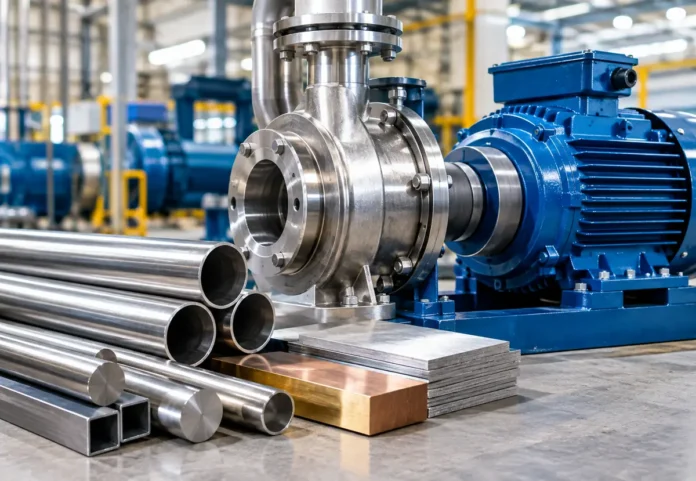

Rotating equipment depends on more than a shaft’s diameter or purchase price. Shafts, axles, rollers, pump components, and similar parts must tolerate motion, load, vibration, surface contact, and the surrounding process environment at the same time. Selecting the material early helps prevent avoidable wear, corrosion damage, unplanned downtime, and replacement costs.
For projects that need precision corrosion-resistant shafting, 316l stainless steel distributor Specialty Steel Company provides 316 and 316L turned, ground, and polished shafting from Cleveland, Ohio. Its product offering addresses precision applications, including hard-to-find shaft sizes, English increments, and metric sizes by request, with service for industrial customers across the United States. That focus on stainless and specialty steel shafting makes the company a relevant resource when buyers need to compare available diameters, finishes, and application requirements.
Why Material Selection Matters In Rotating Equipment
A rotating part can fail for reasons that are not obvious during purchasing. Moisture or chemical residue can attack the surface. Misalignment can increase bearing loads. Repeated starts and stops can introduce fatigue stress. A seal running on an unsuitable finish can wear prematurely, even when the base material has good corrosion resistance.
The lowest-cost bar stock is not always the lowest-cost operating decision. A material that needs frequent replacement, causes seal failures, or requires extensive machining may increase total ownership cost. The best choice considers the full application, including corrosion exposure, mechanical demands, fabrication needs, availability, and inspection requirements.
Start With The Operating Environment
Corrosion resistance is not absolute. Stainless steel develops its corrosion resistance through a chromium-rich passive surface layer, but actual performance still depends on the alloy, the environment, and the condition of the finished part. A useful overview of stainless steel and its corrosion behavior shows why different grades are used for different service conditions.
Before selecting a grade, document what the rotating component will encounter during normal use, cleaning, shutdowns, and maintenance.
- Moisture and humidity: Determine whether the component remains dry, experiences condensation, or sits in standing water.
- Saltwater and chlorides: Consider marine air, road salt, brine, chloride-bearing process fluids, and sanitizer residue.
- Cleaning chemicals: Record the chemical type, concentration, temperature, contact time, and washdown frequency.
- Process contact: Identify whether food, pharmaceuticals, wastewater, acids, alkalis, or other media can contact the shaft.
- Temperature and pressure: Note both operating conditions and cleaning or sterilization temperatures.
- Crevices and stagnant areas: Review locations where liquid can collect around collars, seals, threads, or mounting features.
When the application includes aggressive chemicals, repeated sanitation, elevated temperatures, or safety-critical equipment, material compatibility testing and engineering review are prudent steps before finalizing a specification.
Compare Common Stainless Steel Options
Several stainless steel families can serve rotating equipment, but no single grade is right for every shaft. Compare the grade with the actual exposure and mechanical requirements rather than relying on broad labels such as “food grade” or “marine grade.”
- 304 stainless steel: A widely used austenitic grade for general industrial, fabrication, and many clean-service applications.
- 316 stainless steel: Commonly considered when the environment calls for improved resistance to chloride-related corrosion compared with 304.
- 316L stainless steel: A low-carbon variation of 316 that is often specified when welding is involved, and corrosion performance near welds is important.
- Duplex stainless steel: Can be worth evaluating where higher strength and corrosion resistance are both priorities.
- Martensitic stainless grades: May be suitable where hardness and wear resistance carry greater weight, subject to corrosion and fabrication requirements.
Confirm the applicable material specification, condition, heat treatment, and certification needs. Nominal grade alone does not define every mechanical property or every corrosion limit.
What A Turned, Ground, And Polished Finish Adds
Turned, ground, and polished, often shortened to TGP, describes a finishing sequence commonly used for precision metal shafting. The turned, ground, and polished process is associated with improved roundness, straightness, surface finish, and dimensional accuracy for shaft applications.
How The Steps Support Shaft Performance
- Turning: Brings the bar closer to the required diameter and establishes a round profile.
- Grinding: Refines diameter control and geometry for features such as bearing seats and coupling areas.
- Polishing: Produces a smoother surface that may be beneficial where seals, bearings, bushings, or linear motion parts contact the shaft.
The mating components should define the required finish. A surface that is too rough can raise friction or accelerate seal wear. A surface that is smoother than necessary may add cost and may not suit every lubrication or sealing arrangement.
Match The Material To The Mechanical Load
Corrosion resistance alone does not prove a material is suitable for a rotating component. The design must also account for tensile and yield strength, hardness, torque, bending, thrust, shock loading, rotational speed, and expected service life. Shaft diameter and unsupported length matter because they influence deflection and vibration.
Pay particular attention to stress concentrators. Keyways, threads, grooves, shoulders, cross holes, and abrupt diameter changes can become critical locations under cyclic loading. High-speed, heavily loaded, severely vibrating, or safety-critical applications should be reviewed by a qualified engineer.
Consider Machining And Surface Contact
Material selection continues after the grade is chosen. Stainless steel should be machined, handled, and stored in ways that limit scratches, dents, and contamination. Contact with carbon steel tooling or debris can leave embedded particles that may create visible surface corrosion.
Specify generous shoulder transitions where design constraints allow, avoid sharp changes in section, and communicate the seal and bearing requirements to the machine shop. These details help protect both fatigue performance and mating-part life.
Use This Five-Step Selection Process
- Define the environment: List moisture, salts, chemicals, temperatures, washdown cycles, and possible stagnant-fluid areas.
- Measure the load: Document torque, speed, bending, thrust, shock, vibration, and required service life.
- Choose the grade: Compare corrosion resistance, strength, hardness, weldability, and expected fabrication steps.
- Select the finish: Determine whether turned, ground, polished, coated, or custom-finished stock is appropriate.
- Verify the specification: Confirm dimensions, tolerances, straightness, heat or lot traceability, test reports, and required certificates before ordering.
Questions To Ask A Steel Supplier
- What grade, condition, and specification does the material meet?
- Is heat or lot traceability available?
- What diameter tolerance, straightness, and surface finish can be supplied?
- Are inch and metric sizes available for the required design?
- Can the material be supplied in custom lengths or with cutting services?
- Are material test reports or certificates available when the project requires them?
- Can the supplier help compare 304, 316, 316L, duplex, and harder stainless options for the stated service conditions?
Common Mistakes To Avoid
- Choosing a stainless grade based only on a general label instead of the actual chemical exposure.
- Ignoring chlorides, cleaning chemicals, trapped moisture, or stagnant water.
- Prioritizing corrosion resistance while overlooking shaft deflection, fatigue, and vibration.
- Ordering a finish without confirming seal, bearing, and bushing requirements.
- Failing to verify tolerances, straightness, documentation, and traceability.
- Assuming stainless steel eliminates the need for inspection and preventive maintenance.
Build The Decision Around The Application
Reliable rotating equipment begins with a complete material review. Balance corrosion resistance with mechanical strength, surface finish, machining needs, availability, and total service cost. When operating conditions and design loads are clearly defined, buyers and engineers can choose shafting that supports longer, more predictable service in 2026 and beyond.

