
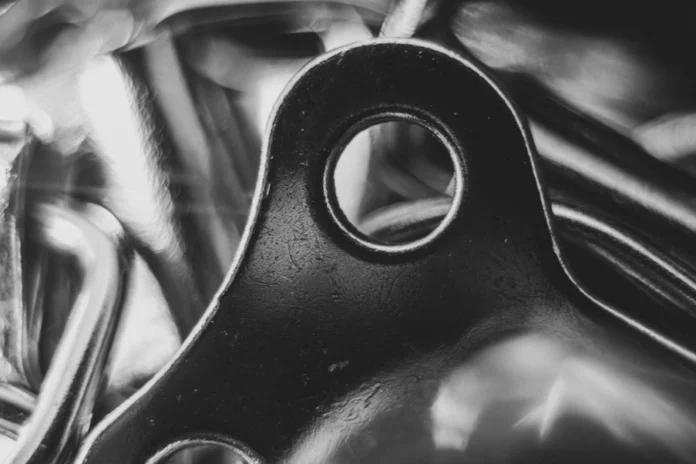

In the world of modern manufacturing, precision and efficiency are paramount. Custom metal stampings play a vital role, providing intricate, high-volume components critical to countless industries. These stamped parts often serve diverse mechanical functions, from simple brackets to complex, load-bearing elements.
A significant aspect of designing these components involves understanding their mechanical behavior, especially when they need to exhibit spring-like characteristics. Engineers must carefully consider material elasticity and how parts deform under stress. This includes situations where multiple components interact to form a combined system, requiring a precise calculation of their effective stiffness.
This extensive guide explores the fundamental processes and engineering advantages of custom metal stampings. It also delves into how these versatile components function as, or integrate with, spring mechanisms. We will specifically examine how to calculate the spring constant of springs in series, a crucial skill for ensuring optimal performance and design accuracy in various applications.
Understanding these principles helps engineers achieve desired flexibility and force distribution in their designs, whether they are working with simple components or complex arrangements, such as those involving custom springs wire forms.
Metal stamping is a cold-forming process that transforms flat sheet metal into specific shapes. This is achieved by placing the sheet metal between a die and a punch, which are then pressed together to cut, bend, or form the metal. The efficiency and precision of modern stamping operations are critical for industries ranging from automotive and aerospace to electronics and medical devices.
Key processes include blanking, piercing, progressive dies, deep drawing, and various bending operations, all of which rely on a deep understanding of material properties like shear modulus and material elasticity.
Blanking involves cutting the outer contour of a part from a larger sheet, producing the desired shape as the “blank.” Piercing, conversely, creates holes or internal cutouts within the blank. These are often performed simultaneously in complex dies.
Progressive dies are sophisticated tools that perform a series of operations at different stations within a single die set. The metal strip advances sequentially through these stations, undergoing one or more operations at each step, until the final part is produced. This method is highly efficient for high-volume production.
Deep drawing is a forming process used to create three-dimensional parts with depths greater than their diameter, such as cups or enclosures, by pulling a metal blank into a die cavity. This requires careful control of material flow and often involves multiple drawing stages.
Various bending operations manipulate the sheet metal to create angles and specific geometries, relying on the material’s ductility and the precise design of the punch and die. Understanding the material’s shear modulus and overall elasticity is paramount in these processes to predict how the metal will deform and spring back after forming, ensuring the final part meets dimensional specifications.
Precision Tooling for Custom Metal Stampings
The heart of any successful metal stamping operation lies in its tooling. Precision tooling, primarily the dies and punches, determines the accuracy, repeatability, and efficiency of the entire process. Factors such as die clearance, punch tolerances, and material selection for the tools themselves are critical.
Die clearance, the gap between the punch and the die, directly impacts the quality of the cut edge and the life of the tool. Optimal clearance prevents secondary shear and burr formation, ensuring clean, precise edges. Punch tolerances are equally vital, as they dictate the dimensional accuracy of pierced holes and cut features. Modern tooling design heavily relies on CAD/CAM (Computer-Aided Design/Computer-Aided Manufacturing) software, which allows engineers to simulate forming processes, predict material behavior, and optimize tool geometries before physical fabrication.
Tools are typically made from high-grade tool steel, often heat-treated for enhanced hardness and wear resistance. For extremely demanding applications or where abrasive materials are being stamped, carbide inserts may be used in critical wear areas to extend tool life significantly. Optimizing cycle speed—the rate at which parts are produced—is a continuous goal, balanced with maintaining tool integrity and part quality. Regular maintenance protocols, including sharpening and polishing, are essential to prolong tool life and ensure consistent part quality over millions of cycles. The precision engineered into these tools directly translates to the precision of the final stamped components.
Material Selection and Mechanical Behavior
The choice of material is a foundational decision in custom metal stamping, directly influencing the component’s performance, durability, and manufacturability. Engineers must consider a range of mechanical properties to match the material to the application’s demands.
Common materials used in stamping include stainless steel, known for its corrosion resistance and strength; phosphor bronze, prized for its excellent electrical conductivity and spring properties; and beryllium copper, which offers exceptional strength, conductivity, and fatigue resistance, making it ideal for spring contacts and connectors.
Key mechanical properties that guide material selection include yield strength, which indicates the stress at which a material begins to deform plastically; Poisson’s ratio, describing the material’s tendency to deform in directions perpendicular to the applied force; and Young’s modulus (modulus of elasticity), a measure of its stiffness or resistance to elastic deformation. For components intended to function as springs or withstand cyclic loading, fatigue life is paramount. This refers to the number of stress cycles a material can endure before failure. Materials with high fatigue strength are crucial for applications where components will experience repeated bending or flexing. Understanding these properties allows designers to select materials that will not only survive the stamping process but also perform reliably throughout the product’s lifespan.
Key Engineering Advantages of Custom Metal Stampings
Custom metal stampings offer a host of engineering advantages that make them indispensable in modern manufacturing. Their ability to deliver complex geometries with high precision at scale provides significant benefits over other manufacturing methods.
One of the most compelling advantages is repeatability. Once a die is perfected, it can produce millions of identical parts with extremely tight tolerances, ensuring consistent quality across massive production runs. This leads to substantial unit economics, as the high initial tooling cost is amortized over a vast number of parts, resulting in a very low cost per piece. Scrap reduction is also a key benefit, as stamping processes can be optimized to nest parts efficiently on the metal strip, minimizing material waste.
Furthermore, stamped components often exhibit superior mechanical integrity. The cold-forming process can enhance the material’s grain structure, leading to increased strength and hardness in critical areas. Many stamped parts are designed to have high tensile strength, enabling them to withstand significant pulling forces without fracturing. These advantages, combined with the speed of the stamping process, make it an ideal choice for mass production scenarios.
Process Type Cycle Time (Relative) Unit Cost (Relative) Complexity (Typical) Progressive Stamping Very Fast Very Low High Deep Drawing Fast Low Medium to High CNC Machining Slow High Very High Laser Cutting Medium Medium Medium
Integrating Custom Metal Stampings into High-Volume Production
The true power of custom metal stampings is unleashed when they are seamlessly integrated into high-volume production environments. This integration relies on sophisticated automation and quality control systems.
Automated feed systems precisely deliver metal strips into the stamping presses, ensuring continuous operation and maximizing throughput. Inline optical inspection systems are frequently deployed to monitor part quality in real-time, detecting defects such as burrs, missing features, or dimensional deviations as they occur. This proactive quality control prevents the production of large batches of faulty parts.
The inherent production scalability of stamping means that once a process is established, increasing output merely requires running more shifts or presses. This makes it incredibly responsive to fluctuating market demands. Effective assembly line integration is achieved by designing stamped components that are easy to handle, orient, and join with other parts, often through features like tabs, slots, or pre-formed attachment points. Adherence to lean manufacturing principles, which focus on eliminating waste and optimizing value streams, is often a hallmark of operations utilizing custom metal stampings, driving efficiency from raw material to final product.
Hybrid Mechanical Components and Spring Functions
Many custom metal stampings are not merely static components but are designed to perform dynamic functions, often acting as springs or integral parts of spring systems. These can include leaf springs, Belleville washers, and various electrical contacts that require specific compliance and return forces. The field of compliance engineering focuses on designing components that exhibit desired flexibility and stiffness characteristics.
When designing these components, understanding concepts like spring rate (or spring constant, k) and Hooke’s Law (F = kx, where F is the force, k is the spring constant, and x is the extension/compression) is fundamental. For complex assemblies, especially those involving multiple spring-like elements, engineers must also grasp how these elements behave when connected in different configurations.
One critical configuration is springs in series. In this arrangement, multiple spring elements are connected end-to-end, so that the force applied to the entire system is transmitted equally through each individual spring. Imagine a chain of springs: if you pull on one end, the same pulling force acts on every spring in that chain. However, the total deformation (or extension) of the system is the sum of the individual deformations of each spring. This is a crucial distinction from parallel connections, where deformation is uniform, but force is distributed.
To illustrate, consider two springs with constants k1 and k2 connected in series. If a force F is applied, each spring extends by x1 and x2 respectively. According to Hooke’s Law, F = k1x1 and F = k2x2. The total extension, Xtotal, is x1 + x2. If we consider the entire series as a single equivalent spring with constant keq, then F = keq * Xtotal.
Substituting the individual extensions: Xtotal = (F/k1) + (F/k2) Since F = keq * Xtotal, then Xtotal = F / keq. Therefore, F/keq = F/k1 + F/k2. Dividing by F, we derive the formula for the equivalent spring constant of springs in series: 1/k_eq = 1/k1 + 1/k2
For more than two springs (n springs) in series, the formula generalizes to: 1/k_eq = 1/k1 + 1/k2 + … + 1/kn
This formula reveals a key characteristic: the equivalent spring constant for springs in series is always smaller than the smallest individual spring constant in the series. This is because connecting springs in series effectively increases the overall length of the “spring” that has to stretch under the same force, making the system more flexible (less stiff). If you have a very soft spring in the chain, it will dominate the overall flexibility.
When identical springs, each with spring constant k, are connected in series, the calculation simplifies further. For n identical springs in series, the equivalent spring constant becomes: k_eq = k/n For instance, two identical springs in series will have half the stiffness of a single spring (k/2), and three will have one-third (k/3).
Understanding the distribution of individual extensions and stored energy is also vital. For two springs in series, the ratio of their elongations is inversely proportional to their spring constants: x1/x2 = k2/k1. This means the softer spring (smaller k) will extend more. Similarly, the stored energy in each spring (E = 1/2 * k * x^2) is distributed such that E1/E2 = k2/k1. The softer spring, extending more, will store more energy under the same force.
Common mistakes to avoid when solving problems with springs in series include:
- Directly adding spring constants: Unlike parallel springs, series spring constants are not simply added.
- Assuming equal extensions: Only the force is equal across series springs; extensions vary based on individual stiffness.
Comparing springs in series to springs in parallel highlights their fundamental differences:
- Series: Force is uniform across all springs; total deformation is the sum of individual deformations; effective stiffness decreases.
- Parallel: Deformation is uniform across all springs; total force is the sum of individual forces; effective stiffness increases (k_eq = k1 + k2 + … + kn).
This knowledge is particularly useful when trying to find the spring constant of an unknown spring. If an unknown spring (k2) is connected in series with a known spring (k1) and the effective constant (keq) is measured, one can rearrange the formula: **1/k2 = 1/keq – 1/k1** Or, for two springs, k2 = (keq * k1) / (k1 – keq). For example, if k1 is 61.0 N/m and k_eq is 20.0 N/m, k2 would be approximately 29.80 N/m.
Finally, consider what happens if a spring is cut in half. If a spring with constant k and N active turns is cut into two equal halves, each half will have N/2 active turns. Since the spring constant is inversely proportional to the number of active turns (k ∝ 1/N), cutting the spring in half effectively doubles its spring constant. This relates to the series formula because if you were to connect these two stiffer halves back in series, 1/keq = 1/(2k) + 1/(2k) = 2/(2k) = 1/k. So, keq = k, restoring the original stiffness, demonstrating the consistency of these principles.
These calculations and principles are essential for engineers designing components that incorporate or interact with spring mechanisms, ensuring that the desired mechanical response is achieved.
Quality Control and Tight-Tolerance Fabrication
Maintaining stringent quality control is paramount in custom metal stamping, especially when producing components with tight tolerances. Deviations can lead to functional failures, assembly issues, and costly recalls. Modern manufacturing employs advanced techniques and equipment to ensure parts meet precise specifications.
Coordinate Measuring Machines (CMMs) are widely used for highly accurate dimensional inspection. These machines use probes to precisely measure the geometry of parts, comparing them against CAD models to detect any discrepancies. Adherence to Geometric Dimensioning and Tolerancing (GD&T) standards is crucial, providing a universal language for defining and communicating engineering tolerances. This ensures that features are not only dimensionally correct but also properly oriented and located relative to each other.
Minimizing burr formation is another critical aspect of quality control. Burrs are sharp, undesirable edges created during the cutting process. While unavoidable to some extent, proper die design, sharp tooling, and controlled clearances help reduce them. Post-stamping processes like tumbling or deburring are often employed to achieve smooth edge conditions, which are vital for product safety, aesthetics, and functionality (especially for electrical contacts or components that mate with others).
For parts that undergo significant forming or are designed to act as springs, stress relief heat treatments may be applied. Stamping can induce residual stresses in the material, which can lead to warping or premature fatigue failure.
Heat treatment at specific temperatures can alleviate these stresses, improving the component’s dimensional stability and long-term performance. The combination of advanced inspection, precise tolerancing, and post-processing ensures that custom metal stampings consistently meet the highest quality standards.
Frequently Asked Questions about Metal Stamping
How do custom metal stampings differ from standard off-the-shelf stampings?
Custom metal stampings are specifically engineered and manufactured to meet the unique requirements of a particular application, whereas standard off-the-shelf stampings are generic components produced for general use.
The primary distinctions lie in several areas: custom tooling, where unique dies are designed and fabricated for the exact part; application-specific geometries, allowing for intricate and optimized shapes that standard parts cannot offer; tighter tolerances, ensuring precision that is often critical for specialized assemblies; and tailored alloy selection, where materials are chosen not just for cost but for specific performance characteristics like conductivity, corrosion resistance, or spring properties. This bespoke approach ensures optimal fit, form, and function for the end product.
What factors determine tooling costs for metal stamping dies?
Tooling costs for metal stamping dies can vary significantly, influenced by several key factors. Die complexity is a major determinant; intricate designs with multiple features, tight tolerances, or complex forming operations require more sophisticated and expensive dies.
The number of progressive stations in a die set, each performing a different operation, also adds to the cost. The raw material hardness to be stamped affects the choice of tool steel and heat treatment, with harder materials requiring more robust and costly tooling. Expected production volumes influence the tool’s design life; a die meant for millions of cycles will be built with more durable materials and precision than one for a short run.
Finally, maintenance intervals and ease of repair are considered during the design phase, impacting the overall lifecycle cost of the tooling.
How are elastic properties managed in stamped spring components?
Managing elastic properties in stamped spring components is a critical aspect of their design and manufacturing to ensure they perform reliably as intended. This involves careful consideration of several factors: deflection limits are set to ensure the spring operates within its elastic range, preventing permanent deformation.
The temper selection of the metal alloy, which refers to its hardness and ductility, is chosen to provide the desired spring characteristics. Heat treatment, such as annealing or age hardening, is often applied after stamping to achieve specific mechanical properties, including increased hardness, strength, and fatigue resistance, while also relieving internal stresses.
Understanding Hookean elasticity is fundamental, as it describes the linear relationship between applied force and deformation. Finally, careful management of residual stress during the stamping process is crucial, as uncontrolled stresses can lead to spring set or premature failure. Engineers meticulously control these variables to produce stamped components that exhibit precise and consistent spring functions.
Conclusion
Custom metal stampings are an indispensable cornerstone of modern manufacturing, driving innovation and efficiency across countless industries. From the fundamental processes of blanking and forming to the intricate design of precision tooling, every stage is optimized for accuracy and high-volume production.
The ability to select specific materials with tailored mechanical behaviors, coupled with advanced quality control measures, ensures that these components meet the most demanding specifications.
The engineering advantages—including unparalleled repeatability, cost-effectiveness, and mechanical integrity—position custom metal stampings as a superior choice for mass-produced parts. Their seamless integration into automated production lines exemplifies the ongoing evolution of manufacturing.
Furthermore, their versatility extends to functioning as sophisticated spring mechanisms, where a deep understanding of principles like the spring constant of springs in series becomes critical for achieving precise compliance and force distribution. As automation trends continue to advance and demand for material efficiency grows, the role of custom engineering in modern fabrication will only expand, solidifying the future outlook for custom metal stampings as a vital enabling technology.

